
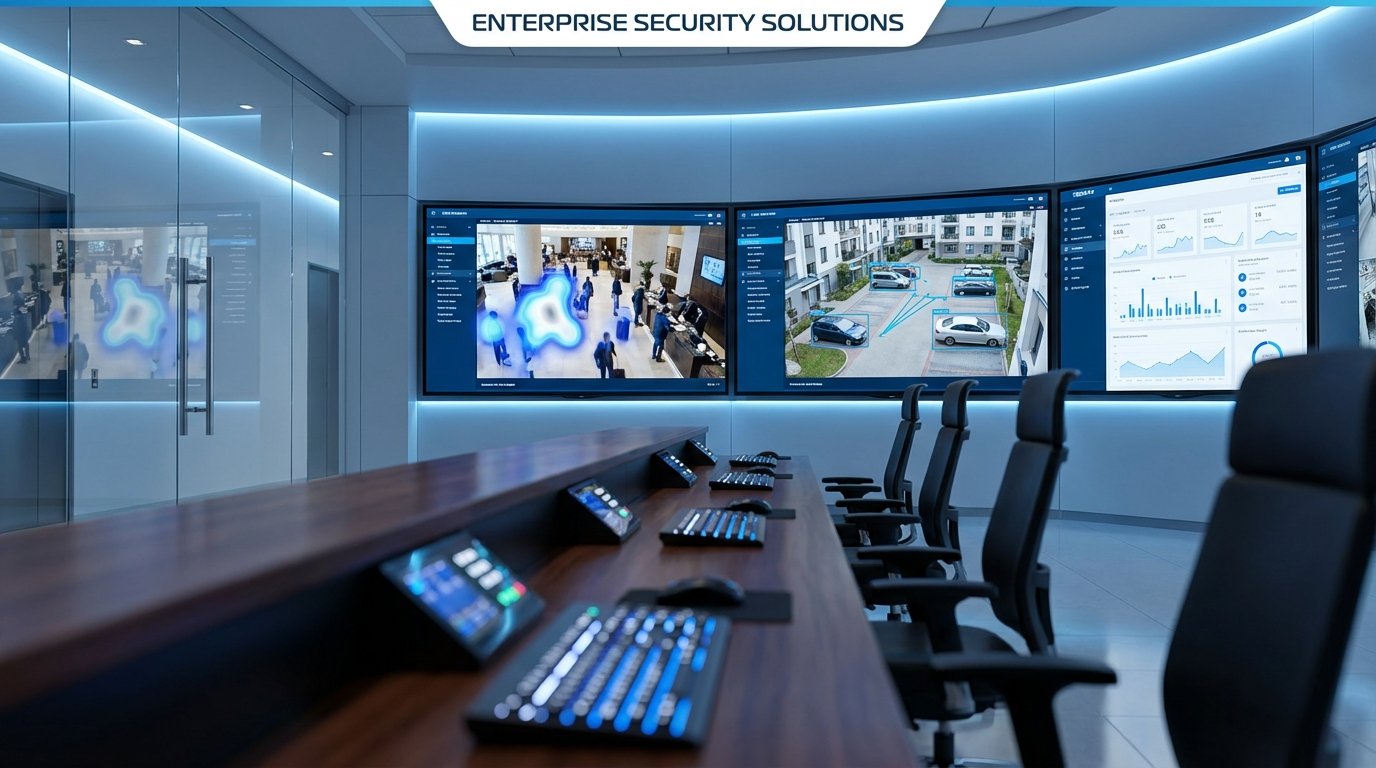
Modern security cameras have evolved far beyond simple recording devices. Today’s video surveillance analytics systems use artificial intelligence to actively monitor properties, detect threats, and provide actionable insights that human operators might miss. For large commercial properties—from 300-room hotels to 500-unit residential communities—this technology represents a fundamental shift from passive surveillance to proactive security management.
Video surveillance analytics leverages machine learning algorithms to analyze camera feeds in real-time, identifying specific behaviors, objects, and patterns. Rather than requiring security personnel to watch dozens of camera feeds simultaneously, these intelligent systems automatically alert teams to potential issues while filtering out irrelevant motion. For property managers overseeing massive facilities, this capability transforms security from a reactive expense into a strategic operational asset.
Understanding Video Surveillance Analytics Technology
Video surveillance analytics represents the integration of artificial intelligence with professional camera systems. These platforms process video data using trained algorithms that recognize specific criteria—from unauthorized vehicle entry to crowd formation in restricted areas. The technology operates through three core components: advanced cameras with sufficient resolution for detailed analysis, processing power either at the camera edge or in centralized servers, and sophisticated software algorithms trained on millions of data points.
Leading systems from manufacturers like Verkada and Axis Communications embed AI processing directly into camera hardware, enabling immediate analysis without overwhelming network bandwidth. This edge computing approach means cameras can make intelligent decisions locally, only transmitting relevant footage and alerts to management platforms. For properties with hundreds of cameras across multiple buildings, this architecture proves essential for scalable, responsive security.
The software layer distinguishes modern analytics from motion detection. Traditional systems trigger on any movement—trees swaying, shadows changing, or rain falling—creating alert fatigue. AI-powered analytics distinguish between vehicles, people, and irrelevant motion. They understand context: a person walking through a lobby at 2 PM is normal behavior, while the same movement at 2 AM in a restricted maintenance area warrants immediate attention.
Key Capabilities Transforming Commercial Property Security
People Detection and Tracking
Advanced analytics platforms identify individual people within camera views and track their movement across multiple cameras. For office buildings and multi-family residential properties, this capability enables sophisticated security protocols. Systems can detect when someone enters through an emergency exit rather than controlled access points, when individuals loiter in parking garages beyond normal timeframes, or when crowds gather in areas designated for limited occupancy.
Hanwha Vision’s Wisenet AI cameras, for example, can distinguish between adults, children, and pets—reducing false alarms while maintaining appropriate sensitivity. In parking structures, this technology identifies when someone appears to be inspecting multiple vehicles, a behavior pattern consistent with theft attempts. The system alerts security personnel with timestamped video, enabling rapid response before incidents escalate.
Vehicle and License Plate Recognition
License plate recognition (LPR) systems represent one of the most valuable analytics applications for commercial properties. These specialized cameras capture plate numbers of vehicles entering and exiting parking facilities, cross-referencing against authorized lists in real-time. For hotels managing valet operations, multi-family communities controlling resident parking, or office buildings with tenant parking allocation, LPR automates access while creating searchable records.
When integrated with access control systems from providers like Brivo, vehicle recognition triggers automated gate operations for authorized users while flagging unknown vehicles for security review. This integration eliminates the inefficiency of separate systems operating independently. Property managers gain comprehensive data about parking utilization, peak entry times, and unauthorized access attempts—insights that inform both security strategy and operational planning.
Perimeter Protection and Intrusion Detection
Video analytics excel at perimeter security for large properties. Rather than relying solely on physical barriers, intelligent cameras create virtual tripwires and detection zones. When someone crosses these boundaries, the system immediately alerts security teams with video verification. This approach proves particularly valuable for warehouse facilities, distribution centers, and properties with extensive outdoor areas where traditional security measures prove impractical.
Thermal imaging cameras from Axis Communications extend this capability to complete darkness and adverse weather conditions. These specialized systems detect heat signatures rather than visible light, making them ideal for after-hours perimeter monitoring in Florida’s frequent storms or for properties requiring 24/7 outdoor coverage. The analytics software distinguishes between human intruders, vehicles, and animals—preventing false alarms from wildlife while maintaining security vigilance.
Occupancy Monitoring and Social Distancing
Analytics platforms now track occupancy levels in real-time, counting people entering and exiting specific areas. For hotels monitoring amenity spaces like pools and fitness centers, this capability enables automatic capacity management. Retail properties use occupancy analytics to understand traffic patterns and optimize staffing. During health concerns, these same systems enforce occupancy limits and monitor social distancing compliance without requiring dedicated personnel.
Behavior Analysis and Unusual Activity Detection
Sophisticated analytics systems establish baseline behavior patterns for different areas and times, then flag deviations. In loading dock environments, the system learns normal delivery schedules and vehicle types, alerting managers when unexpected activity occurs. For office buildings, analytics detect when doors remain propped open beyond acceptable timeframes or when someone attempts repeated access with invalid credentials.
This behavioral analysis extends to slip-and-fall liability protection. Cameras with video analytics can detect when someone falls, immediately alerting staff to provide assistance while preserving video evidence. For hospitality properties and senior living communities, this capability represents both enhanced safety and liability protection.
Integration With Comprehensive Security Ecosystems
Video surveillance analytics deliver maximum value when integrated with broader security systems rather than operating in isolation. When access control, surveillance, and alarm systems communicate through unified platforms, properties achieve true security intelligence.
Consider a multi-tenant office building using Verkada’s Command platform. When someone badges into the facility after hours using access control credentials, the system automatically activates relevant cameras and begins recording their movement path. If that person attempts to access restricted floors without authorization, the access control denial triggers an alert with live video feed to security personnel. This integration transforms individual security components into a coordinated response system.
For mixed-use developments combining residential, retail, and office spaces, integration becomes essential. Milestone Systems’ XProtect video management software operates as the central nervous system, accepting feeds from thousands of cameras across multiple manufacturers while coordinating with access control and intercom systems. Security teams manage the entire property from unified interfaces rather than juggling separate platforms for each technology.
The integration extends to property management systems in hospitality and multi-family applications. When guests check out of hotel rooms or apartment leases end, the property management system automatically updates access permissions, triggers surveillance of vacated units, and adjusts monitoring protocols—all without manual intervention. This orchestration eliminates security gaps while reducing administrative burden.
Operational Benefits Beyond Security
Property managers increasingly leverage video surveillance analytics for operational insights beyond traditional security. Retail properties analyze foot traffic patterns to optimize store placement and common area design. Office buildings study conference room utilization captured by analytics to inform space allocation decisions. Parking facilities use vehicle counting analytics to understand peak demand periods and validate revenue projections.
For hotels and hospitality properties, surveillance analytics inform staffing decisions. By analyzing lobby traffic patterns, pool occupancy trends, and parking utilization, managers optimize staffing levels to match actual demand rather than assumptions. The data captured by security systems becomes business intelligence that impacts operational efficiency and guest experience.
Maintenance teams benefit from video surveillance analytics through proactive issue identification. Cameras detecting water pooling in garage levels alert facilities teams before water infiltration causes structural damage. Analytics identifying unusual equipment vibration patterns in HVAC systems enable preventive maintenance before costly failures occur.
Implementing Video Analytics: Considerations for Large Properties
Successful video surveillance analytics implementation requires more than purchasing advanced cameras. Properties must consider network infrastructure, storage requirements, and system design that balances coverage with budget constraints.
Network capacity represents the foundation. While edge computing reduces bandwidth demands compared to earlier systems, properties still require robust network infrastructure supporting hundreds of cameras transmitting data continuously. Licensed electrical contractors like Fortress Global Technology design network architecture specifically for surveillance demands, ensuring sufficient capacity, redundancy, and security segmentation separating surveillance networks from guest or tenant systems.
Storage strategy varies based on retention requirements, camera resolution, and analytics processing approach. Cloud-based systems from Verkada and Brivo eliminate on-site server infrastructure, storing footage in secure cloud environments with subscription-based models. Hybrid approaches using Hanwha Vision cameras with local storage supplemented by cloud archiving balance cost, accessibility, and retention requirements. Properties subject to specific regulatory retention mandates must ensure their chosen platform accommodates compliance needs.
Camera placement requires professional design considering coverage objectives, lighting conditions, and analytics capabilities. Parking structures demand cameras positioned for effective license plate capture under varying light conditions. Perimeter security cameras require overlapping fields of view eliminating blind spots. Interior cameras must balance privacy considerations with comprehensive coverage, particularly in multi-family residential applications where tenant privacy expectations require thoughtful camera placement.
Professional Installation and Ongoing Support
Video surveillance analytics systems represent significant investments in both equipment and implementation expertise. Unlike consumer cameras requiring simple mounting, commercial systems demand structured cabling, network configuration, power infrastructure, and software integration—work requiring licensed contractors with electrical and low-voltage expertise.
Fortress Global Technology’s approach exemplifies comprehensive implementation. Projects begin with security assessments identifying vulnerabilities and operational requirements specific to each property. Licensed contractors handle permit acquisition, structured cabling installation meeting commercial standards, network configuration supporting surveillance demands, and integration with existing access control and security systems. This turnkey approach ensures systems operate reliably from day one rather than leaving properties troubleshooting connectivity issues and configuration problems.
Ongoing support proves equally critical. Video analytics systems require software updates, camera maintenance, and periodic recalibration as property uses evolve. Local support teams familiar with specific installations respond rapidly when issues arise, minimizing security coverage gaps. For properties operating nationwide with multiple locations, having integration partners capable of consistent deployment and support across regions ensures standardized security while accommodating local requirements.
Frequently Asked Questions
What is surveillance analytics?
Surveillance analytics refers to artificial intelligence software that analyzes video feeds in real-time, automatically identifying specific objects, behaviors, and patterns. Rather than requiring human operators to watch camera feeds continuously, analytics systems detect predetermined criteria—unauthorized access, unusual behavior, specific vehicles—and alert security personnel only when relevant events occur. This technology transforms passive video recording into active threat detection and operational intelligence.
What is video analytics?
Video analytics is the automated analysis of video content using computer vision and machine learning algorithms. These systems process camera footage to extract meaningful information such as people counting, vehicle tracking, behavior recognition, and anomaly detection. Video analytics distinguish between relevant security events and irrelevant motion, dramatically reducing false alarms while enabling cameras to function as intelligent sensors rather than simple recording devices.
What is security camera analytics?
Security camera analytics encompasses the various AI-powered capabilities embedded in modern surveillance systems, including people detection, license plate recognition, perimeter intrusion detection, occupancy counting, and behavior analysis. These analytics transform standard security cameras into intelligent monitoring systems that understand context and automatically respond to specific conditions without human intervention. Commercial properties use security camera analytics to enhance threat detection, improve operational efficiency, and gain business intelligence from their surveillance infrastructure.
How do you analyze CCTV footage effectively?
Modern CCTV analysis relies on video management systems with search capabilities that filter footage by time, camera location, and specific events flagged by analytics. Advanced platforms allow searching by object type (person, vehicle), appearance characteristics, or behavior patterns. Rather than manually reviewing hours of footage, operators query the system for specific criteria—vehicles entering between certain hours, people appearing in restricted zones, or objects left unattended. Video analytics systems automatically tag and index footage during recording, making post-event investigation dramatically more efficient than traditional chronological review.
The Future of Property Security
Video surveillance analytics represents the current state of commercial security technology, but ongoing development promises even more sophisticated capabilities. Facial recognition systems designed for commercial applications continue improving accuracy while addressing privacy considerations. Enhanced behavior prediction algorithms will identify potential security events before they occur based on subtle behavioral cues. Integration with building automation systems will enable coordinated responses—automatically locking relevant doors, adjusting lighting, and alerting law enforcement when specific threat conditions are detected.
For property managers, facility directors, and security professionals, the strategic question isn’t whether to adopt video surveillance analytics, but how to implement these systems effectively within comprehensive security strategies. The technology has matured beyond experimental status to become standard infrastructure for professionally managed commercial properties.
Fortress Global Technology specializes in designing and implementing integrated surveillance systems with advanced analytics for large-scale commercial properties throughout Florida and nationwide. Our licensed contractors assess your property’s unique requirements, recommend appropriate technology combinations from leading manufacturers, and provide complete installation and ongoing support. Contact our team to discuss how video surveillance analytics can enhance security and operational efficiency for your property.