
That sinking feeling when your parking gate fails during peak hours—again—is more than an inconvenience. For property managers overseeing large commercial facilities, multi-family residential communities, or sprawling hotel complexes, a failing gate system represents security vulnerabilities, operational disruptions, and mounting repair costs that often exceed the value of replacement.
Modern parking access control has evolved far beyond basic gate operators. Today’s integrated security ecosystems connect access control, surveillance cameras, license plate recognition, and visitor management into unified platforms that protect property investments while delivering operational efficiency. Yet many facilities still rely on aging gate systems that have become liability risks rather than security assets.
Recognizing when repair stops making financial sense requires understanding both the visible symptoms of system failure and the hidden costs of maintaining obsolete technology. Here are seven critical indicators that your parking gate system has reached the end of its useful life and demands immediate attention.
1. Frequent Breakdowns Requiring Emergency Service Calls
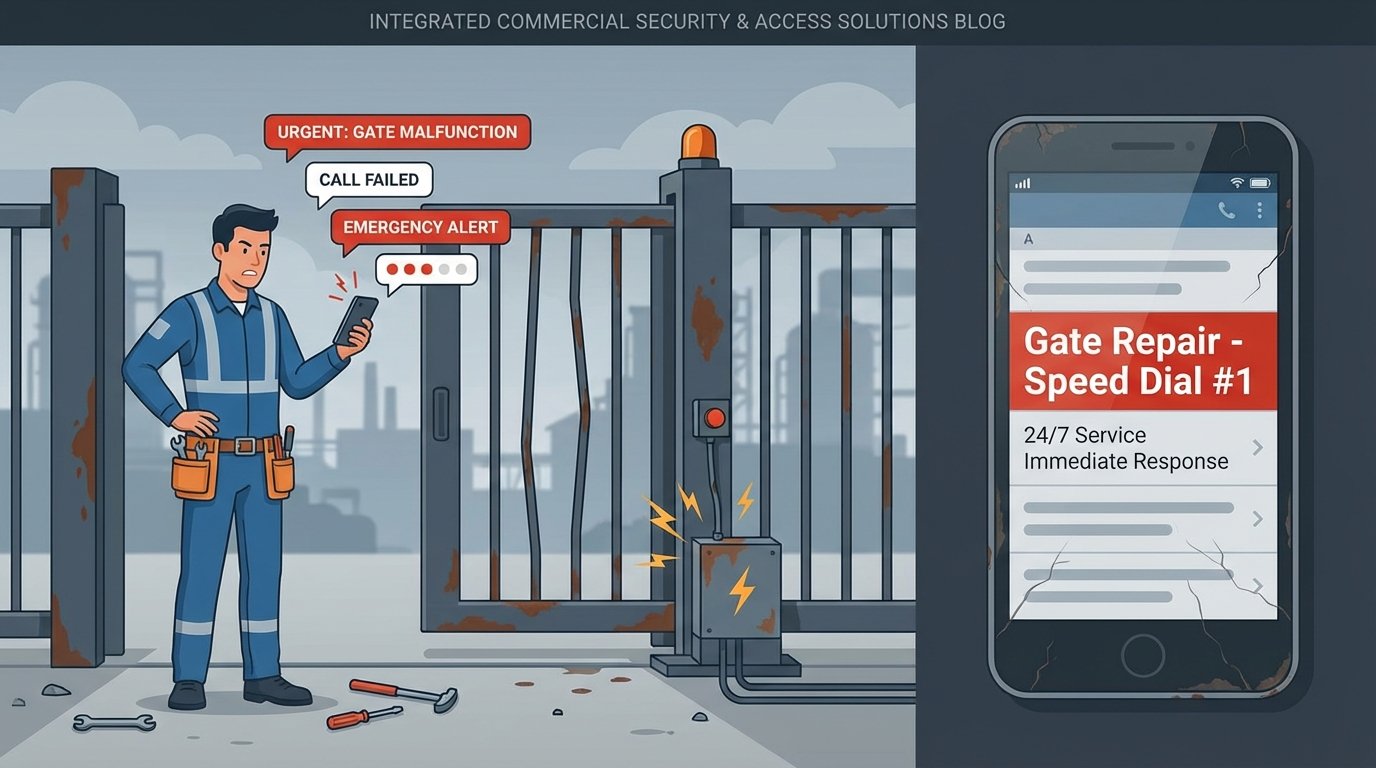
When your maintenance team’s contact list has the gate repair technician on speed dial, you’ve crossed from normal maintenance into problem territory. Occasional service calls are expected with any mechanical system, but frequent emergency repairs signal fundamental deterioration.
Consider the true cost beyond the service invoice. Each breakdown creates security gaps where unauthorized vehicles access your property. Staff time spent coordinating repairs, manually managing traffic, and fielding tenant complaints represents operational expense that rarely appears in budget calculations. For commercial properties in competitive markets like Boca Raton or Fort Lauderdale, unreliable access control damages reputation and tenant satisfaction.
Modern integrated parking access systems from manufacturers like Verkada and Brivo are designed with reliability that minimizes these disruptions. Cloud-based platforms provide real-time system health monitoring, alerting facility teams to potential issues before they cause failures. This predictive approach to maintenance represents a fundamental shift from reactive emergency repairs to proactive system management.
When repair frequency increases to monthly or weekly intervals, replacement economics become compelling. The累積 cost of service calls, plus lost productivity and security risks, typically exceeds the amortized cost of modern replacement systems within surprisingly short timeframes.
2. Incompatibility with Current Access Control Technology
Security technology has transformed dramatically over the past decade. Cloud-based access control systems, mobile credentials, and integrated visitor management platforms now dominate commercial property security. Legacy parking gate systems designed for magnetic stripe cards or basic proximity readers cannot integrate with these modern ecosystems.
This incompatibility creates operational silos that undermine comprehensive security strategies. When your building access uses Brivo’s mobile credentials allowing smartphone-based entry, but parking still requires separate physical cards, you’ve created friction in the user experience and administrative burden in credential management.
For large multi-family residential communities with 200+ units or commercial office buildings managing multiple tenants, credential administration becomes exponentially more complex when parking operates separately from building access. Property managers face the inefficiency of maintaining parallel systems—issuing parking cards while also managing mobile credentials for building entry.
Integration capabilities represent one of the most significant advantages of modern parking access control. Systems that communicate with your broader security platform enable sophisticated functionality: temporary visitor parking credentials that expire automatically, parking access tied to lease status in property management software, or surveillance cameras that activate when gates open during unauthorized hours.
If your current gate system cannot integrate with your property’s access control platform, you’re not just missing convenience—you’re sacrificing security visibility and operational efficiency that modern integrated systems deliver as standard features.
3. Parts Obsolescence and Extended Repair Timelines
The commercial security industry moves rapidly. Manufacturers discontinue product lines, component suppliers exit the market, and replacement parts for older systems become scarce. When your gate system requires parts that technicians must source from specialty suppliers or salvage from decommissioned equipment, you’re operating on borrowed time.
Extended repair timelines create unacceptable security exposure for commercial properties. A gate system awaiting parts for weeks leaves your parking facility vulnerable, forcing manual management that defeats the purpose of automated access control. For facilities like hotels managing hundreds of parking spaces or office complexes with structured parking, these extended outages create operational chaos.
Parts obsolescence also inflates repair costs. Scarce components command premium pricing, and technician time spent sourcing obsolete parts adds expense beyond the repair itself. These escalating costs rarely justify the investment when modern replacement systems offer superior reliability at predictable lifecycle costs.
Fortress Global Technology encounters this scenario frequently with large commercial properties—facility teams struggling to maintain systems where manufacturer support has ended and parts availability becomes a constant challenge. The transition to current-generation systems from partners like Hanwha Vision or Axis Communications eliminates this uncertainty, providing long-term manufacturer support and readily available components throughout the system lifecycle.
4. Safety Compliance Concerns and Liability Risks
Safety standards for automated gate systems have evolved substantially, particularly regarding entrapment protection and emergency vehicle access. Older systems may lack modern safety features now considered standard practice, creating liability exposure that property owners cannot afford to ignore.
Modern parking access control includes sophisticated safety mechanisms: photoelectric sensors that detect obstructions, pressure-sensitive edges that reverse gate movement upon contact, and emergency override systems for first responder access. These features protect both property users and owners from injury and associated liability.
Insurance considerations add financial weight to safety concerns. Property insurers increasingly scrutinize security and safety systems during underwriting and renewal processes. Demonstrating that your facility employs current-standard safety features can influence premium calculations, while documented incidents involving substandard equipment creates claims history that affects future coverage and pricing.
For properties in litigious markets—and commercial real estate anywhere faces litigation risk—the question isn’t whether you can afford to upgrade safety features, but whether you can afford not to. The cost of modern compliant systems represents minimal investment compared to potential liability exposure from preventable incidents involving obsolete equipment.
Florida building codes and life safety requirements demand particular attention to hurricane-resistant installation and emergency access provisions. Systems installed decades ago may not meet current standards, creating code compliance risks that surface during property transactions or following incidents.
5. Operational Inefficiency Impacting Property Experience
The daily friction created by unreliable or slow-responding gate systems accumulates into significant tenant satisfaction issues. For luxury multi-family residential properties competing for quality residents or commercial office buildings attracting corporate tenants, every interaction with property systems contributes to the overall experience perception.
Slow gate response times create traffic backups during peak entry and exit periods. Tenants waiting in vehicle queues while gates slowly cycle experience frustration that colors their entire property perception. In competitive rental markets throughout Palm Beach County or in high-rise residential towers in Manhattan, these operational details influence leasing velocity and renewal rates.
Modern parking access control delivers dramatically improved operational performance. License plate recognition systems enable touchless entry, eliminating the need for vehicles to stop at card readers. Cloud-based platforms allow remote gate operation and monitoring, so facility teams can address issues immediately rather than dispatching staff to investigate problems.
The integration of parking access with visitor management platforms transforms the guest experience. When your front desk can issue temporary parking credentials through the same system managing building access, you’ve eliminated administrative steps and improved service delivery. For hotels managing guest parking across multiple structures or mixed-use developments coordinating resident and visitor access, these integrated capabilities represent operational transformation rather than incremental improvement.
6. Inability to Capture Operational Data and Analytics
Contemporary security thinking emphasizes intelligence and analytics alongside physical access control. Modern systems capture detailed data about facility usage patterns, peak traffic times, and access patterns that inform operational decisions and security protocols.
Legacy gate systems offer minimal reporting capability—perhaps basic entry and exit counts, but rarely the granular data that property managers need for informed decision-making. You cannot optimize parking allocation without understanding actual usage patterns. Security investigations lack the detailed access logs that modern systems provide as standard features.
Integrated platforms like Verkada’s Command system or Milestone’s XProtect video management software unify access control data with surveillance footage, creating comprehensive records that serve both operational and security purposes. When investigating incidents, facility teams can review not just gate access logs but synchronized video showing the vehicle and occupants associated with each entry event.
For large commercial properties spanning 50,000+ square feet or multi-family communities with hundreds of units, this data visibility transforms security from reactive response to proactive management. Analytics identify unusual access patterns that may indicate credential sharing or unauthorized access attempts. Usage data informs decisions about staffing, maintenance scheduling, and resource allocation.
Properties operating without this intelligence capability are making decisions based on incomplete information, missing opportunities for operational optimization and security enhancement that data-driven management enables.
7. Energy Inefficiency and Environmental Concerns
Older gate systems often consume considerably more energy than modern alternatives, creating ongoing operational expense that replacement systems can eliminate. While energy costs may seem minor compared to other facility expenses, the累積 impact across systems operating 24/7/365 becomes substantial over multi-year periods.
Contemporary parking access control emphasizes energy efficiency through LED lighting, low-power electronics, and intelligent power management that reduces consumption during idle periods. For properties pursuing sustainability certifications or simply managing operating expenses, these efficiency improvements contribute to broader environmental and financial goals.
Solar-powered gate systems now offer viable alternatives for facilities with appropriate sun exposure, eliminating electrical infrastructure requirements while providing reliable operation. Battery backup systems ensure continued operation during power outages—a critical consideration for Florida properties facing hurricane-related electrical disruptions.
Environmental considerations extend beyond energy consumption to materials and disposal. End-of-life replacement creates opportunities to properly dispose of obsolete equipment and install systems designed with modern environmental standards throughout their manufacturing and operational lifecycle.
Understanding Replacement Economics
The decision to replace rather than repair requires clear-eyed financial analysis that considers total cost of ownership rather than simply comparing repair estimates against replacement quotes. Several factors influence this calculation.
Cumulative repair costs over recent years provide baseline comparison. If annual maintenance and emergency repairs approach 30-40% of replacement system cost, continued repair rarely makes financial sense. The calculation should include soft costs: staff time coordinating repairs, security risks during outages, and tenant satisfaction impacts that affect property value and leasing performance.
Modern systems offer operational efficiencies that reduce ongoing costs. Reduced energy consumption, lower maintenance requirements, and eliminated costs for physical credential production (when using mobile credentials) contribute to favorable replacement economics. Cloud-based systems reduce or eliminate on-premise server infrastructure and associated IT maintenance expenses.
For large properties where parking access control represents critical infrastructure—hotels managing guest vehicle access, office buildings coordinating tenant and visitor parking, or multi-family communities securing resident vehicles—system reliability carries value beyond direct cost comparison. The business disruption from extended outages can exceed the entire replacement system cost in a single incident.
The Professional Installation Advantage
Parking access control replacement represents significant infrastructure investment that demands professional execution. Unlike simple gate operators suitable for residential driveways, commercial parking systems integrate electrical, network, access control, and surveillance technologies into cohesive platforms requiring specialized expertise.
Licensed electrical contractors bring capabilities that product resellers or unlicensed installers cannot match. Proper installation addresses code compliance, permit acquisition, electrical infrastructure, network cabling, and system integration—the complete scope of work required for reliable, long-term operation. Fortress Global Technology’s licensing as electrical contractors enables comprehensive project execution from infrastructure to final configuration.
Professional installation ensures warranty protection. Manufacturer warranties typically require installation by authorized, licensed contractors. Attempting to reduce project costs through unlicensed installation risks voiding equipment warranties, eliminating the protection these guarantees provide against defects and failures.
The integration complexity of modern parking access control demands experience that only specialized firms possess. Connecting access control with surveillance cameras, configuring license plate recognition systems, integrating with property management software, and ensuring network security requires expertise across multiple disciplines. Generic IT firms or gate maintenance companies lack the cross-platform knowledge that comprehensive integration demands.
Future-Proofing Your Parking Access Investment
Technology selection for parking access control replacement should emphasize scalability and adaptability. Properties evolve, security requirements change, and technology capabilities advance. Systems designed with open architectures and standards-based communication protocols offer flexibility that proprietary platforms cannot match.
Manufacturers like Axis Communications and Milestone Systems build products on open standards, ensuring compatibility with thousands of complementary devices and software platforms. This openness protects your investment by enabling future expansion and integration without forcing complete system replacement when adding capabilities or upgrading components.
Cloud-based platforms provide inherent future-proofing through continuous software updates that add features and capabilities without hardware replacement. Verkada’s Command platform and Brivo’s access control system regularly introduce functionality improvements that existing installations receive automatically, extending system value throughout the lifecycle.
Scalability considerations are particularly critical for growing properties or portfolios. Systems that easily expand to accommodate additional gates, integrate new parking facilities, or extend across multiple properties deliver long-term value that initial cost comparison may not capture. For property management companies overseeing multiple facilities, standardizing on scalable platforms creates operational efficiency and consistent user experience across the portfolio.
Taking Action on Critical Infrastructure
Parking access control represents critical security infrastructure that protects property assets, ensures authorized-only access, and contributes to overall operational efficiency. When systems exhibit multiple failure indicators—frequent breakdowns, parts obsolescence, safety concerns, or integration limitations—continued operation creates risks that responsible property management cannot accept.
The replacement decision requires professional assessment of current system condition, property security requirements, integration opportunities with existing platforms, and lifecycle cost analysis. Fortress Global Technology provides comprehensive evaluation services for large commercial properties, multi-family residential communities, and complex facilities throughout Florida and nationwide.
Our expertise in integrating parking access control with comprehensive security ecosystems—connecting Brivo access control with Axis surveillance cameras, implementing Hanwha Vision analytics, and unifying management through Milestone platforms—enables solutions tailored to specific property requirements rather than one-size-fits-all product sales.
If your parking gate system exhibits any of these seven warning signs, delaying replacement increases security risks and operational costs while the problems compound. Contact Fortress Global Technology for a comprehensive security assessment that evaluates your current infrastructure, identifies vulnerabilities, and designs integrated solutions that protect your property investment for years to come. Our licensed contractors deliver complete installation services from permitting through final configuration, backed by ongoing support throughout your system’s lifecycle.