
HOA board members face a unique challenge: protecting entire communities while managing budgets, resident expectations, and liability concerns. A single security decision can affect hundreds of families, property values exceeding tens of millions of dollars, and the community’s reputation for years to come. Yet many boards approach security system selection the same way they’d choose pool furniture—comparing individual product prices rather than evaluating comprehensive protection strategies.
The reality is that modern HOA security systems aren’t about cameras or access gates operating independently. They’re integrated ecosystems where access control, surveillance, visitor management, and amenity monitoring work together to create layered protection while improving operational efficiency. Understanding this integrated approach is essential for board members tasked with safeguarding their communities.
Why HOA Security Differs From Single-Property Protection
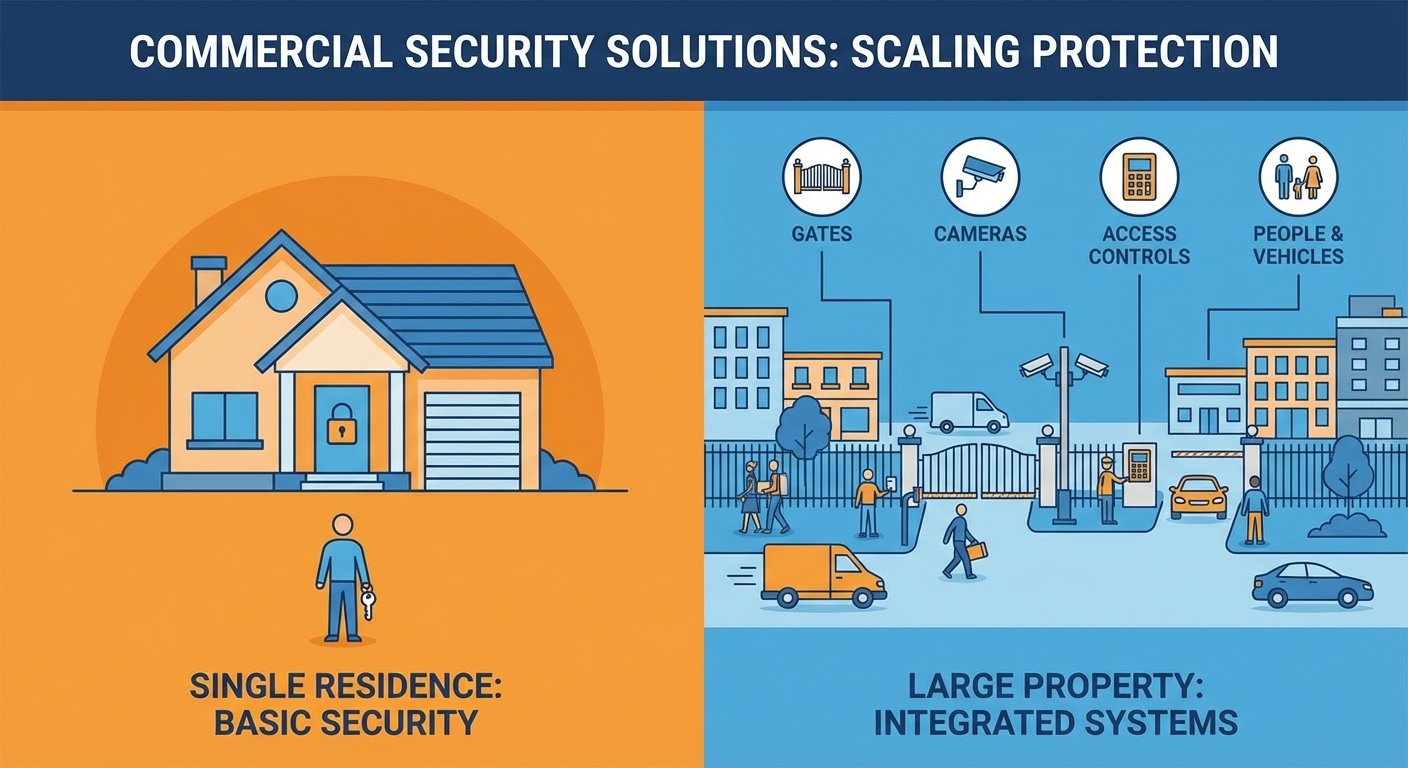
Managing security for a 200-unit residential community or a 500-home gated development presents complexities that single-family properties never encounter. Board members must balance competing priorities: residents want both security and convenience, guests need streamlined access, and the community requires protection without feeling like a fortress.
Traditional security approaches—isolated cameras here, standalone access control there—create operational headaches. Guards manually verify visitors while cameras record separately. Access credentials require physical cards that residents lose. Different systems demand different login platforms, making management cumbersome and incident investigation time-consuming.
Integrated security solutions address these challenges by connecting previously isolated technologies into unified platforms. When a delivery driver arrives at your community entrance, an integrated system doesn’t just verify access—it logs the entry, triggers cameras to record, sends resident notifications, and creates an audit trail accessible from a single dashboard. This coordination transforms security from reactive monitoring into proactive community management.
Core Components of Comprehensive HOA Security Systems
Effective community protection requires multiple security layers working in concert. Board members should understand how these components integrate rather than viewing them as separate purchases.
Cloud-Based Access Control
Modern gated community access control has evolved far beyond gate clickers and key cards. Cloud-based platforms like Brivo enable smartphone credentials, temporary guest access, and remote management from any location. Board members can grant access to contractors for specific timeframes, residents can send digital keys to visitors, and property managers monitor all entry activity in real-time.
The cloud architecture eliminates on-site servers requiring maintenance and provides automatic software updates. For communities managing multiple access points—front gates, amenity centers, fitness facilities, pool areas—centralized cloud control simplifies administration dramatically. A single platform manages everything from vehicle gates to pedestrian doors to elevator access for high-rise buildings.
Integrated Surveillance Systems
Community surveillance serves multiple purposes beyond security. Cameras document incidents, resolve resident disputes, monitor contractor work, and provide liability protection. However, hundreds of cameras generate enormous data volumes that traditional recording systems struggle to manage.
Hybrid cloud camera systems from manufacturers like Verkada store footage directly on cameras while providing cloud-based access for authorized users. Board members and property managers can review incidents from smartphones without driving to equipment rooms. AI-powered analytics detect specific events—vehicles lingering in fire lanes, people entering restricted areas after hours—and send automatic alerts.
Professional-grade IP cameras from Axis Communications and Hanwha Vision deliver HDTV and 4K image quality crucial for identifying license plates, faces, and incident details. For large parking facilities or perimeter monitoring, thermal imaging cameras detect intrusion attempts even in complete darkness or challenging weather conditions.
Visitor Management Integration
Managing guests, vendors, and service providers represents a constant operational challenge for residential communities. Integrated visitor management eliminates the clipboard-and-phone-call approach by connecting access control with resident communication.
When visitors arrive, the system automatically notifies residents via smartphone. Residents approve access digitally, and the visitor receives temporary credentials—whether a QR code, PIN, or automated gate release. The entire interaction logs automatically, creating documentation for security reviews and liability protection.
Amenity Access and Monitoring
Pool areas, fitness centers, clubhouses, and tennis courts require access control and surveillance to prevent unauthorized use, manage capacity, and reduce liability. Integrated systems tie amenity access to resident accounts, tracking usage patterns and enabling automatic hour-based restrictions.
Cameras positioned at amenities serve dual purposes: security monitoring and operational oversight. Property managers can verify that pools aren’t overcrowded, confirm that facilities close properly, and document incidents without physical inspections.
The Integration Advantage: How Connected Systems Transform Operations
Individual security components provide value, but integration creates exponential benefits. Consider how connected systems handle common community scenarios:
Scenario: After-hours parking garage incident. In isolated systems, reviewing what happened requires checking separate access logs, finding corresponding camera footage, and manually correlating timestamps. With integrated platforms like those managed through Milestone Systems’ XProtect VMS, board members click on an access event and immediately view associated camera footage. What previously took thirty minutes of investigation now requires thirty seconds.
Scenario: Contractor requiring temporary building access. Traditional approaches mean issuing physical credentials, hoping they’re returned, and manually logging work hours. Integrated systems allow property managers to create time-limited digital credentials valid only during scheduled work periods, automatically expiring when projects complete.
Scenario: Resident reporting suspicious activity. Connected systems enable residents to report concerns through mobile apps, automatically linking reports to camera locations and timestamped footage. Property managers investigate immediately rather than waiting for security rounds or manual footage review.
Critical Considerations for Board Decision-Making
Scalability and Future Expansion
Communities evolve. Today’s 200 units may expand to 300. Current amenities may add fitness centers or dog parks. Board members must evaluate whether security systems accommodate growth without complete replacement.
Cloud-based platforms excel at scalability because adding access points, cameras, or integrations requires minimal infrastructure changes. Systems like Brivo and Verkada charge per device or door, allowing communities to expand gradually as budgets permit rather than requiring massive upfront investments.
Professional Installation and Ongoing Support
Large residential security installations demand licensed electrical contractors who understand network infrastructure, power requirements, and system integration. Fortress Global Technology’s approach as a licensed electrical contractor—not merely equipment reseller—ensures proper cabling, code compliance, permit acquisition, and professional configuration.
Equally important is post-installation support. Communities need local teams available when systems require adjustment, expansion, or troubleshooting. Unlike national retailers offering installation-and-goodbye service, specialized integrators provide ongoing relationships throughout system lifespans.
Unified Management Platforms
Board members and property managers shouldn’t juggle five different logins to manage security systems. Platforms like Verkada Command consolidate access control, cameras, alarms, and environmental sensors into single dashboards accessible via web browsers or mobile apps.
This consolidation matters during emergencies. When incidents occur, property managers need immediate access to all relevant systems—not time wasted switching between platforms. Unified management also simplifies user training, reduces software costs, and streamlines vendor coordination.
Weather Durability and Environmental Challenges
Outdoor security equipment in coastal Florida communities faces harsh conditions: salt air, intense UV exposure, humidity, and hurricane-force winds. Selecting cameras and access control readers specifically rated for marine environments prevents premature failure and repeated replacement costs.
Board members should verify that proposed equipment meets IP66 or IP67 weatherproofing standards, features corrosion-resistant housings, and includes adequate lightning protection for outdoor installations. Professional integrators familiar with coastal property challenges recommend appropriate equipment rather than installing standard gear destined to fail.
Addressing Common Board Concerns
Budget Considerations and ROI
Security system investments represent significant expenditures requiring reserve funds or special assessments. However, comprehensive residential security solutions deliver measurable returns beyond incident prevention.
Insurance carriers often reduce premiums for communities with documented security systems. Automated access control eliminates recurring costs for physical key replacement and locksmith services. Integrated visitor management reduces gate staffing requirements. Property values increase when communities market sophisticated security infrastructure to potential buyers.
Modern systems also reduce liability exposure. Documented access logs, timestamped video footage, and incident documentation protect communities during disputes or legal proceedings. The cost of installing comprehensive security typically represents a fraction of potential liability damages from inadequately secured properties.
Privacy Concerns and Resident Expectations
Board members must balance security needs against resident privacy expectations. Strategic camera placement focuses on common areas, entry points, and amenities rather than individual units or private spaces. Access control systems log door events without monitoring personal activities.
Transparent communication about security system capabilities, data retention policies, and access restrictions builds resident trust. Many communities include security system overviews in new resident orientations, explaining how technologies protect the community while respecting privacy.
Technology Obsolescence
Boards worry about investing in systems that become outdated quickly. Cloud-based platforms mitigate this concern through automatic software updates and continuous feature additions without hardware replacement. Choosing systems built on open standards like ONVIF ensures compatibility with future technologies rather than proprietary lock-in.
Working with integrators who partner with established manufacturers—companies like Napco Security Technologies (operating since 1969) or Axis Communications (network camera pioneers since 1984)—provides confidence in long-term product support and ongoing development.
Implementation Best Practices
Successful HOA security system deployments follow structured approaches that prevent common pitfalls:
- Conduct comprehensive security assessments: Professional integrators evaluate existing vulnerabilities, entry points, amenity usage patterns, and operational workflows before recommending solutions.
- Involve stakeholders early: Gather input from residents, property managers, and security personnel about pain points and desired improvements. Systems designed around actual user needs achieve higher adoption and satisfaction.
- Plan phased implementations: Large communities may phase installations across multiple budget cycles, starting with highest-priority areas like main entrances and common amenities before expanding to comprehensive coverage.
- Establish clear policies: Document access control procedures, camera monitoring protocols, data retention periods, and authorized system users before deployment.
- Train thoroughly: Budget time for property manager training, board member education, and resident communication about new system capabilities and procedures.
Selecting the Right Integration Partner
The integrator matters as much as the technology. Board members should evaluate potential partners based on:
- Licensing and credentials as electrical contractors, not just security installers
- Experience with similar-sized residential communities and property types
- Manufacturer certifications and authorized partnerships with leading brands
- Local service availability and response time commitments
- Portfolio of completed projects demonstrating integration expertise
- Long-term support capabilities beyond installation
Companies like Fortress Global Technology bring twenty-plus years of large property experience, relationships with multiple leading manufacturers, and the technical capability to handle everything from network infrastructure to final system configuration as licensed contractors.
Protecting Your Community’s Future
HOA security system decisions affect communities for decades. Board members who understand integrated approaches—rather than viewing security as disconnected products—make investments that enhance safety, streamline operations, and protect property values.
The shift from isolated components to connected ecosystems represents more than technological advancement. It reflects a fundamental change in how communities approach protection and management. Access control isn’t just about locks. Surveillance isn’t just about cameras. Integrated security systems create comprehensive platforms that improve resident experiences while safeguarding the substantial investments that communities represent.
For HOA boards ready to evaluate comprehensive security solutions tailored to their community’s specific needs, professional consultation provides clarity. Experienced integrators assess existing infrastructure, explain integration possibilities, and design systems matching both security requirements and operational realities. The conversation costs nothing but often reveals opportunities boards hadn’t considered—and prevents costly mistakes that generic approaches frequently produce.
Contact Fortress Global Technology to schedule a comprehensive security assessment for your community. Our team specializes in designing integrated security ecosystems for large residential properties throughout Florida and nationwide, bringing together access control, surveillance, and management platforms that protect residents while simplifying operations for years to come.