
Property managers across South Florida face a critical infrastructure decision that affects security, operations, and budgets for years: choosing between cloud-based and on-premise access control systems. With commercial properties, multi-family communities, and hospitality facilities increasingly demanding sophisticated security solutions, understanding the architectural differences between these approaches has never been more important.
The access control landscape has transformed dramatically. What once required dedicated servers, complex IT infrastructure, and specialized maintenance staff can now be managed from a smartphone. Yet for large-scale properties—hotels with hundreds of rooms, residential towers with thousands of residents, or commercial complexes with multiple tenants—the decision extends far beyond simple convenience.
Understanding the Fundamental Architecture
Before comparing benefits and limitations, it’s essential to understand how these systems actually function.
Cloud-Based Access Control Systems
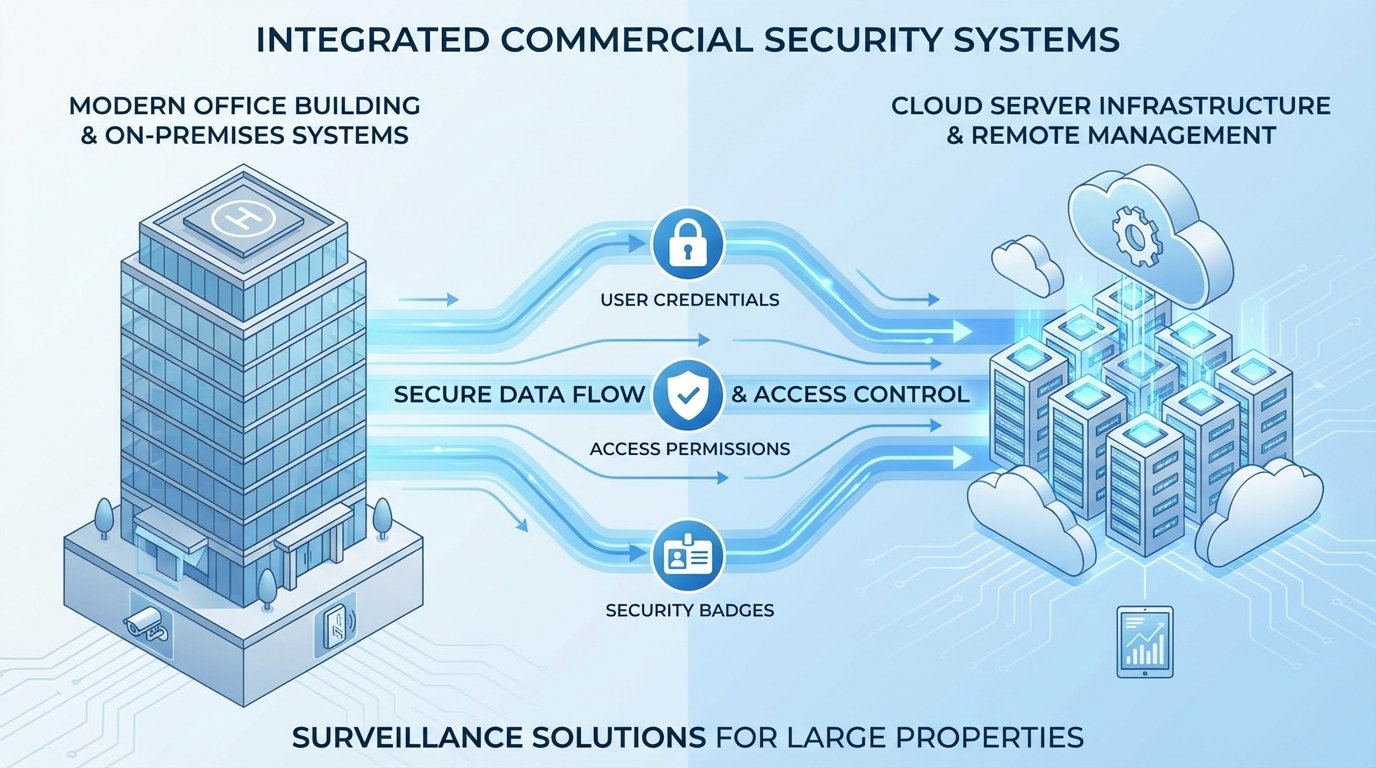
Cloud-based access control systems process credentials, store user permissions, and manage access decisions on remote servers maintained by the manufacturer. Door controllers at your property connect to these cloud servers via your internet connection. When someone presents a credential—whether a card, fob, or smartphone—the local controller communicates with the cloud platform to verify permissions and grant or deny access.
Leading platforms like Brivo pioneered this approach in 1999, creating systems designed from inception to operate entirely in the cloud. Modern solutions such as Verkada have taken this further by integrating cloud-based access control with surveillance cameras and alarm systems into unified management platforms.
The key advantage lies in accessibility. Authorized administrators can manage the entire system—adding users, modifying permissions, reviewing access logs, or responding to alerts—from any device with internet access. Updates and new features deploy automatically without on-site service calls.
On-Premise Access Control Systems
Traditional on-premise systems host all software, databases, and management tools on local servers within your property. Door controllers communicate with these local servers rather than external cloud platforms. Access decisions, credential storage, and system management all occur within your physical infrastructure.
Systems like Napco’s Continental Access Control exemplify this architecture, offering robust, proven technology that operates independently of internet connectivity. For properties with dedicated IT teams or specific security requirements, this local control provides distinct advantages.
Remote access is possible with on-premise systems through VPN connections or secure remote desktop configurations, but requires additional IT infrastructure and security measures your team must implement and maintain.
Critical Considerations for South Florida Properties
Hurricane Preparedness and Business Continuity
South Florida’s hurricane season creates unique operational demands that directly impact access control system selection. During severe weather events, internet connectivity often becomes unreliable or completely unavailable for extended periods.
Cloud-based systems address this through local credential caching. Door controllers store recent credential data locally, allowing the system to continue granting access to authorized users even without cloud connectivity. However, you cannot make system changes—adding emergency responders, modifying permissions for displaced residents, or adjusting access schedules—until connectivity restores.
On-premise systems maintain full functionality during internet outages since all components operate on your local network. As long as your property has backup power for servers and controllers, access control continues normally with complete administrative capability.
For large hotels managing hundreds of guest credentials daily or residential communities coordinating emergency access, this distinction becomes operationally significant. Fortress Global Technology designs both architectures with redundancy appropriate to South Florida conditions, including battery backup systems and generator integration.
Infrastructure Investment and Scalability
Initial capital investment differs substantially between these approaches. Cloud-based access control systems eliminate server hardware costs, reducing upfront expenses. Subscription-based pricing spreads costs over time, which appeals to properties managing capital budgets carefully.
A 300-unit luxury residential tower implementing Brivo’s cloud access control typically invests in door controllers, credentials, and installation labor, with ongoing monthly subscription fees based on door count and feature set. There’s no server to purchase, configure, or replace every five years.
On-premise systems require greater initial investment—servers, database licenses, workstation software, and often dedicated IT infrastructure. However, after this capital expense, ongoing costs consist primarily of maintenance agreements and occasional hardware refreshes rather than perpetual subscription fees.
Scalability considerations also diverge. Cloud platforms expand seamlessly—adding doors, integrating additional buildings, or connecting multiple properties requires no server upgrades or capacity planning. On-premise systems may require server upgrades as door counts increase or when adding resource-intensive features like extensive video integration.
Integration with Property Operations
Modern commercial properties demand integrated security solutions where access control communicates with surveillance cameras, visitor management platforms, property management systems, and building automation.
Cloud-based platforms increasingly offer native integrations. Verkada’s Command platform unifies access control, security cameras, and alarms in one interface. When someone badges into a restricted area after hours, the system automatically pulls up relevant camera views and creates timestamped evidence linking the credential to video footage.
For South Florida hotels, integration between access control and property management systems enables seamless guest experiences. When guests check in through your PMS, their room credentials activate automatically. Checkout triggers immediate deactivation. This integration works with both cloud and on-premise systems, but implementation complexity differs.
On-premise systems often require custom API development and ongoing maintenance to sustain integrations between platforms. Updates to one system may break integrations with another, requiring IT intervention. Cloud platforms with published APIs and integration marketplaces simplify these connections, though you remain dependent on manufacturers maintaining compatibility.
Data Security and Compliance Requirements
Data security concerns frequently dominate access control discussions, particularly for properties handling sensitive information or serving regulated industries.
Cloud-based systems store credential data, access logs, and user information on manufacturer-controlled servers. Reputable providers implement enterprise-grade security—encryption in transit and at rest, SOC 2 compliance, regular security audits, and redundant data centers. You’re trusting the manufacturer’s security posture and operational practices.
This arrangement actually enhances security for most properties. Professional security teams monitoring cloud infrastructure 24/7 typically exceed what individual properties can resource internally. Automatic security updates deploy without administrator action, closing vulnerabilities promptly.
However, certain properties face regulatory requirements or organizational policies prohibiting cloud data storage. Healthcare facilities with HIPAA considerations, government installations, or financial institutions may require on-premise systems where they maintain complete data control.
On-premise systems keep all data within your physical infrastructure and network security perimeter. Your IT team controls access, manages security updates, and implements protective measures according to your standards. This also means your team bears full responsibility for security—implementing patches, monitoring for threats, and maintaining compliance.
Management Complexity and IT Resource Requirements
The human resource implications of each architecture significantly impact total cost of ownership.
Cloud-based access control systems minimize IT demands. The manufacturer handles server maintenance, software updates, database optimization, and platform security. Your team focuses on user management and operational decisions rather than technical infrastructure.
For a 400-unit residential community in Boca Raton without dedicated IT staff, cloud systems enable professional-grade access control without specialized technical expertise. Property managers handle resident credentials through intuitive web interfaces while Fortress Global Technology provides integration support and system optimization.
On-premise systems require ongoing IT attention. Servers need monitoring, operating system updates, database maintenance, and eventual hardware replacement. Software updates require testing and deployment. Backup systems need verification. Security patches demand prompt implementation.
Large commercial office buildings or hotel properties with established IT departments often absorb these responsibilities efficiently. For properties without this infrastructure, these requirements represent hidden ongoing costs through managed services contracts or outsourced IT support.
Mobile Credentials and User Experience
Smartphone-based access has transitioned from novelty to expectation, particularly for luxury residential properties and modern commercial developments.
Cloud-based platforms like Brivo pioneered mobile credentials, allowing residents and employees to access doors using smartphones instead of physical cards or fobs. Credential delivery happens instantly via email or SMS, eliminating physical distribution logistics. Lost phones can be remotely deactivated immediately, and temporary credentials for visitors or contractors expire automatically.
For South Florida’s seasonal residents splitting time between locations, mobile credentials eliminate the “I left my fob up north” scenario. For hotels managing thousands of short-term guests, mobile keys enhance the arrival experience while reducing front desk workload and physical key replacement costs.
On-premise systems have added mobile credential capabilities, but implementation often requires additional infrastructure and may lack the seamless user experience of cloud-native platforms. The credential delivery mechanism, app functionality, and administrative workflow generally reflect the system’s fundamental architecture.
Cost Analysis Over System Lifetime
Evaluating total cost of ownership requires looking beyond initial price tags to five and ten-year projections.
Cloud-based systems feature lower upfront costs but ongoing subscription expenses that compound over time. A 50-door commercial property might pay $200-400 monthly for a fully-featured cloud access control platform. Over ten years, subscription costs could exceed $40,000 beyond initial hardware and installation.
On-premise systems reverse this equation—higher initial investment for servers and software licenses, but minimal ongoing costs beyond maintenance agreements. That same 50-door property might invest $25,000-35,000 initially but pay only $2,000-3,000 annually for support agreements.
The crossover point where cumulative cloud subscription costs exceed on-premise total cost typically occurs between years five and seven, depending on door count, feature requirements, and specific platforms. However, this calculation must include IT labor costs for on-premise systems and factor in eventual server replacement cycles.
For properties planning long-term ownership, on-premise systems may offer better economics. For properties with shorter investment horizons, planned dispositions, or capital constraints, cloud subscription models provide advantages.
Making the Right Choice for Your Property
No universal answer suits every South Florida property. The optimal architecture depends on your specific circumstances, operational requirements, and organizational capabilities.
Cloud-based access control systems excel for:
- Multi-family residential communities without dedicated IT staff
- Properties prioritizing mobile credentials and user convenience
- Multi-site operations requiring centralized management
- Developments wanting rapid deployment and minimal infrastructure
- Properties with capital budget constraints favoring operational expenses
- Organizations valuing automatic updates and minimal IT burden
On-premise access control systems better serve:
- Properties with established IT departments and server infrastructure
- Organizations with data sovereignty requirements or compliance mandates
- Long-term ownership situations where lifecycle costs favor capital investment
- Properties requiring guaranteed functionality during internet outages
- Facilities with complex custom integrations requiring local control
- High-security environments with specific control requirements
Hybrid Approaches and Future Considerations
The distinction between cloud and on-premise continues blurring as manufacturers develop hybrid architectures combining advantages from both approaches.
Some platforms now offer edge-based processing where intelligence resides in local controllers with cloud-based management and monitoring. This architecture maintains local operation during internet disruptions while preserving cloud accessibility and automatic updates.
For South Florida properties, particularly those in hurricane-prone coastal areas, these hybrid solutions warrant serious consideration. They deliver cloud convenience and mobile credential capabilities while maintaining operational resilience during weather events that disrupt connectivity.
As you evaluate options, consider not just current requirements but future needs. How might your property expand? Will you add buildings or amenities? Do you anticipate integrating with additional systems? Parking management? Elevator control? Video surveillance integration?
Smart access control systems designed as integrated security solutions scale and adapt far better than point solutions addressing only immediate needs.
Professional Design and Integration Matters
Regardless of architecture choice, professional design and installation determine system success. Cloud platforms may reduce IT infrastructure complexity, but proper door hardware selection, controller placement, network design, and integration with existing systems require specialized expertise.
Fortress Global Technology approaches every project as a comprehensive security ecosystem rather than isolated product installation. Our licensed electrical contractors handle complete implementations—from low-voltage cabling and network infrastructure to final configuration and staff training. We’re authorized integrators for leading cloud platforms like Verkada and Brivo, as well as on-premise solutions from Napco and others, allowing us to recommend solutions based on your specific requirements rather than product limitations.
For large-scale South Florida properties—luxury residential towers in Boca Raton, beachfront hotels in Fort Lauderdale, commercial office buildings in West Palm Beach—the integration complexity demands experienced professionals who understand both the technology and local operational requirements.
Take the Next Step
Choosing between cloud-based and on-premise access control systems represents a significant decision affecting your property’s security, operations, and budget for years. The right choice depends on your unique circumstances, and professional guidance helps navigate the technical and operational complexities.
Fortress Global Technology provides complimentary security assessments for South Florida commercial properties, multi-family communities, and hospitality facilities. Our consultative approach evaluates your specific requirements, existing infrastructure, operational workflows, and long-term objectives to recommend integrated security solutions tailored to your property.
Contact us today to discuss your access control needs and discover how modern smart access control systems can enhance security while improving operational efficiency across your South Florida property.