
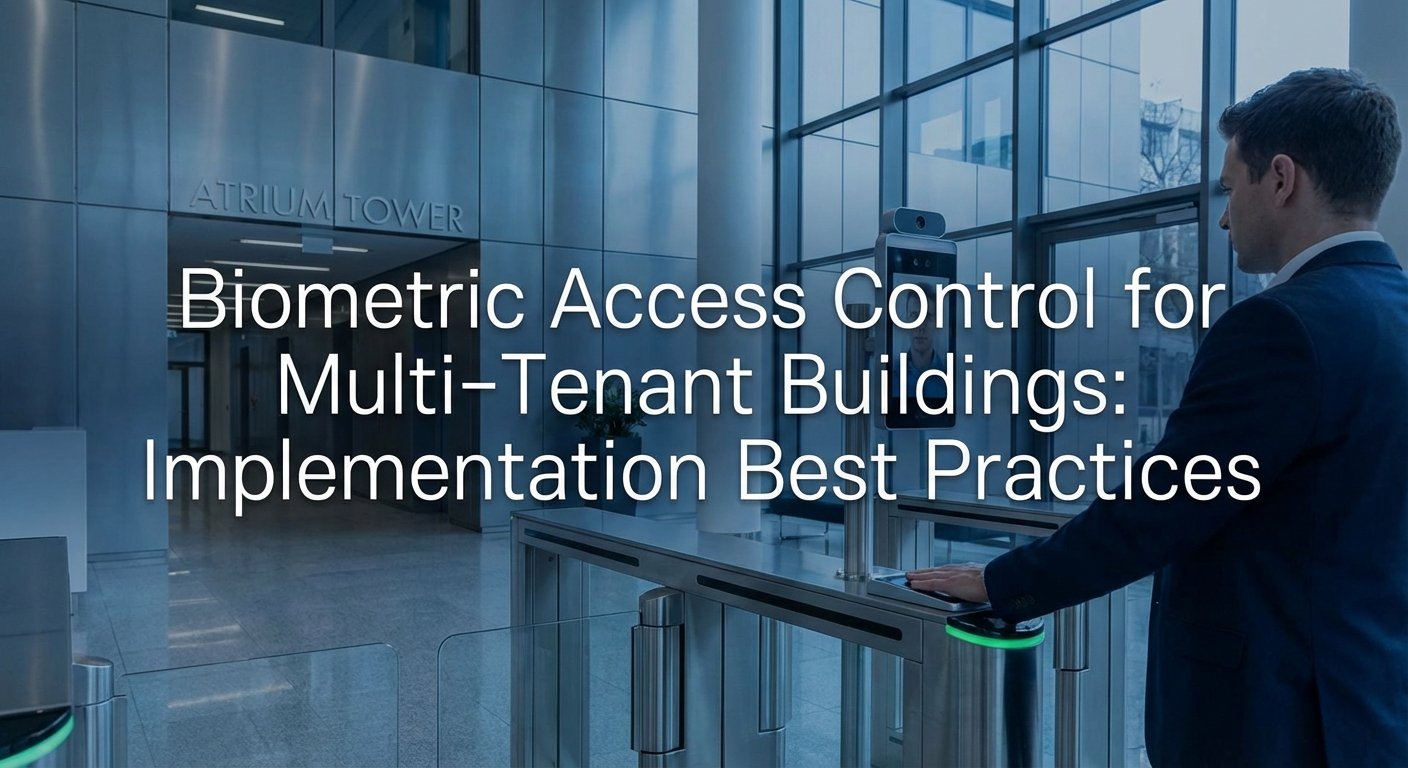
Managing access control across multiple tenants presents unique security challenges that traditional key cards and PIN codes struggle to address. Shared credentials get passed around, access cards are lost or copied, and property managers face constant requests to reprogram access permissions. Biometric access control eliminates these vulnerabilities by verifying identity through fingerprints, facial recognition, or iris scans—credentials that cannot be shared, stolen, or forgotten.
For commercial property managers overseeing office buildings, multi-family residential communities, and mixed-use developments, biometric access control systems represent a significant upgrade in both security and operational efficiency. However, successful implementation requires careful planning around tenant privacy concerns, system integration, and choosing the right biometric modality for your specific property type.
Understanding Biometric Access Control Technology
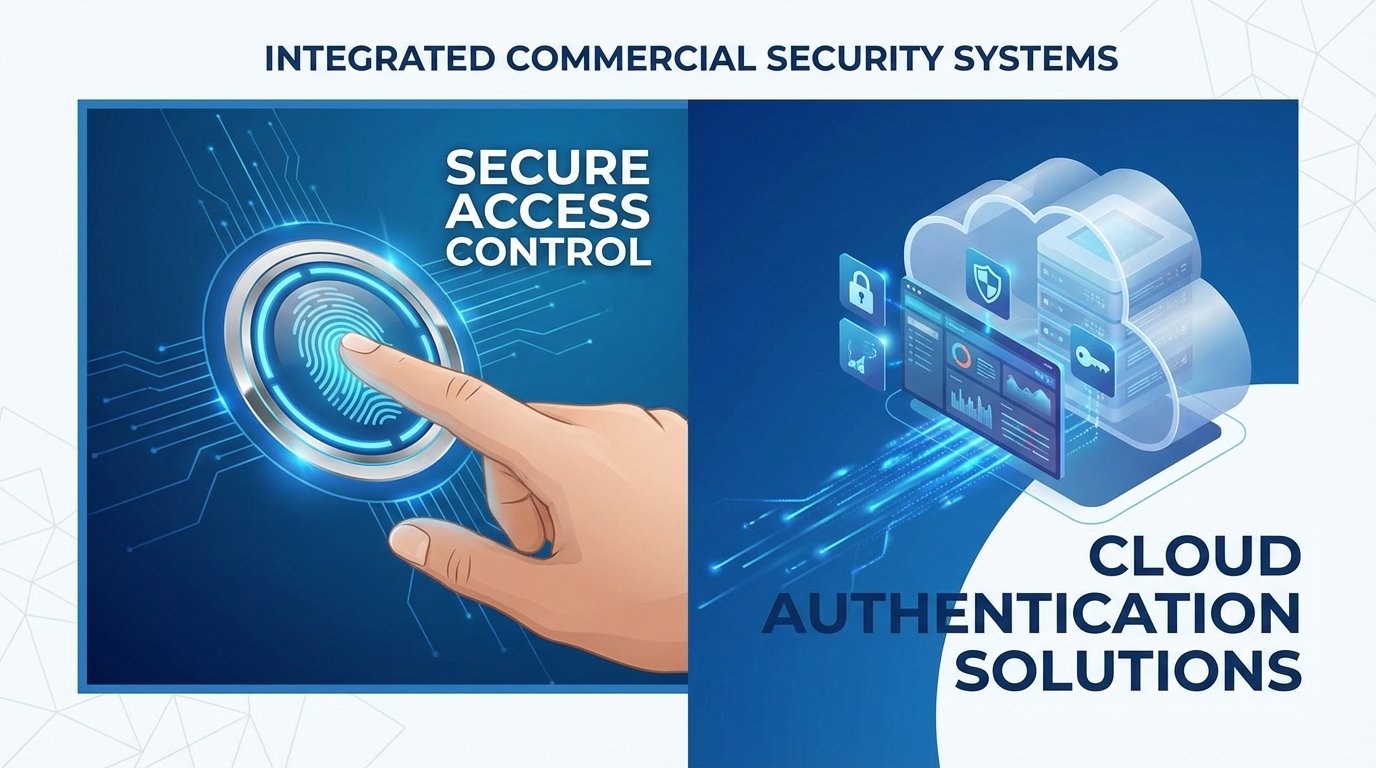
Biometric access control systems authenticate individuals based on unique physical characteristics rather than something they possess (key card) or know (PIN code). Modern commercial access control platforms integrate biometric readers with cloud-based management systems, creating comprehensive security ecosystems that communicate with surveillance cameras, visitor management platforms, and building automation systems.
The most common biometric modalities for multi-tenant buildings include fingerprint recognition, facial recognition, and iris scanning. Each technology offers distinct advantages depending on your property’s security requirements, tenant demographics, and operational workflows.
Fingerprint readers remain the most widely deployed biometric solution due to their balance of accuracy, cost-effectiveness, and user familiarity. Modern capacitive fingerprint sensors capture detailed ridge patterns and can verify identity in under one second, making them suitable for high-traffic entry points.
Facial recognition technology has advanced dramatically with artificial intelligence and machine learning. Contemporary systems from manufacturers like Verkada can identify authorized individuals even with glasses, facial hair changes, or different lighting conditions. These touchless systems became particularly valuable following health concerns about shared-touch surfaces, offering hygienic access without physical contact.
Iris scanning provides the highest accuracy among biometric modalities but typically costs more and requires users to position themselves precisely. This technology suits high-security environments like data centers, executive floors, or restricted areas within larger properties.
Why Multi-Tenant Buildings Benefit From Biometric Access Control
Multi-tenant properties face access control challenges that single-tenant buildings simply don’t encounter. Different tenants require access to different areas, visitor management becomes exponentially more complex, and the sheer volume of credential management creates administrative burdens that traditional systems can’t efficiently handle.
Eliminating Credential Sharing and Unauthorized Access
The fundamental security advantage of biometric access control is that credentials cannot be transferred. In multi-tenant office buildings, employees cannot lend their fingerprint or face to unauthorized individuals. This eliminates the common security gap where key cards get shared among coworkers or contractors gain access through borrowed credentials.
For multi-family residential communities with 200+ units, the problem of shared access credentials becomes particularly acute. Residents give access cards to dog walkers, cleaning services, and guests, creating uncertainty about who actually has building access at any given time. Biometric systems paired with temporary mobile credentials through platforms like Brivo allow residents to grant time-limited access to service providers without compromising long-term security.
Operational Efficiency for Property Management
Property managers spend significant time managing access credentials—issuing new cards, deactivating lost ones, reprogramming access levels when tenants move between spaces. Biometric access control dramatically reduces this administrative burden because credentials are permanently tied to individuals.
When a tenant company adds new employees, their biometric credentials get enrolled once and automatically receive appropriate access permissions based on their role and tenant assignment. When employees leave or tenants vacate, access gets revoked centrally without collecting physical cards or changing lock cores.
Enhanced Audit Trails and Accountability
Multi-tenant access control systems require detailed tracking of who accessed which areas and when. Biometric authentication provides irrefutable audit trails because each access event is definitively linked to a specific individual rather than an anonymized credential number.
This accountability proves invaluable during security investigations or liability disputes. Video management systems from providers like Milestone XProtect can automatically trigger camera recordings when biometric access events occur, creating synchronized video evidence with verified identity information.
Implementation Best Practices for Multi-Tenant Properties
Successful biometric access control deployment in multi-tenant buildings requires addressing technical, operational, and privacy considerations that single-tenant implementations don’t face.
Conduct Comprehensive Security Assessment
Before selecting biometric technology, professional security integrators conduct detailed property assessments identifying access control zones, traffic patterns, and security priorities. Different areas within multi-tenant buildings require different security levels.
Building perimeter access might use facial recognition for contactless convenience during high-traffic morning hours, while rooftop mechanical rooms or electrical closets utilize fingerprint readers for restricted access. Parking garage entry could integrate license plate recognition with biometric verification at pedestrian doors, creating layered security appropriate to each access point’s risk profile.
Fortress Global Technology approaches each property as a unique security ecosystem rather than deploying one-size-fits-all solutions. A Manhattan office tower with elevator integration requirements differs fundamentally from a Palm Beach County mixed-use development with shared amenity spaces.
Choose the Right Biometric Modality for Each Access Point
Strategic biometric deployment considers user experience alongside security requirements. High-traffic main entrances benefit from fast, contactless facial recognition that processes multiple authorized individuals quickly without creating bottlenecks. Service entrances and loading docks might use fingerprint readers where throughput speed matters less than positive verification before allowing access to back-of-house areas.
Multi-family residential properties often implement hybrid approaches—facial recognition at main lobbies for resident convenience, traditional key cards or mobile credentials for amenity spaces, and biometric verification for package rooms or storage areas where theft concerns exist.
Climate considerations matter significantly for outdoor biometric readers. Florida properties require weather-resistant equipment rated for extreme heat, humidity, and potential hurricane conditions. Coastal installations near saltwater face additional corrosion challenges requiring specialized housings and regular maintenance protocols.
Design Tenant-Specific Access Hierarchies
Sophisticated commercial access control systems create granular permission structures where tenant A’s employees access only their leased floors and shared common areas, while tenant B’s personnel access completely different zones. Executive teams might receive after-hours access while general employees face time-restricted permissions.
Cloud-based platforms like Verkada Command or Brivo allow property managers to delegate limited administrative control to individual tenants. Tenant HR departments can enroll their own employees’ biometric credentials and manage their access permissions without gaining visibility into other tenants’ security settings or accessing building-wide system controls.
This delegation reduces property management workload while giving tenants appropriate autonomy over their own security administration.
Integrate With Existing Building Systems
Biometric access control delivers maximum value when integrated into comprehensive smart building security ecosystems rather than operating as isolated technology. Professional integration connects access control with surveillance cameras, elevator controls, visitor management, and building automation systems.
When someone uses biometric authentication to access a multi-tenant office building after hours, integrated systems can automatically illuminate their authorized path, call elevators to appropriate floors, adjust HVAC in their tenant area, and notify security personnel of after-hours access. Surveillance cameras from manufacturers like Axis Communications or Hanwha Vision trigger recordings at access points, creating visual verification synchronized with biometric authentication logs.
For mixed-use developments combining residential, retail, and office components, integration becomes even more critical. A single resident might have biometric access to their residential tower, mobile credentials for the fitness center, and visitor permissions for retail areas—all managed through unified platforms that recognize their various roles within the property.
Address Privacy and Data Protection Concerns
Biometric data represents sensitive personal information requiring careful handling and explicit privacy policies. Successful implementations establish clear data governance addressing what biometric information gets stored, how it’s protected, who can access it, and retention policies.
Modern systems use encrypted biometric templates rather than storing actual fingerprint images or facial photographs. These mathematical representations cannot be reverse-engineered to recreate the original biometric, addressing privacy concerns while maintaining security effectiveness.
Property managers should provide transparent enrollment processes where individuals understand what biometric data gets collected and how it’s used. Clear privacy policies addressing data retention after tenant departure build trust and ensure compliance with evolving biometric privacy regulations.
Multi-tenant buildings might consider voluntary biometric enrollment with traditional credential alternatives for individuals who decline biometric authentication. This accommodates privacy preferences while still offering enhanced security for participating users.
Plan for Scalability and Future Growth
Commercial properties evolve over time with tenant turnover, lease expansions, and changing security requirements. Custom security solutions should accommodate growth without requiring complete system replacement.
Cloud-based access control platforms scale efficiently as properties add doors, integrate additional buildings, or expand to multiple locations. A property management company operating buildings across South Florida and New York can manage all properties through unified platforms with local support teams available in each market.
Professional security integrators design infrastructure supporting future technology additions. Properly installed network cabling, adequate power distribution, and sufficient network bandwidth allow properties to add biometric readers, integrate new camera systems, or upgrade to emerging technologies without infrastructure limitations.
Professional Installation Requirements
Biometric access control systems for multi-tenant buildings require professional installation by licensed contractors who understand electrical codes, network infrastructure, and integration complexity. Unlike simple residential smart locks, commercial implementations involve coordinating multiple technology platforms, ensuring code compliance, and designing reliable systems that operate 24/7 without failure.
Licensed electrical contractors handle complete installations from low-voltage cabling and network infrastructure to final system configuration. Fortress Global Technology’s capabilities span the entire implementation lifecycle—initial security assessment, custom system design, permitting and code compliance, professional installation, comprehensive testing, and ongoing support throughout the system’s operational life.
Multi-tenant properties cannot afford security system downtime or access control failures that prevent legitimate users from accessing their spaces. Professional installation includes redundancy planning, backup power integration, and failsafe mechanisms ensuring access during network disruptions.
Choosing the Right Integration Partner
Successful biometric access control implementation depends on partnering with experienced security technology integrators who specialize in complex, large-scale commercial properties rather than product resellers focused on transactional sales.
Look for integration partners who are authorized dealers for leading access control manufacturers, maintain relevant electrical and security licensing, demonstrate experience with properties similar to yours, and provide local support teams rather than distant call centers. Companies serving markets nationwide while maintaining deep local expertise offer the ideal combination of resources and responsiveness.
Request detailed security assessments before receiving proposals. Professional integrators invest time understanding your property’s unique characteristics, tenant mix, security challenges, and operational requirements before recommending specific technologies. Cookie-cutter proposals suggesting identical systems for different property types indicate lack of true consultation.
Secure Your Multi-Tenant Property With Integrated Biometric Solutions
Biometric access control represents a significant security upgrade for multi-tenant commercial properties, eliminating credential sharing vulnerabilities while improving operational efficiency and creating irrefutable audit trails. However, successful implementation requires careful planning around technology selection, tenant privacy, system integration, and professional installation.
Fortress Global Technology specializes in designing comprehensive security ecosystems for large-scale commercial properties including multi-tenant office buildings, multi-family residential communities, mixed-use developments, and hotels throughout South Florida and nationwide. Our licensed contractors handle complete implementations from initial assessment through ongoing support, ensuring your biometric access control system integrates seamlessly with surveillance, visitor management, and building automation platforms.
Contact our team today to schedule a comprehensive security assessment for your multi-tenant property. We’ll evaluate your specific requirements, recommend appropriate biometric technologies, and design custom security solutions that protect your property investment while improving tenant experience and operational efficiency.