
Florida’s regulatory landscape for commercial security systems continues to evolve, and staying compliant isn’t optional—it’s essential for protecting your investment, avoiding costly fines, and ensuring your security infrastructure actually works when you need it most. Whether you’re managing a 300-room hotel in Boca Raton, overseeing a multi-family residential tower in Fort Lauderdale, or securing a Class A office building in West Palm Beach, understanding and meeting these compliance requirements will determine whether your security system becomes an asset or a liability.
As of 2026, commercial property owners face a complex web of regulations spanning electrical codes, data privacy laws, building requirements, and industry-specific standards. Unlike residential security installations, commercial properties carry significantly higher liability exposure and must meet stricter standards. Here’s what you need to know to keep your property compliant and protected.
1. Florida Building Code and Low-Voltage System Requirements
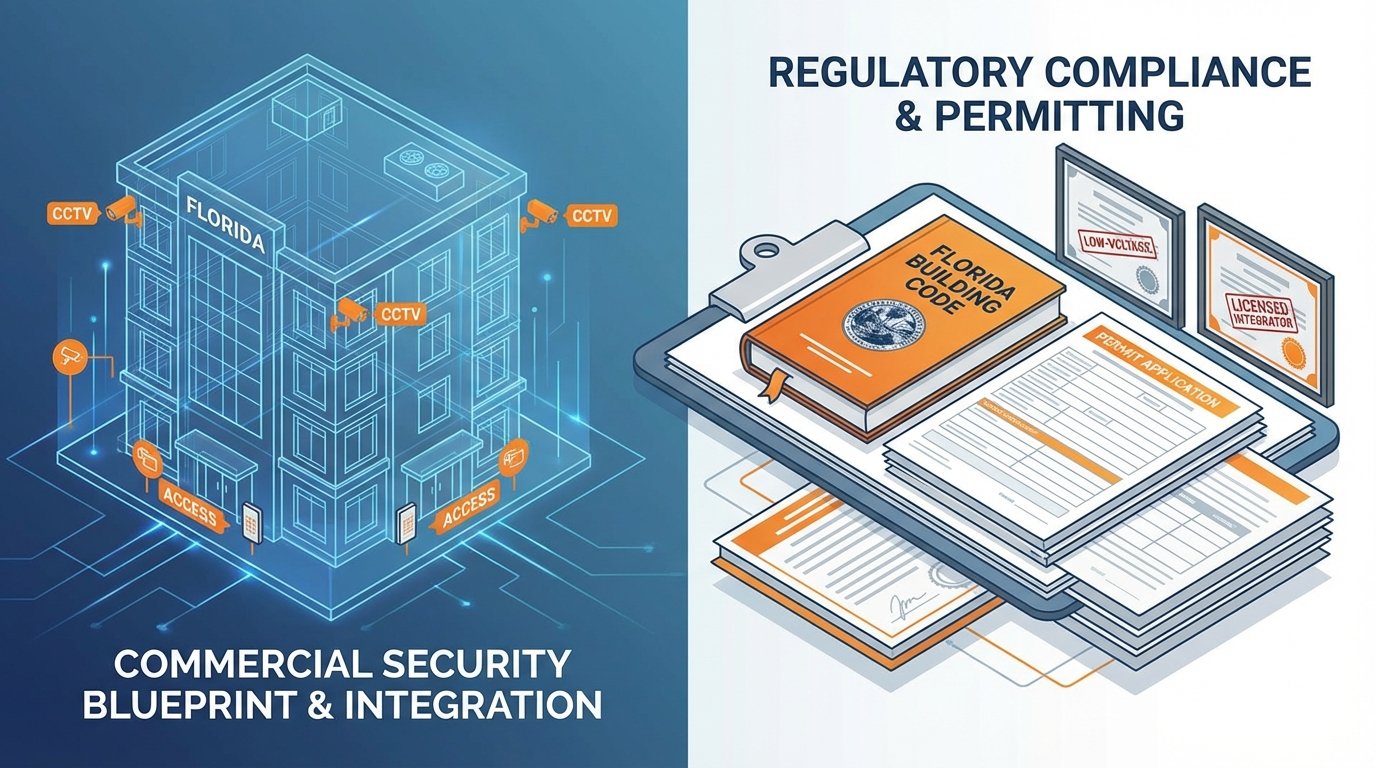
The Florida Building Code governs all commercial security installations, and compliance begins before a single camera or card reader is mounted. Many property owners don’t realize that security system installation isn’t simply a matter of plugging in devices—it requires proper permitting, licensed contractors, and adherence to specific electrical standards.
Licensed Electrical Contractor Requirements
Florida law requires that security system installations involving low-voltage wiring be performed by state-licensed electrical contractors. This isn’t bureaucratic red tape—it’s about ensuring safety, reliability, and proper integration with your building’s electrical infrastructure. Unlicensed installation can void equipment warranties, create insurance complications, and expose you to liability if system failures occur during security incidents.
When integrating access control systems with elevator controls, parking revenue systems, or building management platforms, the complexity increases exponentially. A licensed contractor understands load calculations, proper grounding to prevent electrical interference, and code-compliant cable routing that won’t fail during the system’s lifespan.
Hurricane and Wind Load Compliance
Florida’s unique weather challenges create additional compliance layers. Outdoor security cameras, perimeter sensors, and access control hardware must meet wind load requirements specific to your property’s wind zone. Palm Beach County, Broward County, and Miami-Dade County each have specific requirements based on proximity to the coast and elevation.
Commercial security camera installation in hurricane-prone areas demands impact-rated equipment housings and mounting systems engineered to withstand 150+ mph winds. Following Hurricane Ian in 2022 and subsequent storms, building officials have increased scrutiny of outdoor security equipment installations. Your surveillance system won’t protect your property if it’s torn off the building during the first major storm.
Permitting and Inspection Process
Commercial security system installations require building permits in most Florida jurisdictions. The permitting process involves plan submission showing equipment locations, cable pathways, power sources, and integration points. Inspections verify proper installation before systems go live.
This process typically takes 2-4 weeks and requires detailed technical documentation. Properties attempting to bypass permitting face stop-work orders, removal requirements, and potential fines. More importantly, unpermitted work discovered during property sales or refinancing can derail transactions and reduce property values.
2. Data Privacy and Information Security Compliance
Security systems collect vast amounts of sensitive data—video footage of people, access logs showing employee movements, visitor information, and license plate data from parking facilities. How you handle this data carries significant legal obligations that have expanded dramatically in recent years.
GDPR and International Privacy Standards
While the General Data Protection Regulation is European legislation, it affects Florida commercial properties more than many realize. If your hotel hosts international guests, your office building employs European residents, or your multi-family property has tenants from EU countries, GDPR compliance becomes mandatory. Violations carry penalties up to €20 million or 4% of global revenue—whichever is higher.
Modern access control systems using mobile credentials, visitor management platforms collecting guest information, and cloud-based security cameras with facial recognition capabilities all trigger GDPR considerations. You must provide data processing agreements, maintain clear privacy policies, allow data access requests, and implement data retention limits.
Florida Information Protection Act (FIPA)
Florida’s data breach notification law requires commercial entities to notify affected individuals within 30 days of discovering unauthorized access to personal information. For security systems, this includes access control databases containing employee information, visitor management records with identification details, and video analytics data tied to individuals.
Compliance means implementing proper cybersecurity measures for your security infrastructure. Cloud-based access control systems like Brivo and Verkada build encryption and multi-factor authentication into their platforms, but on-premise systems require additional security layers. Network segmentation, regular security audits, and documented data handling procedures aren’t optional—they’re compliance requirements.
Video Retention Requirements and Best Practices
Different property types face varying video retention requirements. Hotels typically maintain 30-90 days of footage to address guest incidents and liability claims. Multi-family residential properties often retain 30-60 days. Commercial office buildings may need 60-90 days or longer for employee-related investigations.
However, data privacy security systems must balance retention needs against privacy principles. Keeping footage indefinitely exposes you to unnecessary data breach risks and privacy violations. Modern platforms like Axis Communications cameras with edge storage and Milestone Systems VMS allow granular retention policies—automatically deleting routine footage while preserving flagged incidents.
3. Americans with Disabilities Act (ADA) Compliance
ADA compliance extends beyond ramps and parking spaces to encompass security systems. Commercial properties must ensure security infrastructure doesn’t create barriers for individuals with disabilities while still maintaining effective protection.
Access Control Accessibility Requirements
Card readers, keypads, and biometric devices must be mounted at ADA-compliant heights—typically 48 inches maximum for side reaches and 44 inches for front approaches. Button-operated door releases must be positioned within reach ranges and require no more than 5 pounds of activation force.
For properties implementing mobile credential systems through Brivo or other smartphone-based platforms, you must provide alternative access methods for individuals who don’t use smartphones or have visual impairments that make mobile apps challenging to use.
Intercom and Communication System Accessibility
Video intercoms at building entrances, parking garage entry stations, and elevator emergency communications must accommodate hearing and speech impairments. This means providing visual indicators, text-based communication options, and ensuring two-way audio systems have sufficient volume and clarity.
Properties with 500+ space parking facilities implementing intercom systems at entry gates must position equipment at accessible heights and provide visual confirmation that calls are connected. Emergency call stations require both audio and visual signals.
Visual Fire Alarm Integration
While primarily a life safety code requirement, security system integration with fire alarm systems must maintain ADA compliance. Access control systems that automatically unlock doors during fire emergencies should provide clear visual and audible indicators. Stairwell door access control must allow free egress while preventing unauthorized re-entry on floors other than the ground level.
4. Industry-Specific Regulatory Requirements
Beyond general commercial regulations, certain property types face additional compliance layers that directly impact security system design and operation.
Hotel and Hospitality Security Requirements
Florida hotels must comply with specific security provisions following high-profile incidents that led to legislative changes. Guest room door access control systems must create audit trails showing who accessed rooms and when. Electronic locks must fail-secure (remaining locked during power loss) while maintaining fire egress capabilities.
Hotels with parking facilities must provide adequate surveillance coverage of guest parking areas. Loading dock access requires both access control and camera coverage to prevent theft and unauthorized access to back-of-house areas. Integration between the property management system and access control platforms like Brivo enables automatic credential provisioning and deactivation synchronized with guest check-in and checkout.
Healthcare and HIPAA Considerations
Medical office buildings, outpatient facilities, and healthcare campuses must ensure security systems support HIPAA compliance. This means restricting access to areas where protected health information is stored or discussed, maintaining audit trails of all access events, and ensuring video surveillance doesn’t capture patient information on screens or documents.
Access control systems like Napco Continental provide granular access scheduling and zone restrictions necessary for healthcare environments. Integration with nurse call systems and emergency response platforms requires careful planning to meet both security and patient care requirements.
Multi-Family Residential Fair Housing Act Compliance
Apartment communities and condominium properties must ensure security systems don’t create discriminatory barriers. Facial recognition technology in access control raises particular concerns—studies have documented higher error rates for certain demographic groups, potentially creating access difficulties that violate Fair Housing regulations.
Visitor management systems must apply screening criteria consistently across all residents. Communities cannot implement security measures that have disparate impacts on protected classes without documented safety justifications.
5. Cybersecurity and Network Infrastructure Standards
Modern commercial security systems are IP-based networks vulnerable to the same cyber threats facing all connected infrastructure. Compliance increasingly means demonstrating proper cybersecurity practices to insurance carriers, regulators, and during due diligence for property transactions.
Network Segmentation Requirements
Security system networks should never share infrastructure with guest WiFi, public-facing networks, or uncontrolled devices. Proper network design places security cameras, access control systems, and related infrastructure on isolated VLANs with strict firewall rules controlling traffic flow.
When implementing platforms like Verkada’s cloud-based Command system or Hanwha Vision’s WAVE VMS, network architecture determines both performance and security. Working with network infrastructure specialists like Velocity MSC ensures proper VLAN configuration, quality of service settings, and bandwidth allocation for hundreds of cameras streaming simultaneously.
Credential Management and Multi-Factor Authentication
Every access control system creates accounts with privileges to unlock doors, view video, and modify system settings. Weak credential management represents a significant vulnerability. Compliance best practices require unique user accounts (never shared credentials), strong password policies, and multi-factor authentication for administrative access.
Cloud access control platforms build these features in—Brivo requires multi-factor authentication for administrative access and maintains detailed audit logs of all system changes. On-premise systems require additional configuration and ongoing management to maintain security.
Firmware Updates and Patch Management
Security vulnerabilities in cameras, access controllers, and video management systems emerge regularly. Manufacturers release firmware updates addressing these vulnerabilities, but updates don’t install themselves. Compliance means maintaining a documented patch management process ensuring security equipment receives timely updates.
This represents a significant advantage of platforms like Verkada, where firmware updates deploy automatically through the cloud platform. Traditional systems require manual updates across potentially hundreds of devices—a process many properties neglect until vulnerabilities are exploited.
Vendor Security Assessments
Your security system vendor’s cybersecurity practices directly impact your risk exposure. Cloud platforms store your video footage and access control data on their servers. Integration partners connect to your network infrastructure. Compliance due diligence requires understanding vendor security certifications, data handling practices, and breach notification procedures.
Established manufacturers like Axis Communications, Hanwha Vision, and Milestone Systems maintain SOC 2 compliance, undergo regular security audits, and publish security bulletins. When evaluating security technology partners, reviewing these credentials isn’t optional—it’s essential compliance verification.
Implementing Compliant Commercial Security Systems
Meeting these five compliance requirements simultaneously requires experienced integration specialists who understand the interplay between building codes, data privacy laws, accessibility standards, industry regulations, and cybersecurity best practices. A comprehensive approach considers compliance from initial system design through ongoing operation and maintenance.
Effective compliance starts with proper planning. Security system design should include review by specialists familiar with Florida building codes, ADA requirements, and industry-specific regulations. Integration between access control systems, surveillance platforms, and property management software must consider data privacy implications and cybersecurity requirements.
Professional installation by licensed electrical contractors ensures building code compliance and proper permitting. Attempting to bypass these requirements might save short-term costs but creates long-term liability exposure that far exceeds any initial savings. Insurance claims denied due to unpermitted work, fines from building code violations, or data breach penalties from inadequate security measures represent catastrophic financial risks.
Ongoing compliance requires documented policies, regular system audits, and staying current with evolving regulations. Working with a security technology integrator who provides lifecycle support—not just installation-and-goodbye service—ensures your systems remain compliant as requirements change and technology evolves.
Protect Your Property Investment Through Compliance
Commercial security systems represent significant investments protecting even larger property assets. Compliance requirements might seem burdensome, but they serve essential purposes—ensuring systems work reliably, protecting sensitive data, maintaining accessibility for all users, meeting industry standards, and defending against cyber threats.
For large-scale properties across Palm Beach County, Broward County, and Miami-Dade County, partnering with experienced security technology integrators ensures comprehensive compliance while delivering integrated security ecosystems tailored to your property’s specific needs.
Fortress Global Technology specializes in designing, installing, and maintaining compliant commercial security systems for hotels, multi-family residential communities, office buildings, and complex commercial properties throughout Florida. As a licensed electrical contractor with 20+ years of experience and authorized partnerships with leading manufacturers including Verkada, Brivo, Axis Communications, Hanwha Vision, and Milestone Systems, we navigate Florida’s compliance landscape while delivering security solutions that protect your property and your investment.
Contact Fortress Global Technology today to schedule a comprehensive security assessment for your commercial property. Our team will evaluate your current compliance status, identify gaps, and design integrated solutions meeting all regulatory requirements while delivering superior protection and operational efficiency.