
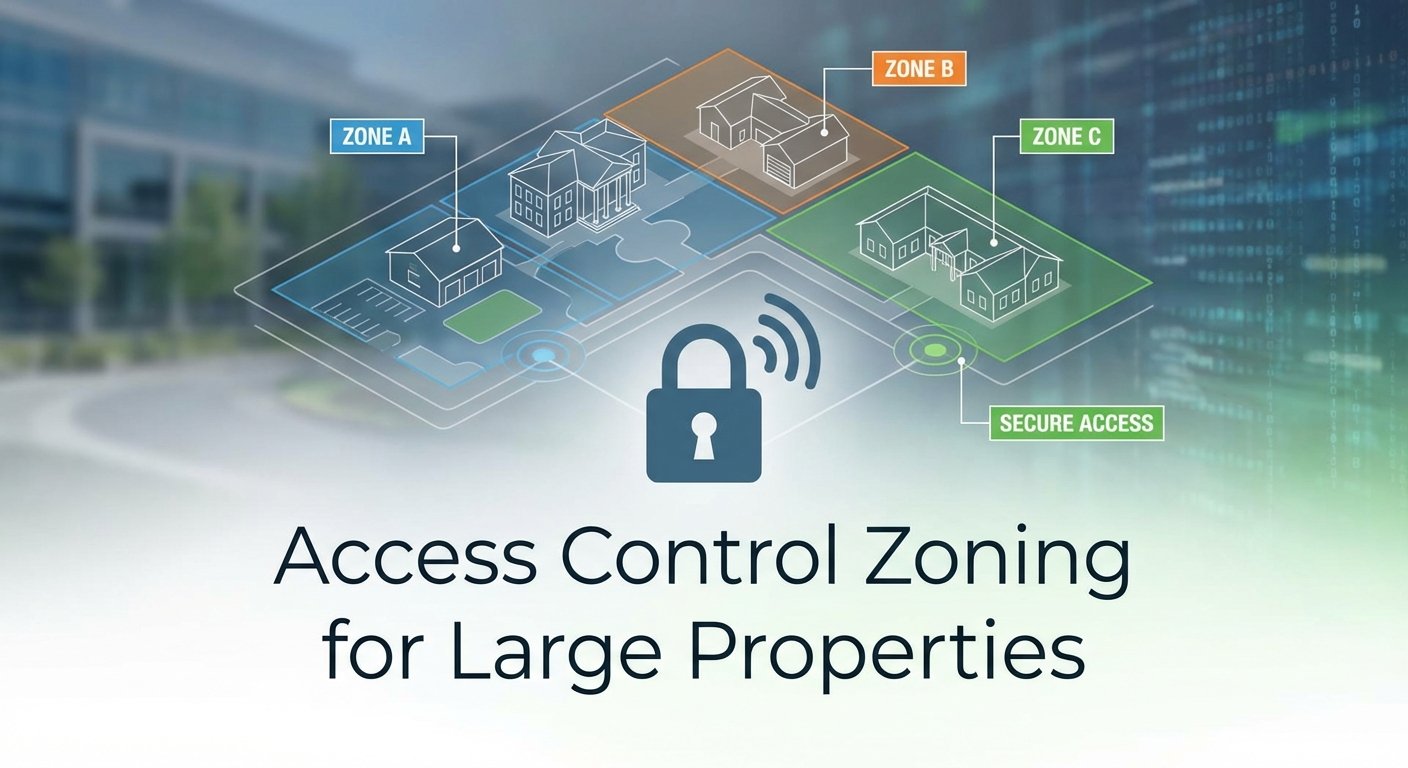
A loading dock door opens at 2 AM. A tenant accesses the rooftop pool during closed hours. An unauthorized visitor reaches a restricted floor. Without proper access control zoning, these scenarios represent security vulnerabilities that expose property owners to theft, liability claims, and operational chaos. For large commercial properties, multi-family residential communities, and mixed-use developments, implementing zone-based access control isn’t just about security—it’s about creating intelligent boundaries that protect assets, reduce insurance liability, and streamline property management.
Access control zoning divides properties into distinct security areas, each with specific permissions, time restrictions, and user access levels. This approach transforms a simple door lock system into a comprehensive security strategy that adapts to how different people legitimately use your property throughout the day.
Understanding Access Control Zones
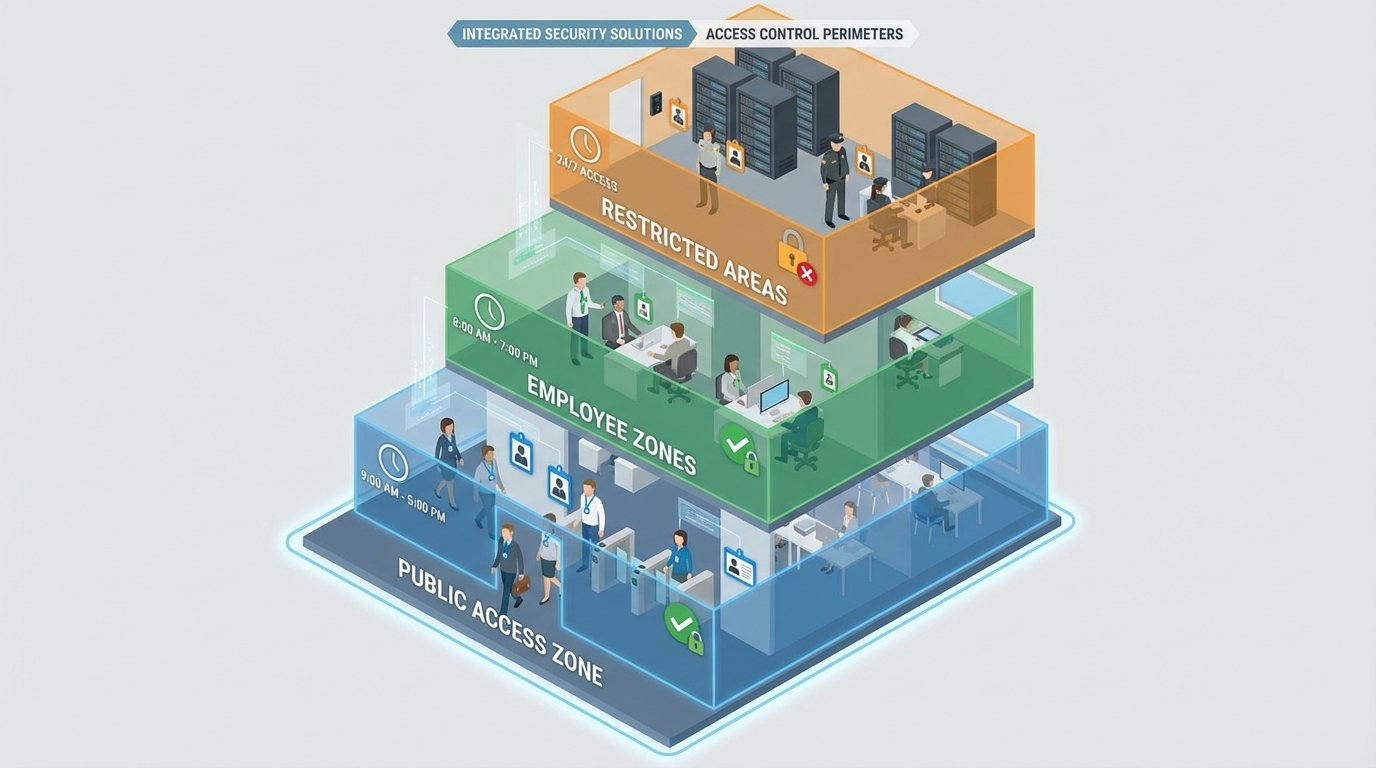
Access control zoning creates virtual security perimeters within your property. Each zone operates with independent rules determining who can enter, when they can access the area, and under what conditions entry is permitted. Unlike traditional key systems where a single key might open multiple doors, zone-based access control systems provide granular control over every entry point.
For a 400-unit luxury high-rise in Brickell, zones might include the main lobby, residential floors, amenity levels, parking garage, service areas, rooftop, and mechanical rooms. Each zone maintains distinct access parameters. Residents access their specific floor and common amenities. Maintenance staff reach service corridors and mechanical spaces. Visitors remain restricted to the lobby and designated amenity areas during approved hours.
Commercial office buildings implement zoning differently. A Class A office tower might establish zones for the lobby, individual tenant suites, shared conference facilities, executive floors, parking levels, and loading docks. Multi-tenant access control becomes manageable when each business operates within defined boundaries while sharing common areas according to lease agreements.
The Security Benefits of Proper Zoning
Zone-based access control prevents security breaches by containing movement within authorized areas. When someone uses credentials to enter one zone, the system doesn’t automatically grant access to adjacent spaces. This containment principle stops unauthorized exploration of your property.
Perimeter and Interior Zoning
Effective zoning starts at property boundaries and progressively restricts access as users move toward sensitive areas. A hotel property demonstrates this layered approach clearly. The outermost zone includes parking areas accessible to guests and visitors. The next zone encompasses public spaces like the lobby and restaurant. Guest room floors form another zone restricted to registered guests and housekeeping. Back-of-house areas—kitchens, laundry, storage—create a service zone accessible only to staff. Administrative offices, IT rooms, and cash handling areas represent the highest security zones with minimal authorized users.
This progressive restriction means a security breach at the perimeter doesn’t compromise interior spaces. If someone tailgates through a parking gate, they still cannot access guest floors, service areas, or administrative offices without proper credentials.
Time-Based Zone Activation
Smart access control systems apply temporal restrictions to zones, automatically adjusting permissions based on time of day, day of week, or specific dates. Pool areas grant access from 6 AM to 10 PM. Loading docks accept deliveries only during business hours. Parking gates operate differently for monthly parkers versus daily visitors.
These time-based rules reduce liability exposure significantly. When automated systems enforce posted hours for amenity areas, property managers gain defensible documentation if accidents occur during unauthorized use. The access control system creates an audit trail proving the area was closed and the individual circumvented security measures to gain entry.
Liability Reduction Through Access Documentation
Every credential scan, door opening, and access denial generates a permanent record in modern commercial access control systems. This documentation proves invaluable when investigating incidents, defending liability claims, or demonstrating security compliance.
When a slip-and-fall claim alleges inadequate lighting in a parking garage at midnight, access control logs show exactly who entered that zone and when. If the claimant wasn’t a registered resident or authorized guest, the documentation supports your defense. If they accessed the area outside permitted hours by following another vehicle, video surveillance integrated with your access control system provides the evidence.
For properties handling sensitive operations—medical offices with patient records, financial institutions, legal firms—zone-based access control with detailed logging demonstrates compliance with privacy regulations. You can prove that only authorized personnel accessed secure file rooms and document exactly when those entries occurred.
Implementing Zones by Property Type
Multi-Family Residential Communities
Large apartment complexes and condominium towers require sophisticated zoning to balance security with resident convenience. Residents expect seamless access to their units and shared amenities while maintaining privacy from unauthorized visitors.
Common zones include:
- Parking areas: Vehicle gates using license plate recognition or RFID tags, with pedestrian access points requiring credentials
- Building entrances: Primary lobbies accessible to residents, guests with temporary credentials, and delivery personnel during specified hours
- Residential floors: Elevator access restricted by floor, ensuring residents reach only their designated level
- Amenity spaces: Pools, fitness centers, clubhouses, and business centers with scheduled access and occupancy tracking
- Package rooms: Secure parcel lockers requiring authentication to retrieve deliveries
- Service areas: Maintenance shops, storage, and utility rooms restricted to staff
- Rooftops and restricted spaces: Emergency exit compliance with delayed egress and alarm notification
Integrated security solutions from companies like Brivo enable mobile credentials for residents, allowing smartphone-based access to all authorized zones. Temporary credentials grant visitors time-limited access to specific areas—a guest receives lobby and pool access for a weekend visit, but cannot reach residential floors unescorted.
Commercial Office Buildings
Office properties balance tenant privacy, shared resource access, and building operations. Zone architecture typically includes tenant-specific areas, shared conference facilities, and building management spaces.
Multi-tenant access control challenges include preventing after-hours access to other tenants’ suites while allowing 24/7 access to your own space. Elevator integration becomes critical—pressing a floor button requires valid credentials for that zone. This prevents the common vulnerability of unrestricted elevator access after passing a single security checkpoint.
Executive floor access within tenant spaces creates zones-within-zones. A law firm might grant all employees access to general office areas while restricting the senior partner floor to specific personnel.
Hotels and Hospitality Properties
Hotels implement dynamic zoning that changes based on reservation status. When guests check in, their key cards automatically receive credentials for their room, elevator access to that floor, fitness center, pool, and designated parking. Upon checkout, these permissions expire immediately.
Service staff receive time-based credentials. Housekeeping accesses guest rooms only during designated cleaning hours. Maintenance personnel reach mechanical spaces and utility areas. Catering staff enter event spaces during setup and service windows. This prevents unauthorized access outside working hours and creates accountability for who entered guest areas and when.
Integration with property management systems automates credential updates. As reservations change, access permissions adjust automatically without manual reprogramming. Verkada’s cloud-based access control platform excels in these scenarios, providing real-time updates across distributed hotel properties.
Parking Facilities and Garages
Large parking structures benefit from vertical and horizontal zoning. Monthly parkers access all levels at any hour. Daily parkers use only lower levels during facility hours. Reserved spaces on premium levels require specific credentials. Service areas and mechanical rooms remain restricted to maintenance personnel.
License plate recognition systems create seamless vehicle zoning. When a registered vehicle enters, gates open automatically and cameras document the entry. Surveillance systems from Axis Communications or Hanwha Vision integrate with access control to provide visual verification of vehicle and occupant credentials.
Integration with Surveillance and Intrusion Detection
Access control zones become significantly more powerful when integrated with surveillance cameras and intrusion detection systems. This integration transforms separate security tools into a unified response platform.
When someone badges into a restricted zone after hours, integrated security solutions automatically trigger several responses: cameras in that zone begin recording at higher frame rates, security personnel receive real-time alerts with live video feeds, and additional cameras along likely travel paths activate to track movement. If someone enters a zone they’re not authorized to access, the system immediately notifies security with the person’s identity, entry point, and live video.
For high-security zones like server rooms, pharmaceutical storage, or cash handling areas, access control integration with intrusion detection provides layered protection. Motion sensors inside these spaces activate when rooms should be empty. If someone enters without proper credentials—even if they bypass the access control—motion detectors trigger alarms and lock down adjacent zones.
Milestone Systems’ XProtect platform provides enterprise-grade integration, combining access control events with video management and analytics. When investigating incidents, security teams review synchronized timelines showing access card scans alongside corresponding video footage.
Managing Zones with Cloud-Based Systems
Cloud-based access control systems simplify zone management across large properties and multi-site portfolios. Instead of programming each door controller individually, administrators manage all zones from centralized web dashboards accessible anywhere.
This centralized management proves essential for properties with hundreds or thousands of credential holders. When an employee terminates, one click revokes access across all zones instantly. When contractors need temporary access to specific service areas, administrators grant time-limited credentials to precise zones without creating permanent permissions.
For property management companies operating multiple buildings, cloud platforms provide unified zone templates. Configure a standard zone structure for apartment communities—lobby, floors, amenities, service areas—then replicate it across your portfolio. Adjust individual properties as needed while maintaining consistent security standards.
Brivo’s mobile credential technology enhances zone management by eliminating physical cards. Residents and employees receive virtual credentials on smartphones, and administrators adjust zone permissions remotely. When someone loses a phone, credentials deactivate instantly without replacement card costs.
Compliance and Insurance Benefits
Proper access control zoning demonstrates security due diligence to insurance carriers and regulatory agencies. Properties with documented zone-based access control often qualify for reduced insurance premiums because they’ve minimized risk exposure through systematic access management.
Healthcare facilities using access control zoning to protect patient records meet HIPAA requirements for physical security safeguards. The detailed audit logs prove that only authorized personnel accessed medical record storage areas.
Properties subject to building codes requiring separate egress monitoring use access control zoning to track emergency exit usage while maintaining fire safety compliance. Delayed egress devices allow immediate exit during emergencies while deterring unauthorized use of fire exits for convenience access.
Implementing Effective Zone Design
Successful zone implementation begins with comprehensive property assessment. Security integrators like Fortress Global Technology analyze traffic patterns, identify sensitive areas, evaluate existing vulnerabilities, and design zone architecture matching operational requirements.
Start by mapping all access points—pedestrian doors, vehicle gates, elevators, stairwells, and loading docks. Categorize spaces by sensitivity level and operational function. Identify who needs access to each area and when that access should be permitted.
For a 300-room beachfront resort, this assessment reveals distinct operational zones: public beach access areas, guest room towers, convention spaces that transition between private events and public use, back-of-house service corridors, administrative offices, and engineering spaces. Each requires different access rules, time restrictions, and credential types.
Professional installation by licensed electrical contractors ensures proper network infrastructure supporting zone-based systems. Access control relies on stable network connectivity between door controllers, credential readers, and management servers. Poor network design creates vulnerabilities where zones fail to communicate authorization decisions properly.
Fortress Global Technology’s Integrated Approach
Since 2004, Fortress Global Technology has designed and implemented zone-based access control systems for large commercial properties nationwide. As authorized dealers for leading platforms including Verkada, Brivo, Axis Communications, and Napco Security Technologies, we specify the right technology for each property’s unique requirements.
Our licensed electrical contractors handle complete installations—from low-voltage cabling and network infrastructure to system configuration and staff training. We don’t just install access control equipment; we engineer comprehensive security ecosystems where access control zones communicate with surveillance cameras, parking systems, visitor management platforms, and property management software.
For properties throughout Palm Beach County, Broward County, and Miami-Dade, our local support teams provide ongoing system management and rapid response when adjustments are needed. When New York City clients require access control for Manhattan high-rises or Brooklyn mixed-use developments, we bring the same integration expertise and long-term support commitment.
Protecting Your Investment Through Smart Access Control
Large commercial properties represent significant financial investments requiring protection through systematic security measures. Access control zoning provides that protection by creating intelligent boundaries that adapt to how your property operates throughout each day.
The liability reduction alone justifies zone-based access control implementation. Detailed audit logs, time-based restrictions, and automated enforcement of security policies provide defensible documentation when incidents occur. Integration with surveillance and intrusion detection creates layered security that prevents breaches and enables rapid response when unauthorized access attempts occur.
Whether you’re managing a luxury apartment tower, operating a commercial office building, or securing a hospitality property, proper access control zoning transforms security from a reactive expense into a proactive asset protection strategy.
Contact Fortress Global Technology today to schedule a comprehensive security assessment for your property. Our team will evaluate your current access control systems, identify vulnerabilities, and design a zone-based solution that reduces liability while improving operational efficiency. Call us at (954) 289-2522 or visit our Boca Raton office to discuss how integrated security solutions can protect your property investment.