
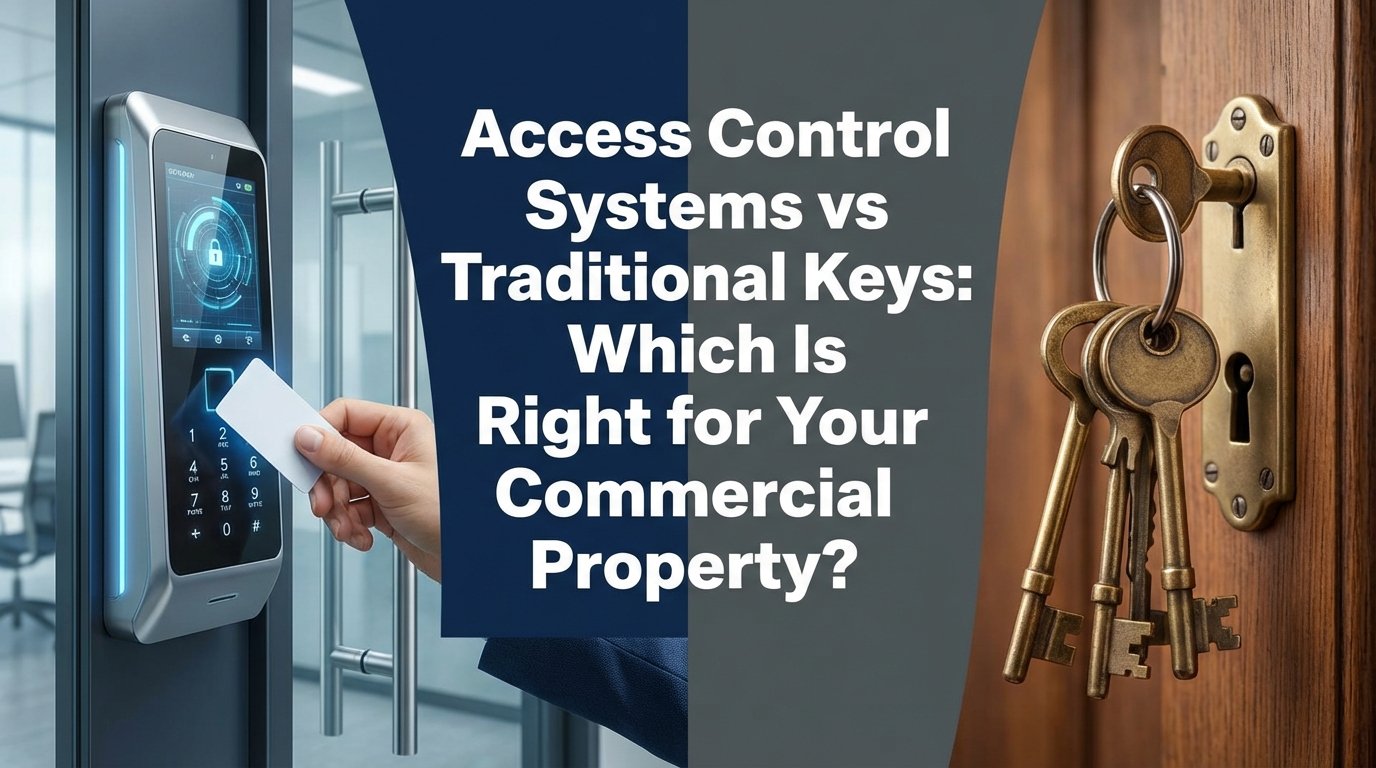
Commercial property managers face a critical decision: continue relying on traditional lock-and-key systems or transition to modern access control technology. While physical keys have secured buildings for centuries, they create substantial operational headaches and security vulnerabilities that become exponentially worse as property size increases. For a 300-unit apartment building or 100,000-square-foot office complex, the simple act of rekeying after an employee termination or lost key can cost thousands of dollars and leave the property vulnerable for days.
This decision isn’t just about security—it’s about operational efficiency, liability protection, and the long-term value of your property investment. Understanding the fundamental differences between these approaches helps property owners and facility managers make informed decisions that protect both assets and people.
The Hidden Costs of Traditional Key Systems
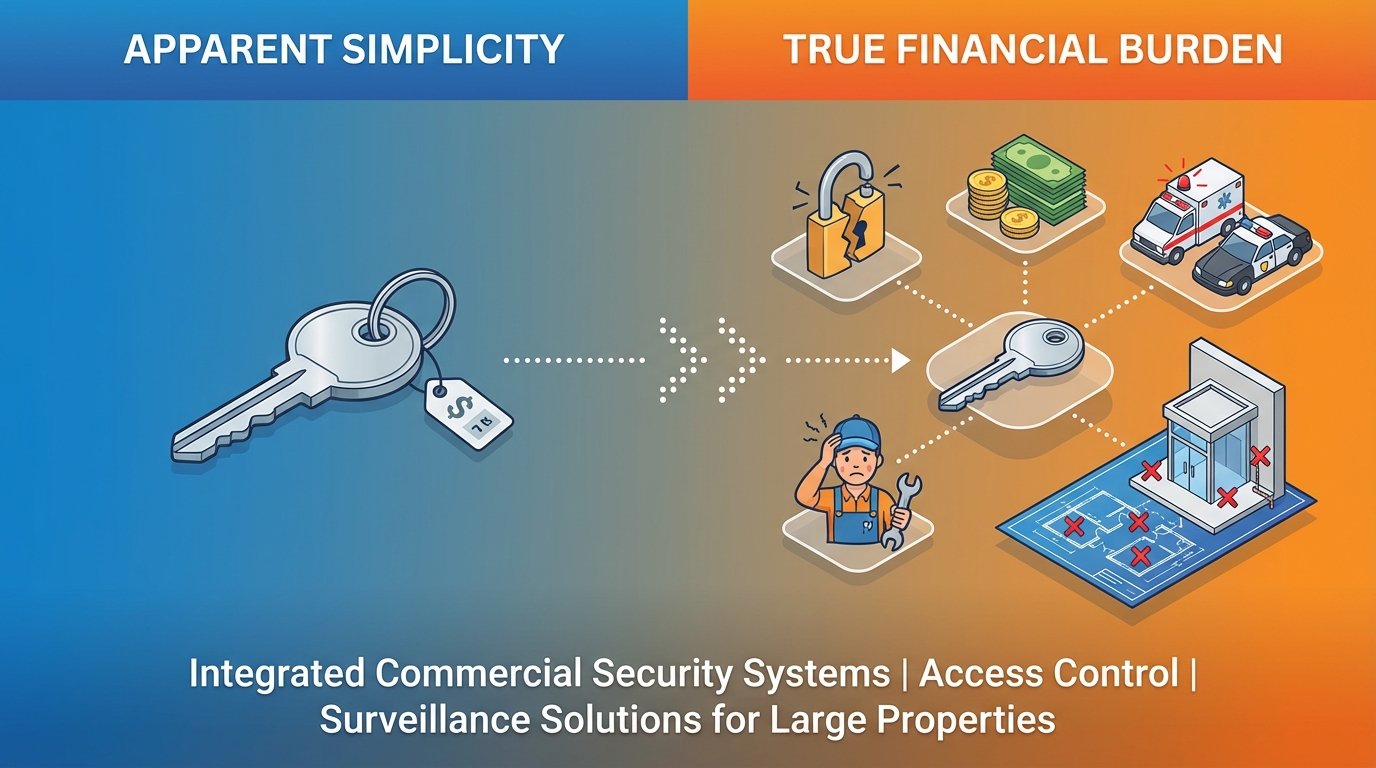
Physical keys appear inexpensive on the surface, but the total cost of ownership tells a different story. When a master key goes missing at a hotel or office building, the entire property becomes vulnerable until locks are replaced—a process that can cost $50,000 or more for large properties.
Traditional lock systems create several compounding problems:
- No access tracking: You cannot determine who entered which door at what time, eliminating accountability and making incident investigations nearly impossible
- Key proliferation: Over time, copies multiply uncontrollably as keys are duplicated without authorization or proper tracking
- Rekeying expenses: Every employee termination, lost key, or security concern requires physical lock replacement or rekeying across the entire property
- No time-based restrictions: You cannot automatically restrict access to business hours or revoke access remotely
- Delayed response: When a security incident occurs, you cannot immediately lock down the facility or restrict access to specific areas
For properties with high employee turnover—hotels, retail centers, warehouses—the operational burden becomes overwhelming. A single hotel property manager might spend hours each month coordinating key collection from departed employees, issuing temporary keys to contractors, and maintaining key tracking spreadsheets that are outdated the moment they’re created.
How Modern Access Control Systems Work
Access control systems replace physical keys with electronic credentials—keycards, key fobs, or smartphone-based mobile credentials. Users present their credential to a reader installed at each controlled door. The reader communicates with a control panel or cloud-based platform that verifies whether that specific credential has permission to unlock that specific door at that specific time.
This technology creates a comprehensive digital record of every access event. When an employee badges into a restricted storage area at 2:47 AM on a Sunday, the system logs that event with timestamp, credential holder, and door location.
Modern systems integrate multiple security technologies into unified platforms. Companies like Brivo and Verkada offer cloud-based solutions where access control, surveillance cameras, and visitor management communicate seamlessly. When someone badges into a loading dock, cameras automatically record high-resolution footage of that entry point. When a visitor arrives at the lobby, the system can send automatic notifications to the host employee and issue temporary mobile credentials valid only for that day.
Cloud vs. On-Premise Architecture
Property owners must choose between cloud-based and on-premise access control systems, each offering distinct advantages for different operational requirements.
Cloud-based platforms like Brivo and Verkada host all software and data on secure remote servers. Property managers access the system through web browsers or mobile apps from anywhere with internet connectivity. This architecture eliminates on-site server maintenance, enables automatic software updates, and simplifies multi-site management for property owners with portfolios spread across different cities.
On-premise systems install control panels and servers within the property itself. Technologies from manufacturers like Napco provide complete control over hardware and data storage, which some organizations prefer for regulatory compliance or network security policies. These systems can operate independently even during internet outages, though modern cloud platforms typically include offline functionality through local controllers.
Large commercial properties often benefit most from cloud architecture. A property management company overseeing ten office buildings can manage access permissions across the entire portfolio from a single interface rather than physically traveling to each location for system changes.
Operational Advantages for Commercial Properties
Access control systems transform property operations beyond basic security improvements. The ability to remotely manage access creates flexibility that fundamentally changes how facilities operate.
Instant Credential Management
When an employee leaves a hotel or office building, administrators immediately deactivate their credential from any location—no need to collect physical keys or worry about unauthorized copies. New employees receive credentials in minutes rather than waiting for key cutting services. Temporary contractors gain access for precisely the duration needed, with credentials automatically expiring at project completion.
Mobile credentials eliminate physical cards entirely. Employees use smartphones as their access credential, which reduces replacement costs when cards are lost and improves user experience. Property managers configure systems to send mobile credentials directly to tenant smartphones, eliminating the logistics of physical credential distribution.
Automated Access Schedules
Traditional keys provide access 24 hours daily unless someone physically stands guard. Access control systems automatically enforce time-based restrictions. Cleaning crews access office buildings only during their scheduled evening shifts. Amenity centers at multi-family residential properties automatically unlock at 6 AM and secure at 10 PM without staff intervention. Loading dock access activates only during scheduled delivery windows.
These automated schedules reduce labor costs while improving security. Properties no longer need security personnel manually locking and unlocking doors at specific times or monitoring who accesses restricted areas after hours.
Detailed Audit Trails
Every access event creates a permanent record including credential holder identity, door location, date, time, and whether access was granted or denied. This audit trail proves invaluable for incident investigations, liability protection, and operational analysis.
When theft occurs in a warehouse, security teams review access logs to identify everyone who entered the affected area during the relevant timeframe. When slip-and-fall lawsuits claim inadequate maintenance, properties reference access logs showing maintenance staff entered and inspected the area hours before the incident.
Property managers analyze access data to optimize operations. Which conference rooms see heaviest usage? When do most employees arrive and depart? Do certain tenants consistently access parking garages during restricted hours?
Integrated Security Ecosystems
The most significant advantage of access control systems emerges when they integrate with other security technologies. Professional security integrators like Fortress Global Technology design comprehensive solutions where multiple systems communicate and coordinate responses.
Access control systems trigger surveillance cameras to record specific events. When someone badges into a restricted pharmaceutical storage room, Axis Communications or Hanwha Vision cameras automatically capture high-resolution footage of that entry, even if the area isn’t continuously recorded to conserve storage. When a door forces open without valid credential presentation, cameras immediately begin recording while the system sends alerts to security personnel.
Integration extends to visitor management platforms, intercoms, and even elevator controls. High-rise residential buildings configure systems so resident credentials automatically call elevators and grant access only to their specific floors—preventing unauthorized floor access while improving convenience. Hotels integrate access control with property management systems so guest room credentials activate automatically at check-in and deactivate at checkout.
Video management platforms like Milestone Systems unify footage from hundreds of cameras across large properties while integrating with access control events. Security personnel click on access control alerts to instantly view associated camera footage rather than manually searching through hours of recordings.
Security Advantages That Protect Property Value
Physical keys create security vulnerabilities that grow worse over time. Every duplicated key becomes a potential unauthorized access point. Every lost key leaves property owners uncertain whether it was truly lost or stolen for later unauthorized entry.
Access control systems eliminate key duplication risks. Credentials cannot be copied at hardware stores. Lost credentials are instantly deactivated, removing any security threat. Anti-passback rules prevent credential sharing by detecting when someone attempts to badge multiple people through a single entry point.
Intrusion Detection Integration
Modern access control integrates with intrusion detection systems from manufacturers like Napco Security Technologies. Properties arm alarm systems automatically when the last authorized employee badges out at night. The system recognizes valid credential presentations and doesn’t trigger alarms when authorized personnel enter during armed periods, eliminating false alarms while maintaining security.
This integration proves particularly valuable for multi-tenant office buildings where different tenants maintain different schedules. Each suite’s intrusion detection arms and disarms based on that specific tenant’s access activity rather than building-wide schedules.
Liability Protection
Access control systems protect properties from liability claims by documenting exactly who accessed areas and when. Detailed audit trails demonstrate reasonable security measures, which helps defend against premises liability lawsuits. Insurance carriers often reduce premiums for properties with comprehensive access control and surveillance systems because they reduce theft, vandalism, and liability claim risks.
Property-Specific Considerations
Different property types benefit from access control features tailored to their unique operational requirements.
Multi-Family Residential Communities
Apartment buildings and HOA communities use access control to secure common areas—fitness centers, pool gates, package rooms, parking garages—while providing residents convenient access through mobile credentials or key fobs. Visitor management features allow residents to issue temporary access to guests without sharing their personal credentials or requiring staff to manually admit visitors.
Office Buildings
Commercial office properties implement elevator integration so credentials automatically grant access to assigned floors. Multi-tenant buildings configure separate access zones for each tenant while maintaining landlord access to all areas for maintenance and emergencies. After-hours access restrictions prevent unauthorized evening or weekend entry while allowing authorized employees flexible schedules.
Hotels and Hospitality
Hotels integrate access control with property management systems so room credentials automatically program at check-in and expire at checkout. Back-of-house areas maintain strict access controls separating guest areas from employee-only spaces like kitchens, laundry facilities, and storage rooms. Loading dock access controls track vendor entries and schedule authorized delivery windows.
Warehouses and Distribution Centers
Industrial properties use access control to secure perimeter entry points, restrict access to high-value inventory areas, and track employee movement through facilities. Integration with surveillance systems provides visual verification of loading dock activities and cargo movements.
Implementation and Professional Installation
Access control systems require professional installation by licensed electrical contractors who understand low-voltage cabling, network infrastructure, and system integration. Unlike simple product installations, commercial access control involves comprehensive planning including door hardware evaluation, power supply design, network connectivity, and integration with existing security infrastructure.
Properties should partner with experienced security integrators who hold manufacturer certifications from companies like Verkada, Brivo, and Axis Communications. These partnerships ensure proper system design, warranty protection, and ongoing technical support throughout the system lifecycle.
Professional installation includes obtaining necessary permits, ensuring code compliance, properly terminating low-voltage cabling, configuring network switches and VLANs for system communication, and integrating with existing surveillance and intrusion detection systems. Licensed contractors handle these complex requirements while inexperienced installers create systems plagued by connectivity issues, security vulnerabilities, and warranty violations.
Making the Right Choice for Your Property
The decision between traditional keys and access control systems ultimately depends on property size, operational complexity, and security requirements. Small single-tenant properties with minimal access points and low employee turnover may reasonably continue using physical keys, though they sacrifice the operational advantages of digital access management.
Large commercial properties—multi-family residential communities, office buildings, hotels, warehouses, parking facilities—gain substantial operational efficiency and security improvements from access control systems. The initial investment generates ongoing returns through reduced rekeying costs, improved security, decreased liability exposure, and enhanced property value.
Properties transitioning from keys to access control should view the change as security infrastructure investment rather than expense. Cloud-based platforms eliminate large upfront server costs while providing scalable solutions that grow with property needs. Mobile credentials reduce ongoing card replacement expenses while improving user experience for tenants and employees.
Partner With Experienced Security Integrators
Fortress Global Technology specializes in designing and implementing comprehensive access control solutions for large commercial properties throughout Florida and nationwide. As a licensed electrical contractor and authorized integrator for leading manufacturers including Brivo, Verkada, Axis Communications, and Napco Security Technologies, we provide complete security ecosystems tailored to your specific operational requirements.
Our team handles everything from initial security assessments and system design through professional installation, integration with existing infrastructure, and ongoing technical support. Whether you manage a 300-unit residential high-rise, a hotel property with complex operational requirements, or a multi-building office campus, we deliver scalable access control solutions that protect your property investment while improving daily operations.
Contact Fortress Global Technology today to schedule a comprehensive security consultation and discover how modern access control systems can transform your property security and operations.