
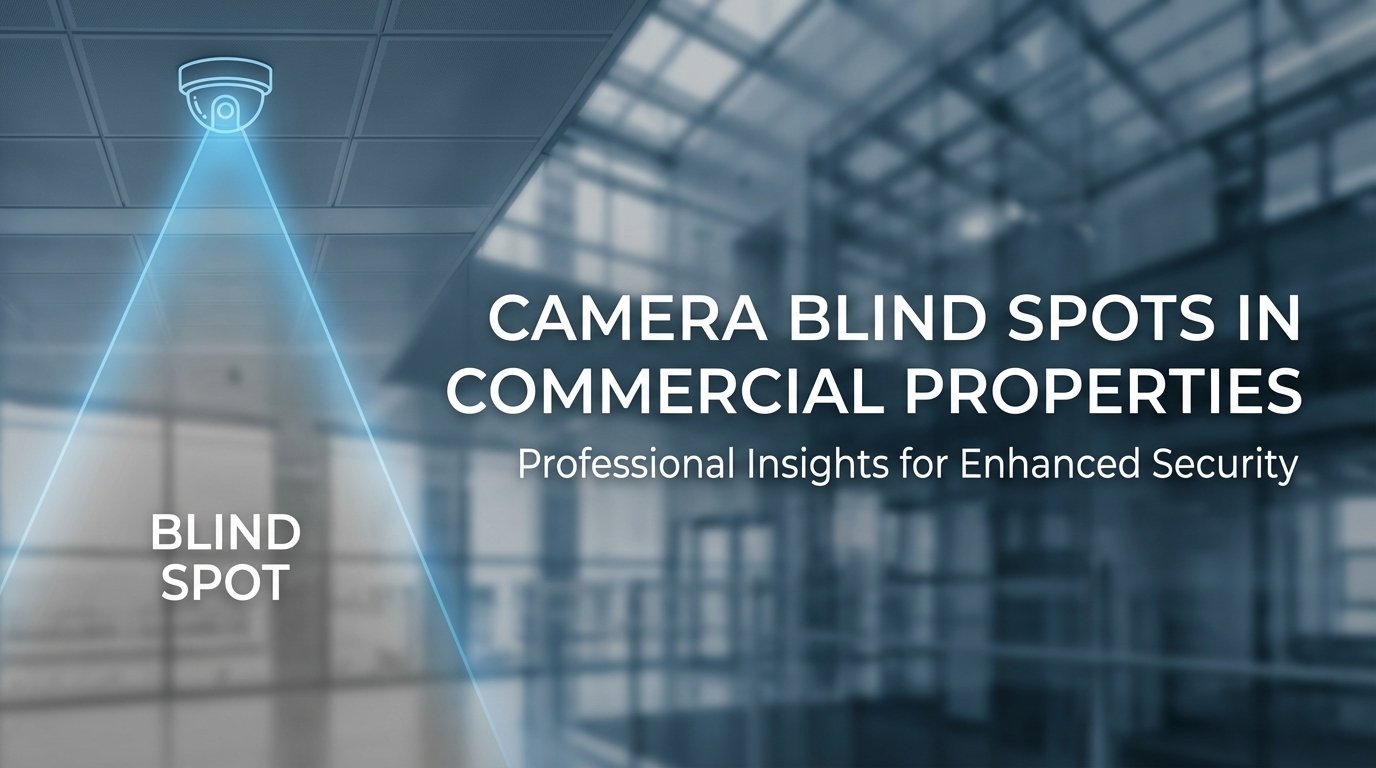
A sophisticated thief spent three weeks studying a 200-unit luxury apartment complex in Fort Lauderdale before striking. He identified a single blind spot where the loading dock camera’s view ended and the parking garage camera’s coverage began. In that unmonitored twelve-foot gap, he accessed the building six times, stealing packages and vandalizing vehicles before being caught. The property manager’s assumption that “we have cameras everywhere” proved costly—they had cameras, but not comprehensive coverage.
Blind spots represent the most exploited vulnerability in commercial video surveillance. No matter how many cameras a property installs or how advanced the technology, gaps in coverage create opportunities for theft, vandalism, liability exposure, and security failures. For properties ranging from multi-family residential communities to hotels and office complexes, eliminating blind spots requires strategic thinking beyond simply adding more cameras.
Why Blind Spots Develop in Commercial Surveillance Systems
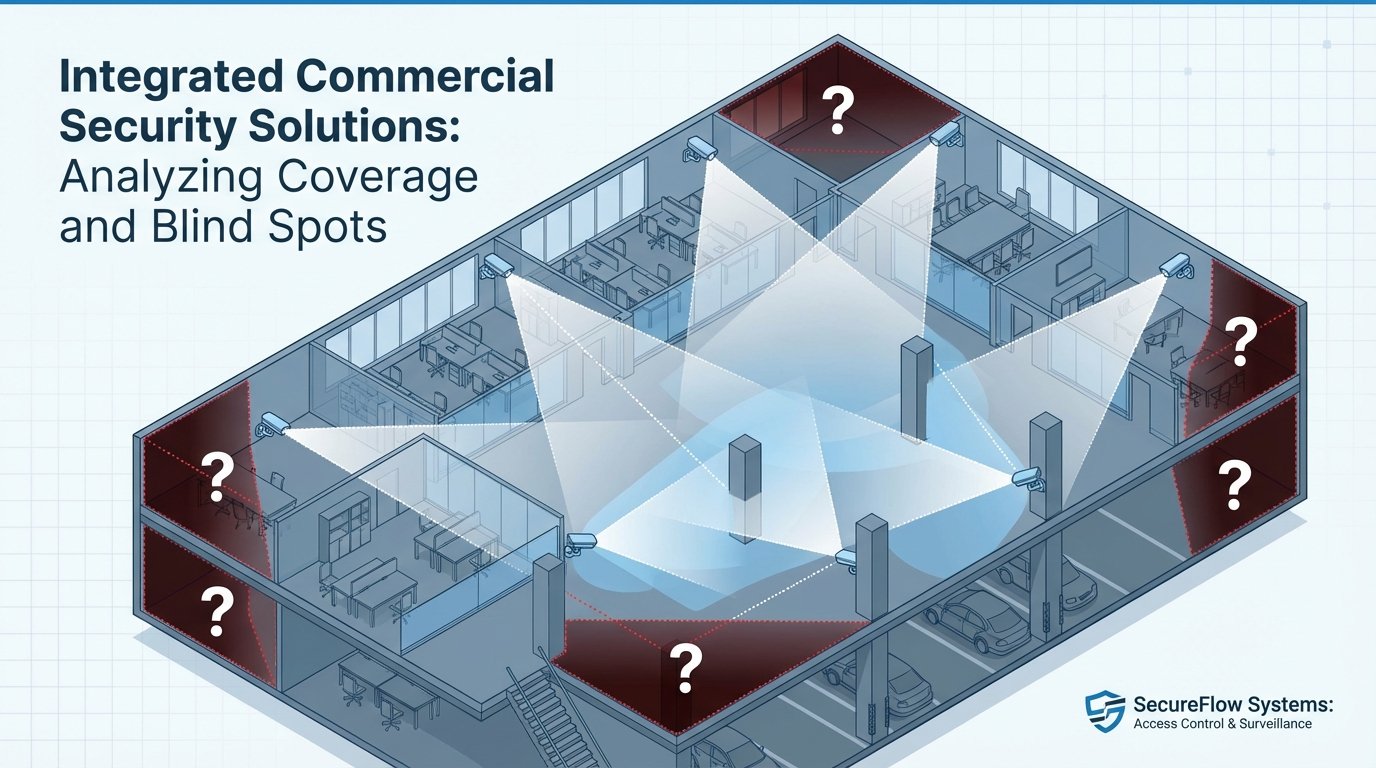
Understanding how blind spots emerge helps property managers prevent them. These gaps rarely result from insufficient budget or equipment—they typically stem from incomplete planning during the design phase.
Common Causes of Coverage Gaps
Properties often develop blind spots when security cameras are added incrementally rather than designed as a comprehensive system. A hotel might install cameras at main entrances, then add parking lot coverage months later, then address the pool area after an incident. This reactive approach creates gaps between coverage zones that intruders quickly identify and exploit.
Physical obstructions change over time, creating blind spots in previously monitored areas. Landscaping grows, blocking camera sight lines. Properties add dumpsters, storage units, or temporary structures that obstruct views. Seasonal changes affect coverage—a camera providing clear views in winter may face sun glare issues in summer, or tree foliage may block sight lines during growing seasons.
Vertical blind spots frequently go unnoticed during planning. A parking garage camera mounted on the first level provides excellent horizontal coverage but misses activity on stairwell landings above. Multi-story buildings often monitor ground-level entries extensively while upper-floor access points receive minimal attention.
The Integration Problem
Blind spots multiply when properties use disparate camera systems that don’t integrate effectively. A commercial property might have one camera system for parking, another for building entries, and a third for interior corridors—each installed by different vendors at different times. Without unified management through platforms like Milestone Systems XProtect video management software, identifying coverage gaps becomes nearly impossible until security incidents reveal them.
Strategic Camera Placement for Comprehensive Coverage
Eliminating blind spots requires methodical planning that considers how different coverage zones interact. Professional commercial security camera installation begins with comprehensive site assessment rather than arbitrary camera placement.
The Layered Security Approach
Effective surveillance designs incorporate three distinct coverage layers. Perimeter monitoring establishes the first defense line, detecting potential threats before they reach buildings or critical areas. For a 300-unit apartment complex, this means cameras covering fence lines, property boundaries, parking lot perimeters, and any access points where unauthorized individuals might enter.
Transition zone coverage represents the most frequently overlooked layer. These areas connect perimeter zones to building entries—the spaces between parking structures and lobby doors, pathways from visitor parking to main entrances, or corridors connecting different building sections. Axis Communications cameras with wide dynamic range technology excel in these challenging environments where lighting conditions shift dramatically between outdoor and indoor spaces.
Critical asset protection focuses surveillance on high-value or high-risk locations: server rooms, package storage areas, loading docks, amenity centers, and cash handling locations. These areas typically require higher-resolution cameras—often 4K models from manufacturers like Hanwha Vision with advanced analytics capabilities that detect unusual activity patterns.
Overlapping Coverage Zones
Professional surveillance design incorporates intentional overlap between adjacent camera views. Rather than positioning cameras to cover distinct, separate areas, best practices dictate that coverage zones should overlap by approximately 10-15%. This overlap eliminates the gaps where one camera’s coverage ends and another begins.
A hotel property illustrates this principle effectively. Rather than positioning one camera at the parking garage entrance and another at the lobby entrance with uncovered space between, proper design places cameras so their coverage zones overlap in the walkway connecting these areas. If someone obscures or disables one camera, the adjacent camera captures the incident within its overlapping coverage zone.
Technology Solutions for Challenging Coverage Areas
Some locations present inherent surveillance challenges where standard camera placement proves insufficient. Modern IP security cameras commercial-grade solutions offer specialized options for these difficult environments.
Multi-Sensor and Panoramic Cameras
Multi-sensor cameras combine multiple lenses in a single housing, providing 180-degree or 360-degree coverage from a single installation point. For large open areas like parking lots, hotel lobbies, or office building atriums, these cameras eliminate blind spots that would otherwise exist between multiple standard cameras.
A 400-space parking garage that might require eight traditional cameras for comprehensive coverage could potentially be monitored with three or four multi-sensor units, reducing both equipment costs and potential blind spots. Verkada’s multi-sensor cameras offer this capability with the added benefit of cloud-based management, making it simple to review footage across all sensors from a unified interface.
PTZ Cameras for Dynamic Coverage
Pan-tilt-zoom (PTZ) cameras provide flexible coverage for areas where blind spots shift based on activity or operational needs. Loading docks exemplify this application—during delivery hours, the camera focuses on the dock area, but after hours, it can automatically pan to monitor the surrounding perimeter.
However, PTZ cameras should supplement, not replace, fixed camera coverage. While a PTZ camera pans to follow activity in one direction, it creates a temporary blind spot in other areas. Effective designs combine PTZ capabilities with fixed cameras that maintain constant coverage of critical zones.
Specialty Cameras for Unique Challenges
Certain environments demand specialized camera technologies. Stairwells, with their vertical architecture and challenging lighting, benefit from cameras with excellent low-light performance and wide dynamic range. Axis Communications offers corridor format cameras specifically designed for these vertical spaces, mounting to capture activity across multiple floor levels simultaneously.
Thermal imaging cameras from manufacturers like Hanwha Vision detect heat signatures rather than visible light, making them ideal for perimeter monitoring in complete darkness or challenging weather conditions common in South Florida. These cameras identify potential intruders in areas where traditional cameras might miss activity due to insufficient lighting or environmental conditions.
Integration with Access Control Eliminates Interior Blind Spots
Commercial video surveillance becomes exponentially more effective when integrated with access control systems. This integration addresses a critical limitation of camera-only approaches: cameras record what happens, but without access control integration, properties cannot prevent unauthorized access in the first place.
When Brivo cloud-based access control systems communicate with surveillance platforms, cameras automatically begin recording when specific doors open, elevators move to restricted floors, or access is denied at controlled entry points. This integration ensures that no interior access point becomes a blind spot, even if continuous recording isn’t practical for every interior location.
A 250-room hotel demonstrates this integration’s value. Rather than continuously recording every guest floor corridor—creating massive storage requirements and privacy concerns—the system records corridor cameras only when stairwell doors open from the exterior, when elevators stop at floors during overnight hours, or when access is attempted at restricted areas. This event-driven approach eliminates blind spots without unnecessary continuous recording.
Visitor Management Integration
Integrated security solutions that combine surveillance with visitor management platforms prevent blind spots in guest and visitor workflows. When a delivery person checks in at a commercial office building’s reception desk, the system automatically alerts relevant cameras to begin recording their path through the facility, ensuring no blind spots exist in their journey from lobby to delivery destination and back to exit.
Conducting a Professional Blind Spot Assessment
Identifying existing blind spots requires systematic evaluation rather than casual observation. Property managers should conduct formal security audits that examine both physical coverage and operational vulnerabilities.
Physical Walkthrough Methodology
A comprehensive blind spot assessment begins with a complete property walkthrough during different times of day. Lighting conditions change dramatically between morning, midday, afternoon, and night, revealing blind spots that exist only during specific periods. A camera positioned to avoid afternoon sun glare might face directly into sunrise, creating a temporary blind spot each morning.
The walkthrough should follow likely intruder paths rather than normal pedestrian routes. Where would someone park to avoid camera coverage? Which building access points receive the least foot traffic? What routes could someone take to reach valuable assets while minimizing camera exposure? This adversarial thinking reveals vulnerabilities that normal operational observation misses.
Video Management System Analysis
Modern video management platforms provide tools for identifying coverage gaps. Milestone Systems’ XProtect platform, for instance, allows security teams to overlay camera coverage zones on property maps, visually revealing blind spots where coverage doesn’t exist. This digital analysis complements physical walkthroughs, often revealing gaps that weren’t obvious during on-site observation.
Properties with existing Axis or Hanwha Vision camera networks can leverage these manufacturers’ planning tools to model coverage improvements before purchasing equipment. These tools calculate precise camera positioning, lens requirements, and expected coverage areas based on property layouts and desired monitoring objectives.
Budget-Conscious Strategies for Comprehensive Coverage
Eliminating blind spots doesn’t necessarily require massive capital investment. Strategic prioritization and phased implementation can address coverage gaps while respecting budget constraints.
Risk-Based Prioritization
Not all blind spots present equal risk. A coverage gap in a landscaped area visible from public streets differs significantly from a blind spot near a loading dock with high-value merchandise. Professional security consultants help properties prioritize blind spot elimination based on risk assessment: what assets need protection, what liability exposure exists, and what security incidents have occurred previously.
A multi-family residential community with 500 units might identify twelve blind spots during assessment. Rather than addressing all simultaneously, a phased approach might prioritize: first, blind spots near building entries and parking garage access points; second, gaps in amenity center coverage; third, perimeter monitoring improvements. This staged implementation spreads costs across multiple budget cycles while addressing the highest-risk vulnerabilities first.
Technology Optimization
Sometimes blind spot elimination requires better technology rather than more cameras. Replacing three older cameras with limited low-light capability with two modern Verkada cameras featuring superior night vision and wider fields of view might improve coverage while actually reducing camera count. The higher per-unit cost is offset by fewer necessary installations and reduced infrastructure requirements.
Ongoing Maintenance Prevents New Blind Spots
Even perfectly designed systems develop blind spots over time without proper maintenance. Professional business CCTV installation includes ongoing support that prevents coverage degradation.
Quarterly camera maintenance should verify that each unit maintains its intended coverage area. Cameras shift due to building settling, vibration from nearby equipment, or environmental factors. A camera that provided perfect coverage at installation might have drifted 15 degrees over two years, creating a significant blind spot. Regular maintenance checks prevent this gradual coverage erosion.
Lens cleaning, particularly in Florida’s humid, salt-air coastal environments, prevents blind spots caused by obscured views. A camera with a dirty lens provides degraded footage that might miss critical details, effectively creating a functional blind spot even though the camera operates and records normally.
The Professional Installation Advantage
Blind spot elimination demands expertise that extends beyond camera technology knowledge. Professional installation by licensed contractors like Fortress Global Technology ensures comprehensive coverage through proper planning, experienced implementation, and integration capabilities that connect surveillance with broader security systems.
Licensed electrical contractors possess the infrastructure expertise to position cameras optimally, install proper network cabling that supports high-bandwidth IP security cameras, and integrate surveillance with access control, intrusion detection, and property management systems. This integration creates security ecosystems where different technologies compensate for each other’s limitations, collectively eliminating blind spots that any single system might leave exposed.
For complex properties—hotels with multiple buildings, office campuses with thousands of daily visitors, or multi-family communities with numerous access points—professional design ensures that surveillance, access control, and visitor management work together to create truly comprehensive coverage without exploitable gaps.
FAQs About Commercial Surveillance Coverage
How many cameras does a commercial property typically need?
Camera requirements depend on property size, layout complexity, and specific security needs rather than simple square footage calculations. A 200-unit apartment complex might require 40-60 cameras for comprehensive coverage including all entries, parking areas, amenities, and common spaces. A professional security assessment identifies precise requirements based on your property’s unique characteristics and vulnerabilities.
Can I identify blind spots using my existing camera system?
Yes, if your system uses professional video management software like Milestone XProtect or Verkada Command. These platforms allow you to map camera coverage zones and identify gaps. However, physical property walkthroughs conducted at different times of day reveal blind spots that desktop analysis alone might miss, particularly those caused by lighting changes or physical obstructions.
How does weather affect camera coverage in Florida properties?
Florida’s intense sun creates glare issues that can temporarily blind cameras during sunrise and sunset. Heavy rainfall can obscure camera views, while hurricane-season storms may shift camera positioning if not properly secured. Professional installation accounts for these regional factors, positioning cameras to minimize sun exposure and using weather-resistant housings rated for coastal environments.
Should every area of my property have camera coverage?
Not necessarily. Privacy considerations and storage requirements make continuous recording of all areas impractical. Strategic coverage focuses on property perimeters, access points, high-value asset locations, and transition zones between areas. Integration with access control systems allows event-triggered recording for less critical areas, providing coverage when needed without continuous monitoring of every space.
Comprehensive Security Starts with Professional Assessment
Blind spots represent the difference between having cameras and having genuine security. For commercial properties where liability, asset protection, and occupant safety create significant stakes, eliminating coverage gaps requires more than simply installing additional equipment—it demands strategic design, proper integration, and professional implementation.
Fortress Global Technology specializes in designing integrated security solutions for large-scale commercial properties throughout South Florida and nationwide. Our licensed contractors conduct comprehensive site assessments that identify existing blind spots and design surveillance systems that provide genuine comprehensive coverage rather than false security from incomplete camera placement.
Whether you’re planning a new surveillance system installation or evaluating your existing camera network for vulnerabilities, professional assessment ensures your security investment delivers actual protection rather than leaving exploitable gaps that determined intruders will inevitably discover.
Contact Fortress Global Technology for a comprehensive security assessment of your commercial property. Our team will identify blind spots in your current coverage, design solutions that integrate surveillance with access control and other security technologies, and implement systems that provide genuine comprehensive protection for your property investment.