
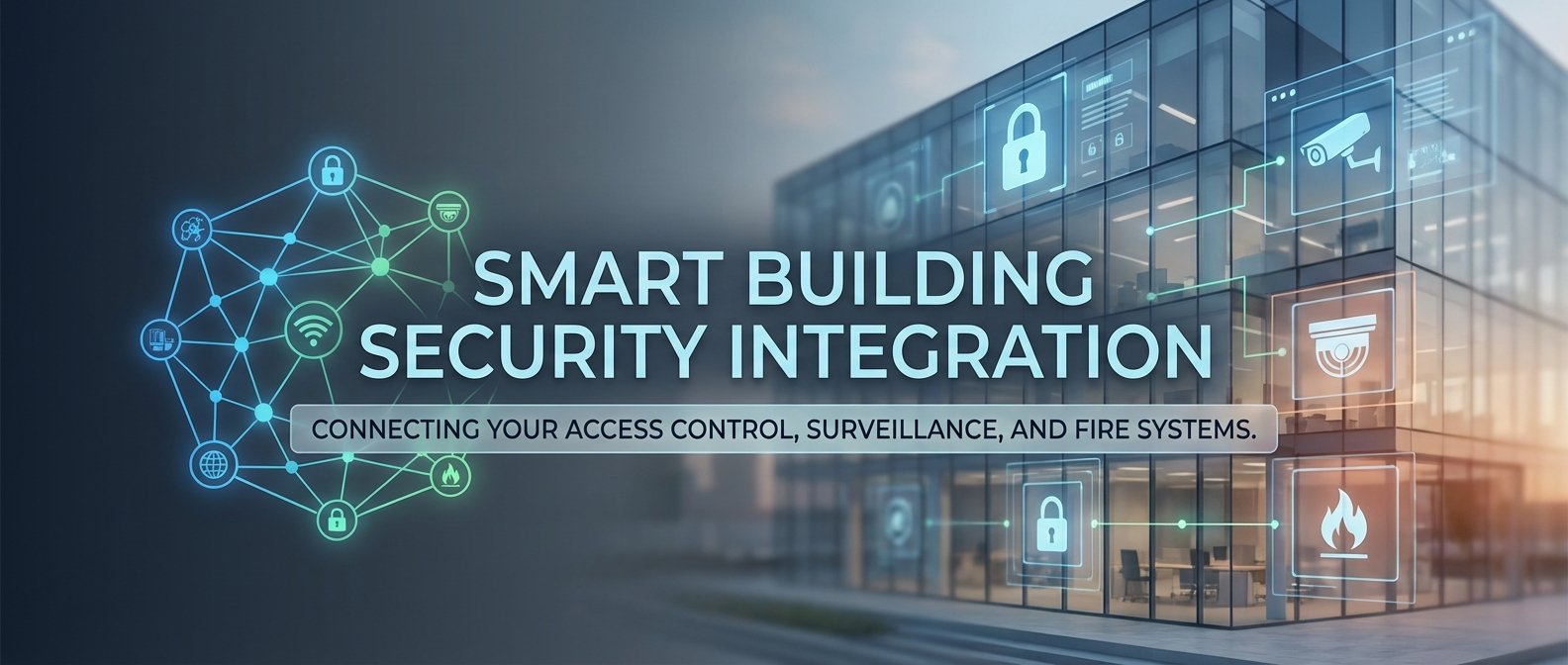
Modern commercial properties face a critical challenge: multiple security systems operating in isolation. A hotel might have twenty different access control panels, surveillance cameras recording to separate systems, and fire alarms that trigger without notifying security staff. This fragmented approach creates operational inefficiencies, delayed emergency responses, and significant security vulnerabilities that sophisticated threats can exploit.
Smart building security integration solves this problem by connecting previously isolated systems into a unified security platform. When access control, surveillance cameras, intrusion detection, fire alarms, and intercom systems communicate with each other, properties achieve comprehensive security that’s greater than the sum of its parts. For large commercial properties—hotels with hundreds of rooms, office towers with thousands of employees, or multi-family communities with complex amenity spaces—integrated security solutions have become essential infrastructure rather than optional upgrades.
Understanding the Integrated Security Ecosystem
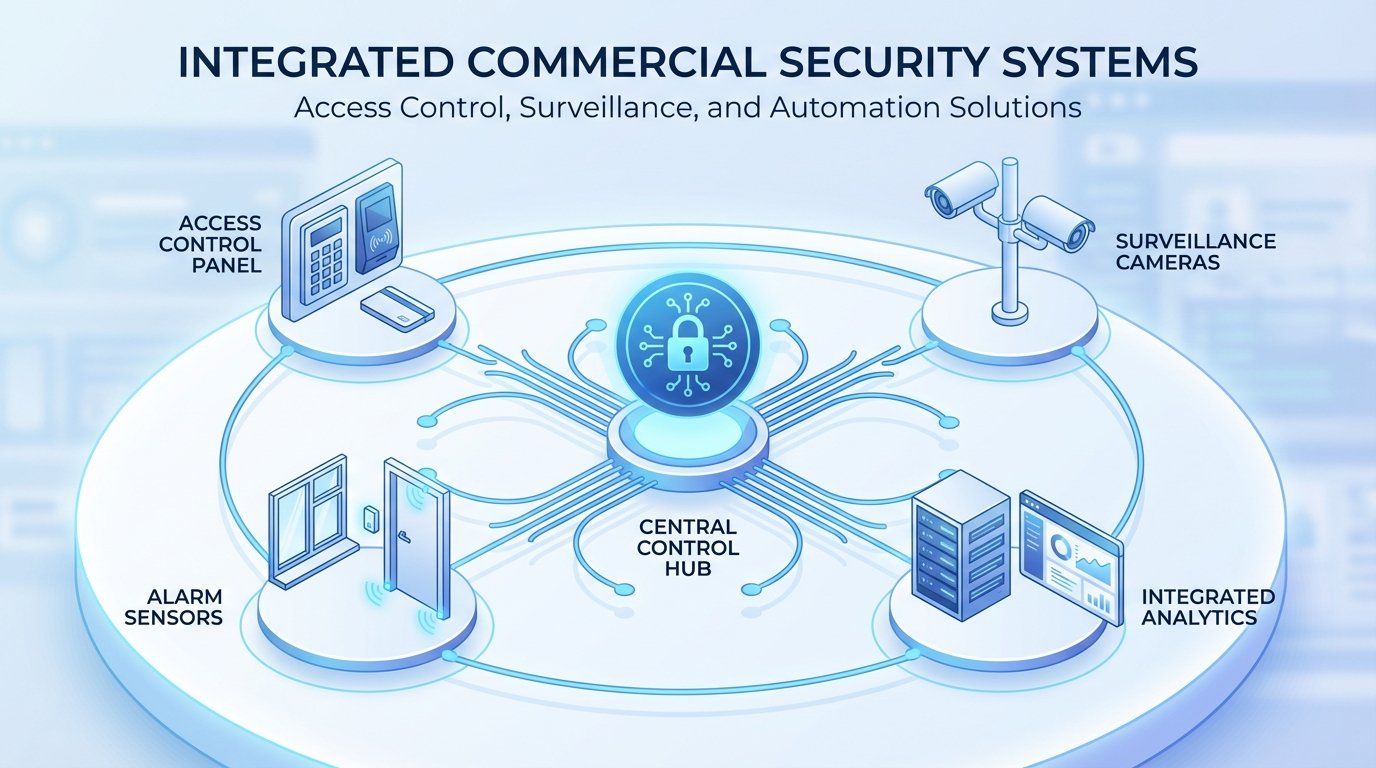
True security system integration means different technologies working together to create automated responses and comprehensive protection. Rather than viewing access control and surveillance as separate purchases, integrated systems treat them as interconnected components of a larger security ecosystem.
When someone badges into a restricted area after business hours, an integrated system doesn’t just unlock the door. The access control system triggers nearby cameras to begin recording, logs the entry timestamp with video verification, sends real-time alerts to security personnel, and creates an auditable trail linking the credential used to visual confirmation of who entered. If that same person forces open a fire exit instead of using authorized access points, the intrusion detection system immediately notifies security while cameras automatically focus on the breach location.
This level of coordination requires professional planning and installation. Systems must communicate using compatible protocols, network infrastructure must support the data loads these connected systems generate, and the unified security platform managing everything needs proper configuration to create useful automation rather than alert fatigue.
Core Components of Comprehensive Security Systems
Effective integration starts with understanding how each security layer contributes to the overall ecosystem and where connection points create the most operational value.
Access Control as the Foundation
Modern access control systems like Brivo’s cloud-based platform or Verkada’s hybrid cloud solution serve as the foundation for integrated security. These systems manage who can enter which areas at what times, creating the primary security perimeter for most properties.
Cloud-based access control offers significant advantages for integration because it operates on IP networks that other security systems can easily connect to. When access control lives in the cloud, properties can manage credentials across multiple buildings from a single interface, issue mobile credentials that work with smartphone apps, and create temporary access for visitors or contractors without physical key cards.
For large office buildings, access control integration extends to elevator systems, ensuring tenants can only access their designated floors. Hotels integrate access control with property management systems so guest room access automatically activates at check-in and deactivates at checkout. Multi-family residential communities connect access control to parking gates, amenity centers, package rooms, and fitness facilities, creating seamless resident experiences while maintaining security boundaries.
Surveillance Systems Providing Visual Verification
IP surveillance cameras from manufacturers like Axis Communications or Hanwha Vision provide the visual layer that verifies access control events and monitors areas between controlled access points. Professional-grade cameras deliver HDTV or 4K resolution, operate reliably in challenging lighting conditions, and integrate with video management systems that organize footage intelligently.
Integration transforms surveillance from passive recording to active security participation. When cameras connect with access control systems, properties can configure automatic responses: cameras begin recording when specific doors open, zoom to cover areas where motion detectors trigger, or send alerts when someone enters a restricted zone without proper credentials.
Video management platforms like Milestone Systems’ XProtect provide the software layer that unifies cameras from multiple manufacturers. This flexibility allows properties to choose the best camera for each specific location—thermal cameras for perimeter detection, license plate recognition cameras for parking facilities, high-resolution cameras for cash handling areas—while managing everything through one interface.
Intrusion Detection Filling the Gaps
While access control secures doors and cameras monitor spaces, intrusion detection systems protect perimeter windows, emergency exits, and areas that don’t have controlled access. Systems from manufacturers like Napco Security Technologies provide professional-grade intrusion panels that integrate with comprehensive security platforms.
Integration eliminates false alarms and improves response times. When an intrusion sensor triggers, the unified security platform automatically pulls up nearby camera views, verifies whether authorized personnel are in the area by checking recent access control events, and can distinguish between an actual break-in attempt and an employee who accidentally triggered an emergency exit.
Fire and Life Safety System Coordination
Building and fire codes require specific fire alarm system certifications, but integration with the broader security ecosystem improves emergency response. When fire alarms trigger, integrated systems can automatically unlock access control doors along evacuation routes, display fire panel status on security monitoring stations, and ensure surveillance systems continue recording during emergencies for post-incident investigation.
This coordination becomes critical in large properties where security and facilities management teams need complete situational awareness during emergencies. A hotel fire alarm triggering in a single room should immediately provide security staff with camera views of that hallway, unlock elevator override controls, and begin logging all system activity for fire marshal review.
The Unified Security Platform Advantage
The power of integrated security solutions becomes apparent when examining how unified platforms transform security operations for large commercial properties.
Single Pane of Glass Management
Rather than monitoring five different systems through separate interfaces, unified security platforms like Verkada’s Command consolidate access control, surveillance, alarms, intercom systems, and environmental sensors into one management dashboard. Security personnel see real-time status of all systems, respond to alerts from a single interface, and can quickly understand what’s happening across sprawling properties.
For properties with multiple buildings or locations nationwide, this consolidation eliminates the need for security staff to become experts on numerous disconnected systems. A facility manager can check who accessed the loading dock, review camera footage of that entry, and verify the intrusion system armed properly—all without switching between different software applications or vendor portals.
Automated Response and Workflow
Integration enables automation that improves security while reducing manual workload. Properties can configure their systems to automatically respond to specific scenarios without requiring human intervention for routine events.
A commercial office building might configure automatic locking of all perimeter doors at 6 PM, arm intrusion detection in common areas, and send summary reports of after-hours access to facilities management each morning. If someone badges in during overnight hours, the system automatically turns on lights in that area, begins recording high-resolution video, and sends notifications to designated security personnel.
Loading dock security benefits tremendously from automation. When a scheduled delivery arrives, the access control system can automatically unlock the dock door during a specific time window, trigger cameras to record the entire delivery, and log the event for receiving department review. If someone attempts access outside scheduled times, the system denies entry and alerts security staff with video verification of who’s at the door.
Comprehensive Audit Trails and Reporting
Integrated systems create detailed audit trails that link access control events with video evidence, intrusion alarm activity, and system configuration changes. This documentation proves invaluable for liability protection, incident investigation, and regulatory compliance.
When investigating theft from a retail stockroom, integrated logs show exactly who accessed that room during the relevant timeframe, provide video footage of each entry and exit, and can even show whether anyone disabled cameras or tampered with other security systems. This type of comprehensive documentation significantly reduces investigation time and provides concrete evidence for insurance claims or legal proceedings.
Integration Benefits for Different Property Types
While integration principles remain consistent, specific benefits vary based on property type and operational requirements.
Hotels and Hospitality Properties
Hotels achieve exceptional operational efficiency through security system integration. Guest access credentials automatically sync with property management systems at check-in, elevator access restricts guests to their assigned floors, and parking access connects to room charges. Back-of-house areas use different access levels for staff based on role, while loading dock security tracks vendor deliveries with integrated camera verification.
When incidents occur—disputed charges, theft claims, or slip-and-fall incidents—integrated systems provide complete documentation linking guest credentials to specific times and camera footage. This comprehensive evidence protects properties from fraudulent claims while ensuring legitimate issues receive proper attention.
Multi-Family Residential Communities
Large residential communities with hundreds of units face complex access management challenges. Residents need convenient access to their homes, parking spaces, mail rooms, fitness centers, and pools—but properties must prevent unauthorized access and maintain detailed records for liability protection.
Integrated security solutions allow residents to use mobile credentials for seamless access throughout the community while providing management with complete visibility into who accesses amenity spaces and when. Cameras automatically record pool areas during access events, creating documentation that helps resolve disputes about rule violations or damages.
Commercial Office Buildings
Multi-tenant office properties require sophisticated access control that maintains security boundaries between different companies while allowing property management complete system oversight. Integration with elevator controls ensures tenants can’t access other companies’ floors, while common area surveillance monitors lobbies, parking garages, and loading docks.
Visitor management integration streamlines guest access. When a visitor checks in at the lobby, the system issues temporary credentials valid only for specific areas and times, triggers cameras to record the visit, and automatically notifies the host employee. After business hours, the comprehensive security system tightens access restrictions and alerts security staff to any unusual activity patterns.
Parking Structures and Facilities
Large parking facilities benefit from integration between license plate recognition cameras, access control gates, intercom systems, and revenue management platforms. The system can automatically grant access to registered vehicles, direct visitors to payment stations, and alert security to suspicious vehicles or individuals loitering in the structure.
Emergency call stations integrated with the security platform immediately display caller location and nearby camera views when someone requests assistance, enabling faster response to medical emergencies or security concerns.
Professional Installation and Infrastructure Requirements
Achieving reliable security system integration requires professional design and installation by licensed contractors who understand both the technology and the infrastructure supporting it.
Network Infrastructure Design
Modern IP-based security systems demand robust network infrastructure. High-resolution surveillance cameras generate substantial bandwidth requirements, access control systems need reliable connectivity for real-time credential verification, and unified platforms require consistent network performance to maintain responsiveness.
Professional integrators design networks that segment security traffic appropriately, provide redundancy for critical systems, and scale to accommodate future expansion. This infrastructure planning prevents network bottlenecks that can cause camera recording failures or access control delays during critical moments.
Integration Complexity and Testing
Making different manufacturers’ equipment work together reliably requires expertise in API integration, communication protocols, and system configuration. While many modern systems claim “open architecture,” actual integration often requires detailed technical knowledge about how systems authenticate, exchange data, and handle error conditions.
Fortress Global Technology’s approach involves comprehensive testing before system handover. Each integration point—access control triggering cameras, intrusion systems communicating with the management platform, fire system coordination—undergoes verification to ensure automated responses work reliably under real-world conditions.
Ongoing Support and System Evolution
Integrated security systems require ongoing support throughout their operational lifespan. Software updates, credential management, system expansion, and troubleshooting all demand expertise in how integrated components interact. Working with a local security integrator ensures support teams can respond quickly when issues arise and understand your specific system configuration.
As properties evolve—adding buildings, changing operational requirements, or adopting new technologies—integrated systems should adapt without requiring complete replacement. Proper system design ensures scalability that protects your technology investment over many years.
Moving Toward Comprehensive Protection
Smart building security integration represents the current standard for professional commercial property protection. While individual security products serve specific functions, only integrated security solutions provide the comprehensive protection, operational efficiency, and liability protection that large properties require.
Properties investing in integrated systems gain immediate operational benefits through automation and unified management while establishing a technology foundation that adapts to future needs. As artificial intelligence, mobile technology, and cloud platforms continue advancing, integrated architectures ensure properties can adopt innovations without abandoning existing infrastructure investments.
The shift from isolated security products to unified security platforms requires working with integrators who understand both the technology and the unique challenges facing your specific property type. Whether managing a luxury hotel, commercial office tower, or large residential community, professional integration transforms security from a collection of separate systems into a coordinated ecosystem protecting people, property, and assets.
Fortress Global Technology designs and installs comprehensive security systems for large commercial properties throughout South Florida and nationwide. Our licensed teams handle complete integration projects from initial design through installation, testing, and ongoing support. Contact us to discuss how unified security platforms can transform protection and operations for your property.