
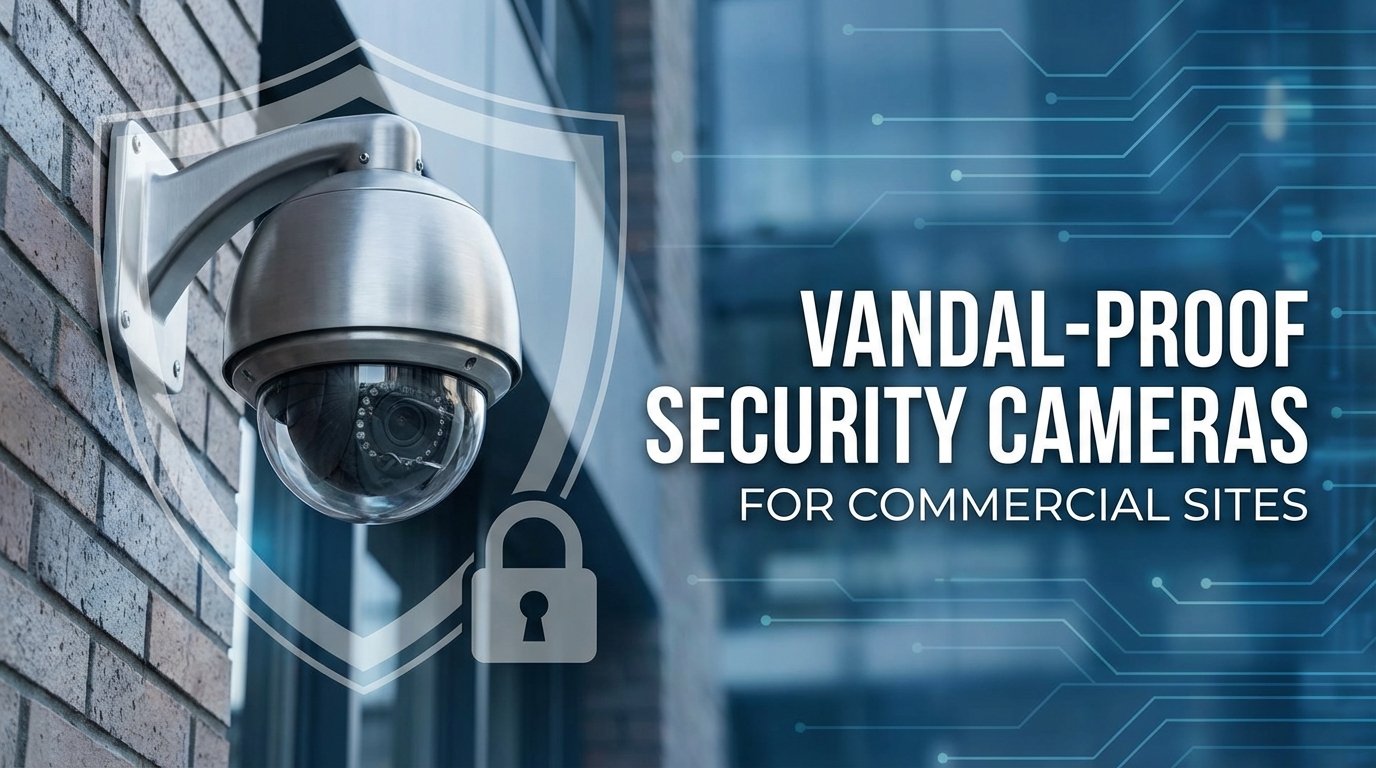
A single act of vandalism can eliminate your surveillance coverage at the worst possible moment. When a security camera gets disabled, tampered with, or destroyed, you’re not just losing equipment—you’re creating a security blind spot that exposes your property to theft, liability, and operational disruptions. For commercial properties, parking facilities, and multi-family communities, camera vandalism represents a persistent challenge that demands proactive engineering solutions rather than reactive replacements.
Protecting your commercial video surveillance investment requires understanding both the vulnerabilities that vandals exploit and the hardening technologies available to combat them. This goes beyond simply mounting cameras out of reach—it involves strategic equipment selection, professional installation techniques, and integrated security layers that work together to detect, deter, and document tampering attempts before they succeed.
Why Commercial Properties Face Heightened Vandalism Risk
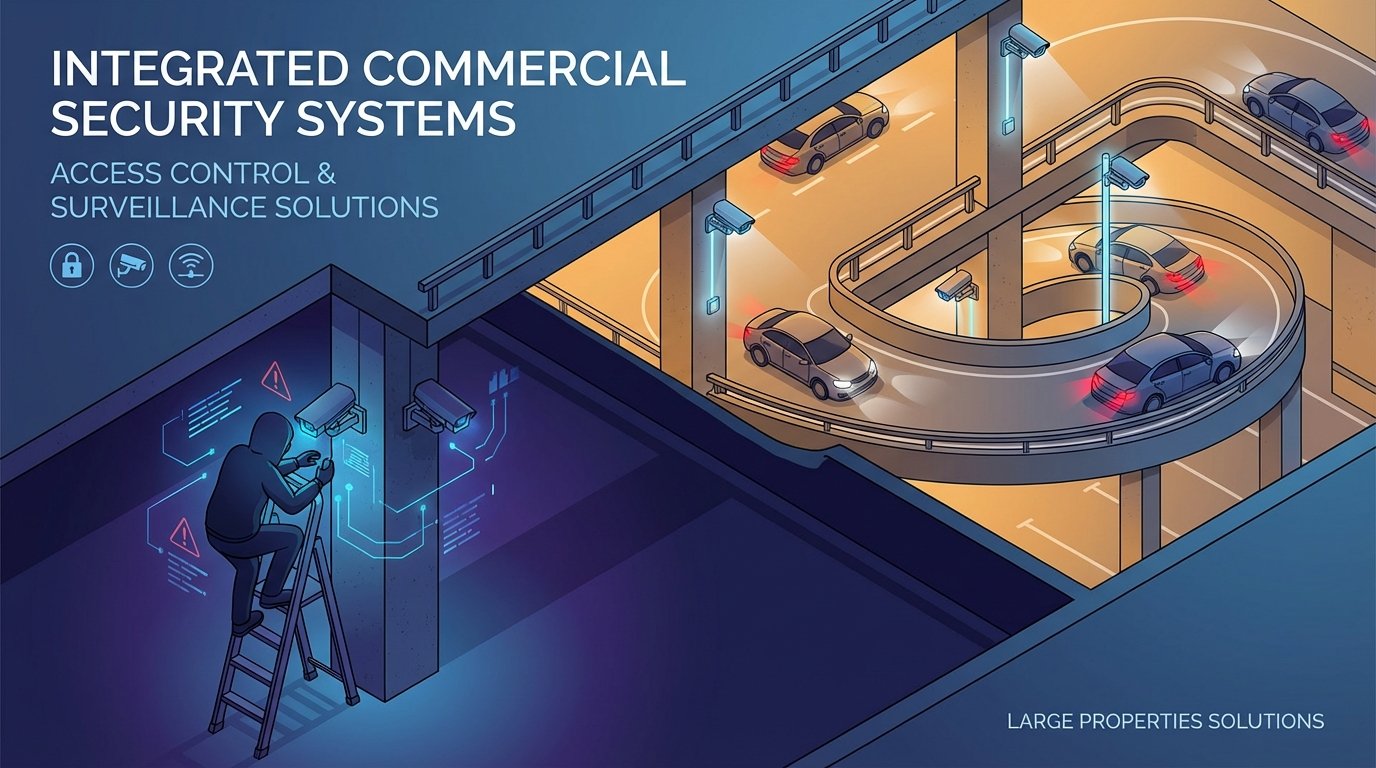
Commercial properties present unique security camera vulnerabilities compared to other environments. Multi-family residential communities with hundreds of units create anonymity where vandals blend into legitimate resident traffic. Parking structures offer isolated corners where tampering can occur unobserved. Retail loading docks provide cover and tools that facilitate quick equipment destruction. Hotels manage constant visitor turnover, making it difficult to identify who approached a camera before it stopped functioning.
The financial impact extends beyond replacement costs. When cameras covering cash handling areas, inventory storage, or parking revenue collection points go offline, you lose critical evidence during the exact window when security coverage matters most. Insurance claims become harder to substantiate. Liability exposure increases when incidents occur in unmonitored areas. Property managers face operational disruptions investigating what happened during coverage gaps.
South Florida properties face additional environmental factors that compound vandalism risks. Coastal humidity and salt air can corrode improperly sealed camera housings, creating vulnerability points that facilitate tampering. Hurricane season power fluctuations may disable cameras temporarily, giving vandals opportunity windows. The year-round outdoor activity in Florida communities means cameras face constant exposure to potential interference rather than seasonal risk patterns seen in colder climates.
Engineering Vandal Resistance Into Camera Selection
True vandal resistance begins with purpose-built camera hardware designed to withstand deliberate attacks. The IK rating system measures impact resistance, with IK10 representing the highest commercial standard—capable of withstanding 20 joules of impact, equivalent to a 5-kilogram object dropped from 40 centimeters. For commercial security camera installation in high-risk areas, IK10-rated housings should be minimum specifications, not optional upgrades.
Axis Communications manufactures several camera lines specifically engineered for hostile environments. Their Q-series dome cameras feature IK10+ impact resistance with polycarbonate housings that resist both blunt force and prying attempts. The dome design eliminates external mounting points that could be gripped or leveraged. Internal cable routing prevents wire cutting. These cameras can endure repeated impacts that would shatter conventional surveillance equipment.
Hanwha Vision’s stainless steel camera housings provide corrosion resistance critical for Florida’s coastal properties while delivering IK10 impact protection. Their TNO series combines vandal-resistant construction with thermal imaging capabilities, allowing 24/7 perimeter monitoring even when lighting conditions or weather would compromise standard cameras. For parking structures and loading docks where vandalism often occurs in low-light conditions, this integration of tamper resistance and imaging technology creates comprehensive protection.
Beyond impact resistance, tamper-proof security cameras incorporate sealed cable entry points that prevent wire cutting. Metal conduit terminations rather than exposed cabling eliminate the easiest vandalism method. Torx security screws or specialized fasteners prevent casual disassembly.Verkada’s dome cameras feature recessed mounting hardware completely concealed once installed, removing external access points entirely. The cameras stream to Verkada’s Command platform via hybrid cloud architecture, so even if someone successfully disables a camera, footage already uploaded to cloud storage remains secure and accessible.
Strategic Installation Techniques That Multiply Protection
Even the most vandal-resistant camera becomes vulnerable through poor installation decisions. Height and positioning create the first defense layer. Mounting cameras at 12-15 feet eliminates casual tampering without requiring ladders or tools. For locations where height mounting isn’t feasible—such as apartment corridor cameras serving life-safety documentation—recessed ceiling mounting within protective housings provides equivalent protection.
Professional commercial security camera installation addresses the complete vulnerability envelope, not just the camera itself. Metal conduit rather than exposed low-voltage cabling prevents wire cutting. Conduit routing through secured areas rather than public spaces eliminates access to infrastructure. Junction boxes placed in locked electrical rooms or above secured ceiling tiles prevent tampering with connections. These infrastructure decisions require licensed electrical contractors familiar with commercial building codes—a core competency that separates comprehensive security integrators like Fortress Global Technology from equipment resellers offering camera-only installations.
Overlapping camera coverage creates redundancy that defeats targeted vandalism. When multiple cameras monitor the approach path to any single camera, tampering attempts get documented even if the primary camera gets disabled. This security camera protection strategy requires careful site planning during design phases. For a parking structure, perimeter cameras watch approaches to interior garage cameras. Loading dock cameras provide coverage of service corridor cameras. The integrated design ensures no camera stands alone as a single point of failure.
Lighting integration amplifies deterrent effects while improving forensic image quality. Cameras positioned to leverage existing lighting reduce contrast challenges that obscure faces and actions. For areas requiring after-hours monitoring, coupling vandal-resistant cameras with tamper-protected lighting fixtures ensures continued coverage. Motion-activated lighting creates psychological deterrence—vandals instinctively avoid suddenly illuminated areas. Fortress Global Technology coordinates lighting and camera placement during installation planning, ensuring both systems reinforce rather than undermine each other.
Technology Integration That Detects Tampering Instantly
Modern commercial video surveillance platforms offer tampering detection that alerts security teams the moment interference begins, often before significant damage occurs. Verkada cameras include built-in analytics that trigger alerts when video feed quality suddenly degrades, when the camera gets physically repositioned, or when the lens becomes obscured. These alerts reach designated personnel via mobile notifications within seconds, enabling immediate response while tampering is still underway.
Integrating cameras with access control systems creates powerful deterrence through attribution. When Brivo access control logs show which credential unlocked a door at 2:14 AM, and Verkada cameras covering that door get tampered with at 2:15 AM, you’ve immediately narrowed investigation scope to specific individuals. This integration transforms anonymous vandalism into documented incidents with identified suspects, dramatically increasing deterrence as word spreads that tampering will be traced.
Audio detection adds another sensor layer that identifies tampering through sound signatures before visual coverage fails. Cameras with integrated audio analytics can detect the distinct acoustic patterns of tools against metal housings, impact sounds, or wire cutting. Axis cameras with audio capabilities feed into the Milestone XProtect video management system, where rules trigger alerts based on audio events in specific zones. For parking facilities or warehouse perimeters monitored after hours, these audio triggers provide earlier warning than video analytics alone.
Napco’s intrusion detection systems integrate with camera platforms to create comprehensive tampering response. When motion sensors detect activity in restricted areas where cameras are mounted, the system can automatically trigger recording, activate lighting, and dispatch alerts simultaneously. This layered response—combining intrusion detection, lighting, and surveillance—creates defense depth that single-technology approaches cannot achieve. Continental access control from Napco links credential usage to camera feeds, automatically pulling video when doors near camera locations unlock after hours.
Physical Barriers and Environmental Hardening
Certain locations demand physical protective barriers beyond camera housing strength alone. Wire cages or expanded metal guards around cameras prevent direct contact while maintaining video quality. These barriers work effectively in parking structures, stairwells, and exterior corners where cameras must be mounted within reach of determined vandals. The visual deterrent of protected cameras often redirects tampering attempts elsewhere—preferably toward more visible areas where the act itself gets captured.
Recessed mounting within protective alcoves provides architectural hardening appropriate for new construction or major renovations. Building camera locations into structural design eliminates exposed installations entirely. For multi-family residential properties under development, Fortress Global Technology works with architects during planning phases to incorporate security infrastructure into building specifications. This approach costs far less than retrofit hardening while delivering superior protection.
Environmental hardening addresses the corrosion and degradation that creates tampering vulnerabilities over time. Florida’s salt air environment requires conformal coating on circuit boards and stainless steel or marine-grade aluminum housings. Gasket seals must maintain integrity through humidity cycles and temperature fluctuations. When environmental factors degrade camera housings, previously vandal-resistant equipment becomes progressively vulnerable. Selecting cameras specifically rated for coastal or harsh environments—like Hanwha’s corrosion-resistant models or Axis cameras with NEMA 4X ratings—prevents this progressive weakening.
Cloud Architecture That Defeats Physical Tampering
Traditional network video recorders create single points of failure. If someone accesses the server room and destroys recording equipment, all footage disappears regardless of camera protection. Cloud-based surveillance architectures eliminate this vulnerability by continuously uploading footage off-site where physical tampering cannot reach it.
Verkada cameras include onboard storage that buffers video during network interruptions, then uploads automatically when connectivity restores. Even if someone cuts network cables, recent footage remains retrievable from camera storage. The Command platform provides instant remote access to all footage across multiple properties, eliminating the need for on-site recording infrastructure that becomes tampering targets. For hotels managing dozens of buildings or office complexes with multiple structures, this architecture protects footage without creating vulnerable central recording locations.
Hybrid cloud approaches balance local redundancy with cloud security. Cameras store footage locally while simultaneously streaming to cloud platforms. Milestone Systems’ XProtect VMS can be configured with both local servers and cloud archiving, creating layered redundancy. If local equipment gets compromised, cloud archives survive. If internet connectivity fails, local storage continues recording. This architectural approach—integrating on-premise and cloud resources—delivers reliability that pure cloud or pure local systems cannot match alone.
Implementing Comprehensive Vandalism Protection Programs
Effective security camera protection requires coordinated programs rather than isolated product purchases. Begin with vulnerability assessments that identify high-risk locations based on property layout, historical incidents, and access patterns. Not every camera requires maximum hardening—focus IK10 equipment and physical barriers on highest-risk locations while using standard commercial-grade cameras in lower-threat areas.
Develop tampering response protocols that define immediate actions when alerts trigger. Who receives notifications? What constitutes after-hours emergency response versus next-business-day investigation? How quickly can replacement equipment be installed? These operational decisions determine whether your technical hardening investments deliver actual security value or simply delay rather than prevent compromises.
Regular maintenance inspections identify developing vulnerabilities before vandals exploit them. Quarterly inspections should verify mounting hardware tightness, check for environmental corrosion, confirm camera positioning hasn’t drifted, and test tampering alert functionality. For Florida properties, post-hurricane inspections should verify that storm conditions haven’t created new access points or damaged protective housings. Fortress Global Technology provides ongoing maintenance contracts that include these systematic inspections as part of comprehensive support programs.
Documentation and evidence management protocols ensure that when vandalism occurs, captured footage supports investigation and prosecution. Cloud platforms like Verkada Command include chain-of-custody features that produce court-admissible evidence exports. Training property management teams on evidence preservation procedures transforms security systems from passive recording tools into active crime prevention assets.
Cost-Benefit Analysis: Hardening vs. Replacement Cycles
Vandal-resistant cameras typically cost 40-60% more than standard commercial cameras. Protective housings, specialized mounting hardware, and professional installation add further expenses. Property managers reasonably question whether these investments exceed simple replacement costs when vandalism occurs.
The calculation shifts dramatically when considering total exposure. A destroyed $800 camera might cost $1,200 to replace once, but if that camera covered a parking revenue collection point, the lost transaction documentation during downtime could exceed equipment costs. If footage gaps prevent defending against slip-and-fall liability claims, legal exposure dwarfs camera expenses. When vandalism creates patterns—the same locations repeatedly targeted—replacement cycles multiply costs while hardening represents one-time investment.
Insurance implications favor proactive hardening. Properties demonstrating comprehensive security measures including vandal-resistant equipment often qualify for premium reductions that offset initial costs over 3-5 years. More significantly, documented security gaps resulting from repeated vandalism can complicate claims or even provide insurers grounds for coverage disputes. The risk management value of preventing coverage gaps justifies hardening investments beyond simple equipment cost comparisons.
Partner With Security Integration Experts
Protecting commercial surveillance investments requires more than purchasing vandal-resistant cameras—it demands integrated system design, professional installation, and ongoing support that addresses the complete vulnerability landscape. Fortress Global Technology brings two decades of experience designing and installing commercial video surveillance systems for hotels, multi-family communities, parking facilities, and office complexes throughout Florida and nationwide.
As licensed electrical contractors and authorized integrators for Verkada, Axis Communications, Hanwha Vision, and other leading manufacturers, we design comprehensive security camera protection strategies tailored to your property’s specific vulnerabilities. Our teams handle everything from initial vulnerability assessments and system design through licensed installation, code compliance, and ongoing maintenance programs that keep your surveillance infrastructure functioning reliably.
Contact Fortress Global Technology today to schedule a consultation. We’ll evaluate your property’s vandalism risks, recommend appropriate hardening strategies, and design integrated security solutions that protect your investment while delivering the comprehensive coverage your property requires. Don’t wait for the next vandalism incident to expose vulnerabilities—let’s build proactive protection into your security infrastructure now.