
The Florida hotel discovered their surveillance system breach at 3 AM when a cybersecurity consultant noticed their IP cameras broadcasting publicly accessible video streams to the internet. Hundreds of cameras covering guest areas, parking garages, and back-of-house operations were visible to anyone with basic search skills. The property’s 400-room operation faced not just a security failure but potential liability exposure, regulatory violations, and devastating reputation damage.
This scenario plays out more frequently than most property owners realize. As commercial properties adopt sophisticated IP security cameras and networked surveillance platforms, they simultaneously inherit significant cybersecurity responsibilities that many organizations aren’t prepared to manage.
The Evolution of Surveillance Vulnerabilities
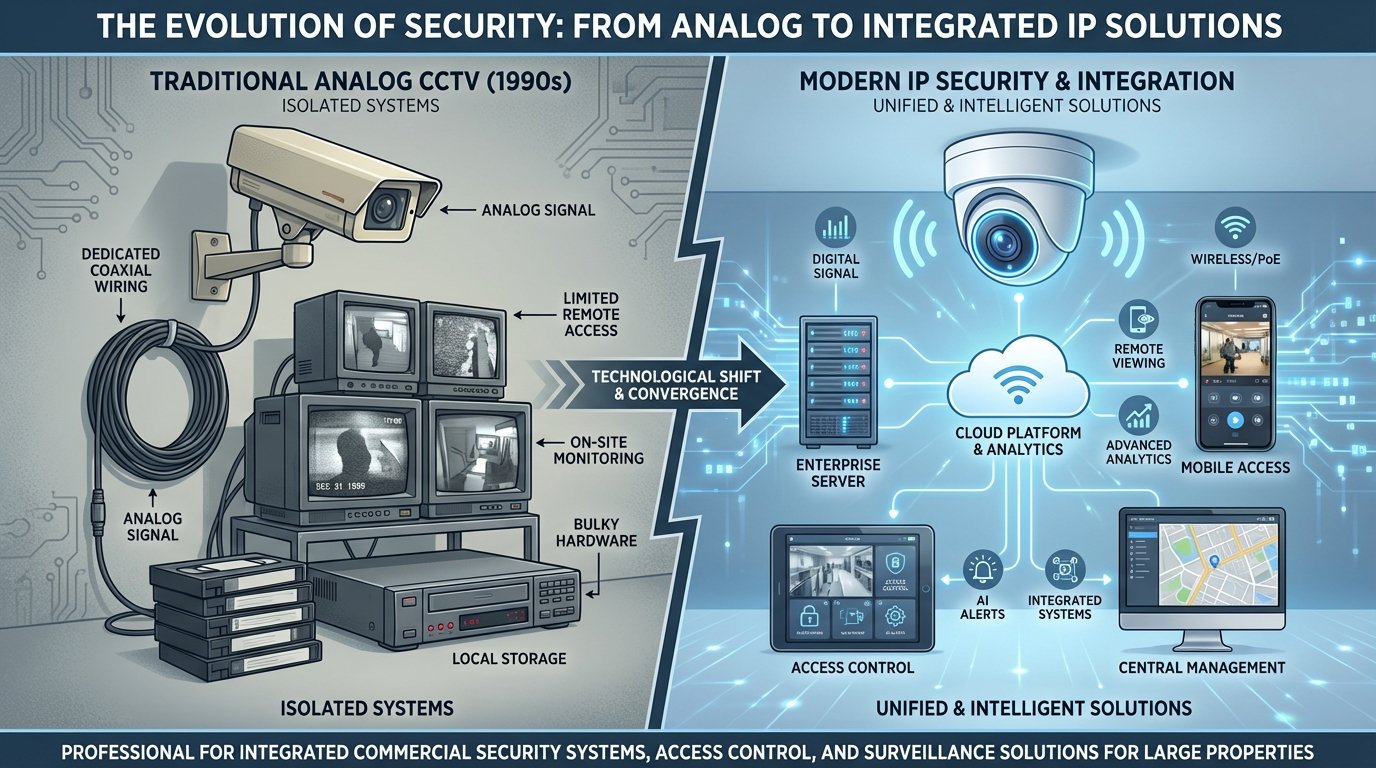
Modern commercial security camera systems bear little resemblance to the closed-circuit analog systems of a decade ago. Today’s surveillance infrastructure consists of network-connected cameras running embedded operating systems, video management software hosted on servers or cloud platforms, mobile applications for remote viewing, and integration points with access control systems, analytics platforms, and property management software.
This transformation from isolated security tools to comprehensive integrated security solutions creates exponential value for property managers—and exponential attack surfaces for cybercriminals.
IP security cameras commercial properties deploy today are essentially specialized computers with image sensors. They run Linux or proprietary operating systems, maintain network connections, store credentials, and process data. Like any networked device, they’re vulnerable to exploitation when not properly secured.
Primary Threat Vectors in Commercial Surveillance
Default Credentials and Weak Authentication
The most common surveillance system vulnerability remains embarrassingly simple: default usernames and passwords. Many organizations complete commercial security camera installation without changing factory-set credentials. Attackers maintain databases of default credentials for every major camera manufacturer and systematically scan internet-connected devices.
For properties with hundreds of cameras across parking garages, amenity areas, and building perimeters, tracking and updating credentials manually becomes unwieldy without proper security system integration practices.
Unpatched Firmware and Software
Camera manufacturers regularly release firmware updates addressing discovered vulnerabilities. However, large commercial deployments often run outdated firmware for months or years. A multi-family residential property with 300 cameras across multiple buildings faces significant complexity in maintaining current firmware across all devices.
Video management systems require similar attention. Platforms like Milestone XProtect or Hanwha’s WAVE VMS release regular security updates that must be applied systematically.
Network Segmentation Failures
Surveillance cameras should operate on isolated network segments separate from guest WiFi, business operations, and building automation systems. Yet many properties place cameras on the same network infrastructure as point-of-sale systems, guest internet access, and administrative computers.
This creates lateral movement opportunities. An attacker compromising a single camera can potentially pivot to access other network resources, including access control systems, payment processing, or confidential data.
Exposed Management Interfaces
Camera web interfaces and video management platforms exposed directly to the internet without VPN protection represent critical vulnerabilities. Properties wanting convenient remote access sometimes sacrifice security by opening management ports to public internet access.
Cloud-Based Security Advantages and Considerations
Cloud-based surveillance platforms like Verkada fundamentally alter the security equation for commercial properties. Unlike traditional architectures where video management servers sit on-premises with potentially vulnerable configurations, cloud platforms centralize security management with dedicated cybersecurity teams.
Verkada’s hybrid cloud architecture stores video footage locally on cameras with encrypted solid-state storage while management, access controls, and analytics operate through cloud infrastructure with enterprise-grade security. Properties benefit from automatic security updates, centralized credential management, and professionally maintained infrastructure without deploying on-premises servers.
For multi-site organizations—hotel chains, retail operations with multiple locations, or property management companies overseeing numerous communities—cloud platforms eliminate the security complexity of maintaining individual servers at each property.
However, cloud solutions introduce their own considerations. Organizations must evaluate data sovereignty requirements, internet connectivity dependencies, and compliance obligations that may restrict cloud-based surveillance for certain applications.
Security Integration Architecture for Protected Systems
Proper Network Design
Professional south florida security installation begins with appropriate network architecture. Surveillance systems should operate on dedicated VLANs with firewall rules preventing unnecessary communication with other network segments.
For a typical 250-unit luxury high-rise, this means cameras monitoring parking areas, amenity centers, and common spaces communicate only with the video management system and authorized management interfaces—not with resident networks, guest WiFi, or building automation systems.
Fortress Global Technology’s approach as a licensed electrical contractor includes comprehensive network infrastructure design, ensuring security cameras integrate properly with broader network architecture rather than being bolted onto existing infrastructure as an afterthought.
Multi-Factor Authentication and Credential Management
Access to surveillance footage and system configuration requires strict authentication controls. Modern platforms support multi-factor authentication, requiring both password credentials and mobile device verification, biometric authentication, or hardware tokens.
For properties with security teams, property management staff, and sometimes law enforcement requiring access, role-based access controls ensure individuals see only appropriate camera feeds and functions. A maintenance supervisor doesn’t need access to HR office cameras, while front desk staff shouldn’t control loading dock surveillance.
Encryption Throughout the System
Video streams, stored footage, and management communications must employ encryption. Cameras should transmit video using encrypted protocols, preventing interception of surveillance feeds during network transmission. Stored video requires encryption protecting recorded footage from unauthorized access if storage devices are physically compromised.
Axis Communications cameras support extensive encryption options including HTTPS for web interfaces, 802.1X network authentication, and encrypted video streams. These enterprise-grade capabilities matter significantly for properties handling sensitive surveillance footage.
The Integrated Security Advantage
Comprehensive security system integration creates cybersecurity advantages beyond what isolated surveillance systems achieve. When cameras integrate with access control platforms like Brivo or Continental, security policies can automatically respond to threats.
For example, when an access control system detects an unauthorized door forced open, integrated cameras immediately begin recording at higher frame rates with longer retention while simultaneously notifying security personnel. This integration happens through secure APIs with encrypted communication rather than exposing vulnerable management interfaces.
Similarly, visitor management systems integrated with surveillance create audit trails connecting specific individuals to camera footage, enhancing security while protecting privacy through documented access policies.
Vendor Security Practices Matter
The manufacturing security practices behind IP security cameras commercial properties deploy directly impact long-term cybersecurity. Fortress Global Technology partners with manufacturers demonstrating commitment to security throughout product lifecycles.
Axis Communications maintains a dedicated Product Security team, publishes transparent vulnerability disclosures, and commits to security updates throughout extended product lifespans. Hanwha Vision similarly provides regular security patches and maintains SOC 2 Type II compliance for cloud services.
For Verkada’s cloud platform, security includes third-party penetration testing, bug bounty programs encouraging security researchers to identify vulnerabilities, and regular security audits. The platform’s architecture prevents cameras from being directly accessible from the internet, eliminating the exposure risk inherent in traditional IP camera deployments.
Compliance and Liability Considerations
Beyond technical security concerns, commercial property owners face regulatory and liability obligations related to surveillance system cybersecurity. Healthcare facilities must consider HIPAA requirements, payment card industry standards apply to retail properties, and various privacy regulations govern residential surveillance.
A data breach exposing surveillance footage could trigger notification requirements, regulatory investigations, and civil liability. Property owners and facility managers increasingly recognize that surveillance system security isn’t just an IT concern—it’s a risk management imperative requiring professional implementation and ongoing maintenance.
Maintenance and Ongoing Security Management
Cybersecurity isn’t achieved through installation alone. Commercial surveillance systems require ongoing management including regular firmware updates, periodic security audits, credential rotation, and monitoring for anomalous behavior.
For large properties, this becomes unmanageable without professional support. A parking garage with 150 cameras across multiple levels needs systematic update management ensuring cameras remain secure while maintaining operational availability.
Fortress Global Technology’s service model includes ongoing support throughout system lifespans, not installation-and-goodbye approaches. Local teams familiar with specific property deployments can schedule maintenance windows, apply security updates, and respond to security concerns without requiring properties to develop in-house expertise.
The Role of Professional Integration
The complexity of securing modern commercial surveillance systems explains why professional integrated security solutions matter significantly. A property purchasing cameras and attempting DIY installation confronts network configuration challenges, encryption setup, access control integration, and ongoing maintenance requirements they’re unprepared to handle.
Licensed contractors with electrical and low-voltage expertise handle complete installations from network infrastructure through final system configuration. This includes proper cable installation preventing physical tampering, network design isolating security systems, and configuration following security best practices.
For properties in South Florida, considerations include backup power systems ensuring surveillance continues during hurricane-related outages, environmental factors affecting outdoor camera placement, and coordination with local authorities for compliance with building codes and regulations.
Building Security into Future Deployments
Properties planning surveillance system upgrades or new deployments should prioritize security from initial design. Key considerations include:
- Selecting manufacturers with demonstrated security commitments and ongoing support
- Designing network architecture with proper segmentation and access controls
- Implementing centralized management platforms enabling systematic security updates
- Establishing credential management and multi-factor authentication policies
- Planning for ongoing maintenance and security management throughout system lifespan
- Considering cloud-based platforms that centralize security responsibility with dedicated teams
For multi-family residential communities, hotels, office buildings, and other large commercial properties, these considerations require expertise beyond typical IT capabilities. Surveillance systems operate at the intersection of physical security, network infrastructure, and cybersecurity—demanding specialized knowledge.
Taking Action on Surveillance Cybersecurity
Property owners uncertain about their current surveillance system security should begin with professional assessment. Understanding existing vulnerabilities enables prioritized remediation addressing the most critical exposures first.
For properties with aging surveillance infrastructure using outdated cameras and on-premises video management servers, migration to modern platforms provides both functional upgrades and security improvements. Cloud platforms like Verkada offer migration paths preserving existing camera investments where possible while modernizing management infrastructure.
Organizations managing multiple properties benefit particularly from centralized security management enabling consistent policies and systematic updates across all locations.
Protect Your Investment with Professional Security
Commercial surveillance systems represent significant investments in property protection, liability management, and operational efficiency. These systems deserve the same cybersecurity attention organizations apply to financial systems and confidential data.
Fortress Global Technology brings two decades of experience designing and implementing comprehensive commercial security solutions for large-scale properties throughout South Florida and nationwide. As a licensed electrical contractor and authorized integrator for leading manufacturers including Verkada, Axis Communications, Hanwha Vision, and Milestone Systems, we deliver complete security ecosystems with cybersecurity built into every deployment.
Our approach emphasizes systems integration—making surveillance cameras, access control, visitor management, and network infrastructure work together seamlessly while maintaining security throughout. With local support teams and ongoing service, we ensure your surveillance system remains protected throughout its operational lifespan.
Contact Fortress Global Technology today to schedule a comprehensive security assessment for your commercial property. Let’s discuss how properly designed and secured surveillance systems protect your property, your reputation, and your peace of mind in an increasingly connected world.