
Corporate properties throughout South Florida face unique security challenges that extend far beyond simple door locks. With thousands of employees, visitors, contractors, and delivery personnel moving through office buildings daily, property managers need sophisticated systems that control access while maintaining operational efficiency. Modern office building access control has evolved into a comprehensive security layer that integrates with surveillance, visitor management, and building automation systems to create protected environments where business can thrive.
The complexity of managing multi-tenant office buildings, parking facilities, elevator access, and after-hours security requires professional-grade solutions designed specifically for commercial environments. Whether managing a single Class A office tower in Boca Raton or a corporate campus spanning multiple buildings in West Palm Beach, the right access control infrastructure protects assets, reduces liability, and provides the operational flexibility that modern businesses demand.
Understanding Commercial Access Control for Office Buildings
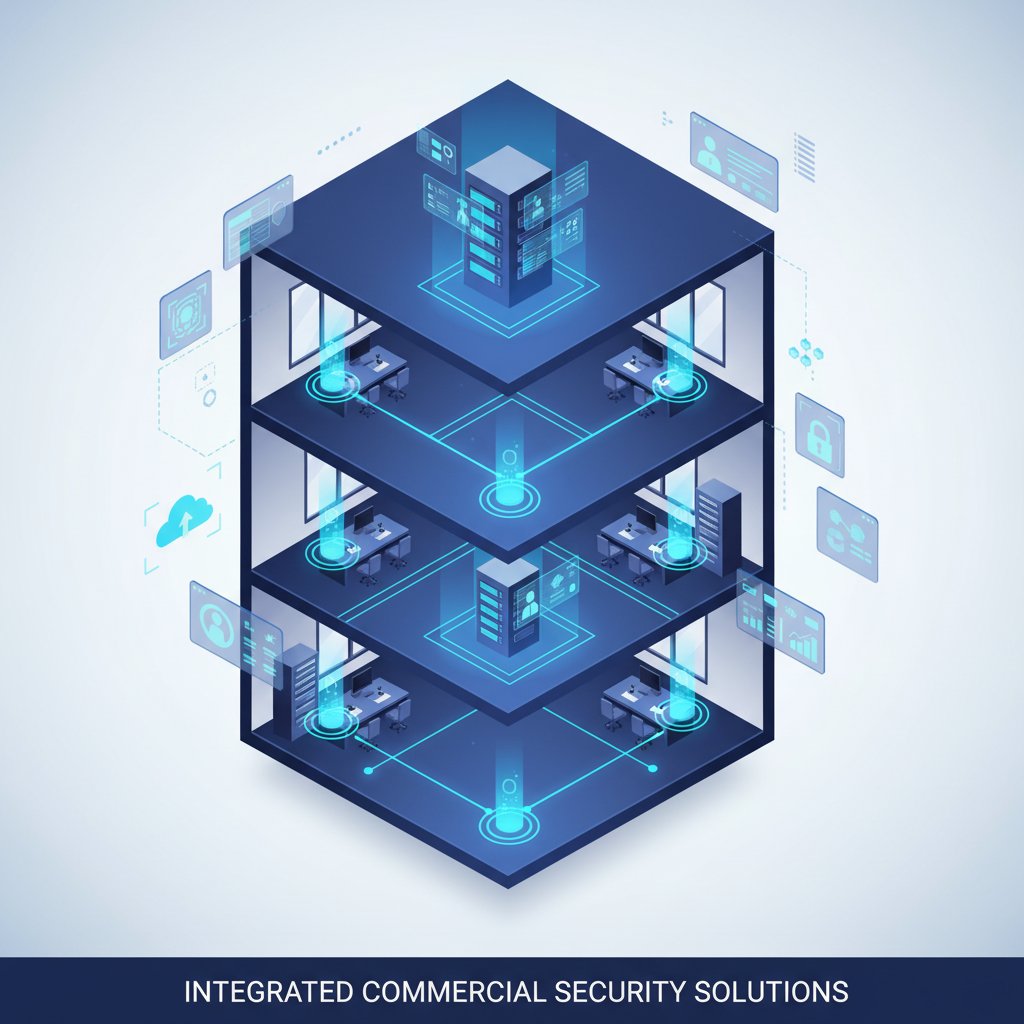
Commercial access control systems differ fundamentally from residential or small business solutions in their scale, integration capabilities, and management requirements. These enterprise-grade platforms manage thousands of credentials, control hundreds of entry points, and generate detailed audit trails that document every access event across the property.
Unlike traditional lock-and-key systems where physical security becomes a nightmare when employees leave or keys get lost, door access control installation creates a digital permission structure. Credentials can be instantly activated, modified, or revoked from a central management platform. When an employee terminates, their access disappears immediately across every door, elevator, and parking gate they previously used.
Modern smart access control systems integrate multiple technologies into unified platforms. Access readers communicate with surveillance cameras to trigger recordings when doors open. Intercom systems at lobby entrances connect with cloud-based visitor management. Parking access ties directly into the building’s main security ecosystem. This integration creates security layers that work together rather than operating as isolated components.
Cloud Versus On-Premise Architecture
Office building security systems now offer two primary architectural approaches, each with distinct advantages depending on property requirements and IT infrastructure.
Cloud-based platforms like Brivo and Verkada eliminate on-site servers and provide management from any internet-connected device. Property managers access the system through web browsers or mobile apps, reviewing access events, managing credentials, and receiving real-time alerts wherever they work. This architecture particularly benefits multi-site property management companies overseeing office buildings throughout South Florida from a central operations center.
On-premise systems maintain local servers and offer complete data control for organizations with strict information security policies. These platforms work independently of internet connectivity, which some financial services, legal firms, and government contractors require for compliance reasons.
Many enterprise deployments now use hybrid approaches—local controllers at each door maintain operation during network outages while cloud platforms provide centralized management and mobile access capabilities.
Multi-Tenant Access Control Challenges
Office buildings housing multiple businesses face security complexity that single-tenant properties never encounter. Each company needs independent control over their leased space while the property management team maintains oversight of common areas, building systems, and emergency protocols.
Integrated security solutions address this through hierarchical permission structures. Property managers control lobby entrances, elevator access, parking facilities, and building amenities. Individual tenants receive administrative access for their specific floor or suite, managing their own employees without affecting other businesses in the building.
When a company leases the entire fifth floor, their credentials grant elevator access only to that level. As they grow and expand to additional floors, the system instantly extends their permissions. When they eventually move out, every credential associated with that tenant gets deactivated simultaneously.
This multi-tenant capability extends to after-hours access policies. Some businesses operate standard hours while others run 24/7 operations. The access control system enforces different rules for different tenants, alerting property management only when unusual access patterns occur.
Elevator Integration for Vertical Access Control
High-rise office buildings require more than just door security—they need vertical access control that manages elevator permissions by floor. This prevents unauthorized individuals from reaching restricted areas even if they bypass lobby security.
Modern elevator integration works through several methods. Card readers installed in elevator cabs or on each floor activate only the buttons corresponding to that credential’s permissions. An employee with fifth-floor access can press only the fifth-floor button; other floors remain inactive. Visitors escorted to the executive suite can access only that specific floor without wandering throughout the building.
This technology provides particular value for mixed-use buildings combining office space with residential units, retail operations, or parking structures. Each user type receives appropriate vertical access without requiring security personnel at every elevator bank.
Emergency protocols override these restrictions during fire alarms or building evacuations, automatically releasing elevator controls and unlocking stairwell doors to facilitate safe egress.
Visitor Management and Temporary Credentials
Professional office buildings generate substantial visitor traffic—clients attending meetings, contractors performing maintenance, delivery personnel accessing loading docks, and temporary employees working on projects. Managing this transient population requires flexible credentialing that maintains security without creating operational bottlenecks.
Cloud-based platforms like Brivo excel at visitor management through mobile credentials and temporary access links. A tenant expecting a client meeting emails a time-limited access code that works only during the appointment window. The visitor presents this code at the lobby kiosk or uses their smartphone as a credential, gaining building entry without requiring permanent credentials or security escort.
Contractors working on renovation projects receive credentials programmed for specific time periods and designated areas. A plumbing contractor gets access to mechanical rooms and the floor under renovation, but nowhere else. When the project completes, their credentials automatically expire.
This approach creates detailed audit trails documenting exactly who accessed which areas and when. If equipment goes missing or security incidents occur, property managers review access logs to identify everyone present during the relevant timeframe.
Parking Facility Access and Integration
Office building parking garages represent significant security challenges and operational considerations. Multi-level structures housing hundreds of vehicles need surveillance, access control, and integration with the building’s primary security ecosystem.
License plate recognition systems integrated with access control platforms provide frictionless entry for registered vehicles. Cameras at garage entrances capture plate images, cross-reference them against authorized databases, and automatically open gates for approved vehicles. This eliminates the delays and lost credential issues that plague traditional card-based parking access.
Monthly parking permit holders, daily visitors, and valet operations all function within the same integrated platform. Visitors receive temporary parking credentials linked to their building access, ensuring parking permissions match their authorized visit duration. When their meeting ends and building access expires, their parking privileges terminate simultaneously.
Security cameras throughout parking structures integrate with access control events. When a vehicle enters after hours, the system flags the event and ensures corresponding video footage gets retained for investigation if needed.
Loading Dock and Back-of-House Security
Office building security extends beyond public entrances to loading docks, mechanical rooms, IT closets, and other sensitive back-of-house areas. These spaces require controlled access with detailed logging to prevent theft, vandalism, and unauthorized entry to building systems.
Loading docks use scheduled access control where delivery companies receive time-windowed credentials. A courier making daily deliveries between 9 AM and 11 AM has credentials that work only during that window at the loading dock entrance. Attempts to access other doors or use credentials outside scheduled times generate immediate alerts.
Mechanical rooms housing HVAC systems, electrical panels, and telecommunications equipment need restricted access limited to maintenance personnel and building engineers. Access events in these sensitive areas often trigger camera recordings, creating video documentation of who accessed critical infrastructure and when.
IT closets and server rooms employ multi-factor authentication requiring both credential and PIN code entry. This ensures that even if a credential gets lost or stolen, unauthorized individuals cannot access spaces containing valuable equipment and sensitive data.
Integration with Building Automation and Fire Systems
Enterprise office building security systems must integrate with existing building automation platforms, fire alarm systems, and emergency protocols. This integration ensures security measures enhance safety rather than creating conflicts during emergencies.
When fire alarms activate, integrated security solutions automatically unlock egress doors, disable elevator access control, and release magnetic door holders to close fire-rated doors. This happens instantly without requiring security personnel to manually override systems during evacuations.
Building automation systems communicate with access control to manage HVAC and lighting based on occupancy. When the last person exits a floor and badge out, the system reduces heating and cooling to energy-saving levels. This integration provides operational efficiency while maintaining detailed records of building occupancy.
Intrusion detection systems for after-hours monitoring integrate with access control to create armed and disarmed zones. When employees work late and badge into specific areas, those zones automatically disarm. As they leave and badge out, the zones re-arm without requiring manual system programming.
South Florida Climate Considerations
Custom commercial security systems designed for South Florida office buildings must withstand regional environmental challenges that don’t exist in other climates. The combination of extreme heat, humidity, salt air exposure, and hurricane threats requires weather-resistant technology and backup power infrastructure.
Outdoor access readers at parking garage entrances, perimeter gates, and loading docks need IP66 or higher weatherproof ratings. These industrial-grade devices resist moisture intrusion and continue operating despite direct sun exposure and afternoon thunderstorms that characterize South Florida summers.
Coastal properties from Palm Beach to Miami Beach face accelerated corrosion from salt air. Stainless steel or marine-grade aluminum enclosures protect sensitive electronics, while regular maintenance schedules prevent degradation that compromises system reliability.
Hurricane preparedness extends to security infrastructure. Battery backup systems maintain access control operation during power outages, ensuring employees can exit buildings safely even when commercial power fails. Cloud-based platforms maintain remote management capabilities through cellular backup connections when internet service disrupts.
Selecting Technology Partners for Enterprise Deployments
Large office buildings require security systems boca raton property managers can depend on for years of reliable operation. The technology brands selected for these installations determine long-term performance, integration capabilities, and support availability.
Verkada provides cloud-based access control integrated directly with their surveillance camera platform through a unified Command interface. This architectural approach works exceptionally well for office buildings wanting streamlined management where access events automatically trigger camera recordings and alerts include video verification.
Brivo pioneered cloud access control and offers mobile-first credentialing through smartphone apps. Their platform particularly suits office buildings with tech-forward tenants who expect to use phones as building credentials rather than carrying separate access cards.
Napco’s Continental Access Control systems provide enterprise-grade on-premise solutions for organizations requiring local data control. Their platforms integrate with virtually any electronic lock hardware and scale from single doors to thousands of openings across campus environments.
Axis Communications and Hanwha Vision supply professional-grade IP cameras that integrate with access control platforms through open ONVIF standards. Their surveillance technology provides the high-resolution footage needed for facial recognition, license plate capture, and incident investigation in large office complexes.
Professional Installation and Ongoing Support
South Florida security installation for enterprise office buildings requires licensed electrical contractors capable of handling complete infrastructure deployment—not just equipment resellers who mount devices to walls. Professional integration encompasses network infrastructure design, low-voltage cabling installation, system configuration, and comprehensive testing before handover.
Licensed contractors coordinate with local building departments for permits, ensure installations meet Florida Building Code requirements, and integrate properly with existing fire alarm systems and building automation platforms. This expertise prevents the costly mistakes that occur when inexperienced installers attempt complex commercial deployments.
Fortress Global Technology maintains local service teams throughout South Florida, providing ongoing support through the system’s operational lifespan. When access control issues arise, local technicians respond quickly rather than requiring remote troubleshooting or waiting for out-of-state service providers to schedule visits.
This long-term support relationship proves essential for office buildings where security systems operate 24/7 without tolerance for extended downtime. Regular maintenance visits, firmware updates, and system health monitoring prevent minor issues from becoming major failures that compromise building security.
Future-Proofing Office Building Security
Smart access control systems installed today must accommodate tomorrow’s technology requirements without complete replacement. Office buildings represent long-term investments where security infrastructure should expand and adapt as properties evolve and new capabilities emerge.
Open platform architectures using industry-standard protocols like ONVIF ensure compatibility with future devices regardless of manufacturer. Properties aren’t locked into single-vendor ecosystems that become obsolete or face limited upgrade paths.
Scalable platforms allow office buildings to start with core security requirements and add capabilities over time. A property might initially install access control at primary entrances and parking areas, then expand to include elevator integration, visitor management kiosks, and mobile credentials as budget allows.
Cloud-based systems receive regular feature updates and security patches automatically, ensuring installations remain current without costly upgrade projects. New capabilities like facial recognition, artificial intelligence analytics, and advanced reporting become available through software updates rather than hardware replacement.
Securing Your Office Building Investment
Office building access control represents more than security technology—it’s infrastructure that protects property value, reduces operational costs, minimizes liability exposure, and creates professional environments that attract quality tenants. The right integrated security solutions provide these benefits while delivering the reliability and scalability that commercial properties demand.
Fortress Global Technology designs and installs comprehensive security ecosystems for office buildings throughout South Florida, from Boca Raton corporate parks to Miami’s urban office towers. As a licensed electrical contractor and authorized integrator for leading commercial security brands, we handle complete installations from infrastructure cabling through final system configuration and ongoing support.
Our team understands the unique challenges of multi-tenant access control, elevator integration, parking facility security, and the environmental considerations specific to South Florida’s climate. We create customized solutions tailored to each property’s requirements rather than offering one-size-fits-all packages.
Contact Fortress Global Technology today to schedule a comprehensive security assessment for your office building. Our consultative approach evaluates your current vulnerabilities, operational requirements, and growth plans to design integrated security solutions that protect your property investment for years to come.