
South Florida’s mixed-use developments present a unique security challenge: managing access for hundreds or thousands of tenants across residential units, commercial spaces, parking facilities, and shared amenities—all within a single property. A luxury high-rise in Brickell might house 400 residential tenants, ground-floor retail, professional offices on mid-levels, and rooftop amenities. Each occupant requires different access permissions, different schedules, and different security protocols. Traditional lock-and-key systems can’t handle this complexity, and fragmented security approaches create operational nightmares for property managers.
Modern multi-tenant access control systems solve these challenges by creating unified platforms where property managers can grant, modify, and revoke access permissions across entire properties from a single dashboard. When properly designed and integrated, these systems reduce administrative burden, enhance security, improve tenant experience, and protect property value. For South Florida’s growing portfolio of mixed-use developments, choosing the right access control architecture isn’t just about security—it’s about operational efficiency and competitive positioning in demanding rental markets.
Understanding Multi-Tenant Access Control Architecture
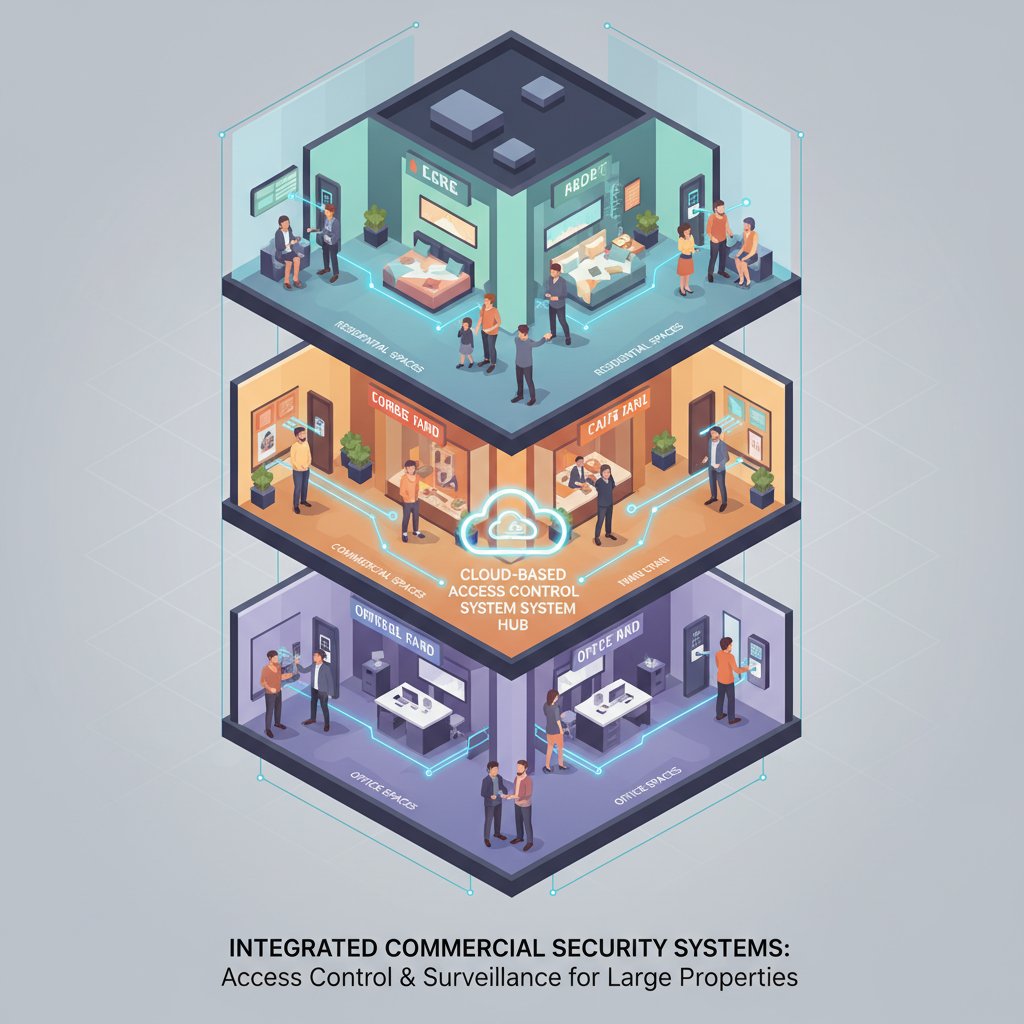
Multi-tenant access control differs fundamentally from single-purpose systems. Rather than controlling access to one building or one group of similar users, these systems must accommodate diverse populations with overlapping but distinct access needs. A resident might need 24/7 access to their unit, building lobbies, parking garage, and pool area. A retail employee needs daytime access to their storefront and back-of-house delivery areas. An office worker requires access to elevators serving specific floors during business hours. Visitors need temporary credentials that automatically expire.
Effective multi-tenant access control systems create hierarchical permission structures that mirror property organization. Property managers establish access groups based on tenant type, location, and time requirements. When a new residential tenant signs a lease, their credentials automatically grant appropriate access across all relevant entry points. When that tenant moves out, one action revokes all permissions instantly—eliminating the security risks and administrative costs associated with unreturned keys or changing locks.
Cloud-Based vs. On-Premise Access Control for Mixed-Use Properties
South Florida property managers face an important architectural decision when implementing multi-tenant access control: cloud-based platforms or traditional on-premise systems. This choice significantly impacts scalability, administrative efficiency, and long-term operational costs.
Cloud-Based Access Control Advantages
Cloud-based access control platforms like Brivo and Verkada have transformed security management for mixed-use developments. These systems eliminate on-site servers, reduce IT infrastructure requirements, and enable remote management from anywhere with internet connectivity. For property management companies overseeing multiple South Florida buildings, cloud platforms provide centralized visibility across entire portfolios.
Brivo, a pioneer in cloud access control since 1999, specializes in multi-tenant environments. Property managers access the system through web browsers or mobile apps, creating tenant credentials, adjusting permissions, and monitoring access events in real-time. When a Coral Gables mixed-use property adds a new restaurant tenant, managers issue mobile credentials to staff within minutes—no site visit required. Integration with property management software automates credential lifecycle management, synchronizing access permissions with lease agreements.
Verkada’s cloud platform extends beyond access control to create comprehensive security ecosystems. Their Command interface unifies access control, surveillance cameras, and alarm systems under one dashboard. When an unauthorized access attempt occurs at a restricted door, the system automatically triggers nearby cameras to record, sends alerts to security personnel, and creates searchable audit trails—all without multiple software platforms or complex integration projects.
When On-Premise Systems Make Sense
Some mixed-use properties require on-premise access control infrastructure. Properties with limited internet connectivity, strict data sovereignty requirements, or existing server infrastructure may benefit from traditional systems. Napco’s Continental access control platform offers robust on-premise capabilities with optional cloud connectivity, providing flexibility for properties transitioning between architectures.
Integrated Security Solutions for Complex Properties
True security effectiveness in multi-tenant environments comes from integration—making access control systems communicate with surveillance cameras, visitor management platforms, and property management software. Fortress Global Technology specializes in designing these integrated security solutions for South Florida’s largest mixed-use developments.
Consider a 300-unit Boca Raton property with ground-floor retail. When commercial tenants receive deliveries after hours, integrated systems coordinate multiple security layers. Delivery personnel use temporary access credentials at the loading dock entrance. The access control system triggers cameras to begin recording, logs the exact entry time, and sends notifications to property management. Elevator access restrictions ensure delivery personnel can only reach designated floors. When they exit, the system confirms departure and creates complete audit trails.
This integration extends to parking facilities—a critical concern for mixed-use properties where residential, commercial, and visitor parking must coexist. License plate recognition cameras identify authorized vehicles, cross-reference access control databases, and open barriers automatically. Residents receive assigned parking spaces with automatic access. Retail customers receive validated temporary parking. Office tenants access designated levels during business hours. All parking events sync with access control audit logs for dispute resolution and security investigations.
Mobile Credentials and Tenant Experience
South Florida’s tech-savvy tenant population expects smartphone-based access solutions. Mobile credentials transform tenant experience while reducing administrative costs and enhancing security. Rather than distributing physical key cards that tenants lose or forget, property managers issue digital credentials to smartphones. Tenants unlock doors by presenting their phones to readers or using Bluetooth proximity unlocking.
Brivo’s mobile access platform excels in multi-tenant environments. Tenants download a single app that works across all entry points—building lobbies, parking gates, amenity centers, and individual units. Property managers issue, modify, or revoke credentials remotely without collecting physical cards. When residential tenants host guests, they share temporary mobile credentials that automatically expire after specified timeframes. This guest access capability is particularly valuable for Miami Beach properties where short-term rentals require frequent credential turnover.
Mobile credentials also solve elevator access control challenges common in high-rise mixed-use properties. Tenants automatically receive elevator permissions to their floor while preventing access to restricted levels. Office tenants can’t access residential floors. Residential tenants can’t access executive office suites. Maintenance staff receive building-wide access during work shifts. These granular controls protect privacy and security while maintaining convenience.
Visitor Management Integration
Mixed-use properties in Palm Beach County and Broward County generate substantial visitor traffic—delivery services, contractors, office guests, retail customers, and residential visitors. Professional visitor management systems integrate with multi-tenant access control to streamline guest access while maintaining security protocols.
Modern visitor management platforms like those integrated with Brivo create pre-registration workflows. Office tenants expecting clients can pre-authorize visitor access through web portals. When guests arrive at the lobby, they check in through self-service kiosks or reception tablets. The system verifies their appointment, captures visitor information, issues temporary credentials, and notifies hosts of arrival. Access permissions automatically expire when visitors exit or after predetermined time limits.
For South Florida properties where loading dock access requires coordination with commercial tenants, integrated visitor management prevents unauthorized deliveries. Retail tenants schedule delivery windows through online portals. Delivery drivers receive temporary access credentials valid only during approved timeframes. Surveillance cameras automatically record all loading dock activity, and access control systems prevent entry outside scheduled windows. This integration eliminates the security risks of propped-open doors while improving operational efficiency.
Amenity Access Control in Mixed-Use Environments
Shared amenities—pools, fitness centers, rooftop terraces, conference rooms—require sophisticated access management in multi-tenant properties. Residential tenants may receive unlimited amenity access. Office tenants might get business-hour gym access. Retail tenants may have no amenity privileges. Smart access control systems enforce these complex permission structures automatically.
Fort Lauderdale luxury properties often feature multiple amenity zones with different access tiers. Premium residential units include rooftop terrace access. Standard units access ground-level pools and fitness facilities. Guest suites allow limited amenity access. Access control systems tie credentials to specific lease agreements, automatically granting appropriate permissions based on unit type and lease terms. When tenants upgrade units or lease agreements change, permission updates occur centrally without visiting each access point.
Occupancy management represents another critical amenity application. Access control systems integrated with occupancy sensors prevent pool areas or fitness centers from exceeding capacity limits—addressing both safety concerns and premium tenant experience. When amenity areas reach capacity, access control temporarily restricts additional entry while displaying real-time availability through tenant apps.
Scalability for Growing South Florida Properties
Mixed-use developments rarely remain static. Properties add buildings, expand amenity offerings, increase parking capacity, and modify tenant mixes over time. Scalable access control systems accommodate growth without expensive replacements or complicated upgrades.
Cloud-based access control platforms offer inherent scalability advantages. Adding access points requires installing door hardware and readers—no server upgrades or software licensing changes. When a West Palm Beach property adds a second residential tower, the existing Verkada or Brivo platform extends seamlessly to the new building. Tenants use the same credentials across both structures. Property managers administer both buildings through unified dashboards.
Network infrastructure planning is critical for scalability. Fortress Global Technology designs access control installations with growth in mind, implementing network architectures that support future expansion. As licensed electrical contractors, we install proper low-voltage cabling, network switches, and power distribution to accommodate additional access points without infrastructure overhauls. This future-proofing protects property investments and prevents costly retrofit projects.
Florida-Specific Implementation Considerations
South Florida’s environmental conditions demand careful equipment selection for outdoor access control applications. Parking garage readers, pool area access points, and exterior doors face extreme heat, humidity, and salt air exposure. Inferior equipment fails quickly, creating security vulnerabilities and maintenance expenses.
Commercial-grade access control hardware from manufacturers like Axis Communications and Verkada features weatherproof ratings suitable for coastal Florida installations. Stainless steel or marine-grade components resist corrosion from salt air. Thermal management ensures electronics function reliably in temperatures exceeding 100 degrees. Proper installation techniques—including weatherproof junction boxes, sealed conduit, and corrosion-resistant mounting hardware—extend equipment lifespan and maintain security integrity.
Hurricane preparedness also influences access control design for South Florida properties. Battery backup systems maintain access control during power outages, preventing lockouts or security failures. Integration with building management systems allows coordinated emergency responses. During hurricane events, property managers remotely modify access permissions to restrict entry to evacuation areas while maintaining emergency egress.
Choosing the Right Integration Partner
Multi-tenant access control implementation requires expertise beyond equipment installation. Successful projects demand comprehensive understanding of network infrastructure, system integration, building codes, and long-term support requirements. Property managers should partner with licensed commercial security technology integrators experienced in complex mixed-use environments.
Fortress Global Technology brings twenty years of large-scale property experience to South Florida access control projects. As licensed electrical contractors serving properties nationwide with deep local expertise in Palm Beach, Broward, and Miami-Dade counties, we design, install, and support integrated security solutions tailored to each property’s unique requirements. Our partnerships with leading manufacturers—including Verkada, Brivo, Axis Communications, and Napco—ensure access to best-in-class technology appropriate for specific applications.
Our approach emphasizes systems thinking rather than product sales. We analyze traffic patterns, tenant types, operational workflows, and security vulnerabilities to design comprehensive solutions where access control, surveillance cameras, visitor management, and property management systems work together seamlessly. Professional installation includes permitting, code compliance, network infrastructure, system configuration, and personnel training. Local support teams remain available throughout system lifespans—not just during installation.
Protecting Property Value Through Professional Security
Multi-tenant access control systems represent significant investments that protect even larger property values. Effective security attracts quality tenants willing to pay premium rents for safe, well-managed properties. Insurance providers often reduce premiums for properties with professional access control and surveillance integration. Liability protection from comprehensive audit trails and video evidence prevents costly legal exposure.
Beyond security benefits, modern access control systems improve operational efficiency. Property managers eliminate rekeying costs, reduce administrative time managing physical keys, and automate tenant lifecycle processes. Mobile credentials enhance tenant satisfaction and reduce service calls. Integration with property management software streamlines operations and reduces staffing requirements.
For South Florida’s competitive multi-family and mixed-use markets, professional security infrastructure isn’t optional—it’s essential for attracting residents and commercial tenants who demand both safety and convenience. Properties that invest in comprehensive, integrated security solutions protect their investments while positioning themselves competitively for long-term success.
Planning Your Multi-Tenant Access Control Project
Successful multi-tenant access control implementation begins with thorough needs assessment. Property managers should inventory all access points requiring control—building entries, elevators, parking gates, amenity areas, commercial spaces, and service entrances. Document tenant types, access requirements, and operational workflows. Consider integration requirements with existing property management software, surveillance systems, and building automation.
Professional security integrators conduct site surveys evaluating network infrastructure, power availability, door hardware compatibility, and environmental conditions. These assessments identify potential challenges before installation begins, preventing costly surprises and project delays. Detailed system design documents specify equipment, configuration requirements, integration points, and implementation timelines.
Property managers should prioritize partners offering comprehensive support beyond installation. Systems require periodic firmware updates, user training, permission adjustments, and occasional troubleshooting. Local support teams familiar with your property ensure rapid response when issues arise and proactive maintenance preventing system failures.
Fortress Global Technology serves South Florida’s largest mixed-use properties with customized access control solutions designed for long-term reliability and scalability. Our team evaluates your specific requirements, recommends appropriate technology platforms, and implements integrated security ecosystems that protect your property investment while improving operational efficiency. Contact us today to discuss your multi-tenant access control needs and discover how professional security integration enhances property value, tenant satisfaction, and peace of mind.