
The era of disconnected security products is over. Property managers overseeing large commercial properties in 2026 face a fundamental choice: continue managing separate systems with isolated data and multiple interfaces, or transition to integrated security ecosystems that communicate, automate, and provide unified intelligence across every access point, camera, and sensor.
For properties ranging from 300-room hotels to 500-unit residential towers, integrated security solutions represent more than technological sophistication—they deliver operational efficiency, reduced liability exposure, and enhanced property value that fragmented systems simply cannot match.
What Integration Actually Means in Modern Security
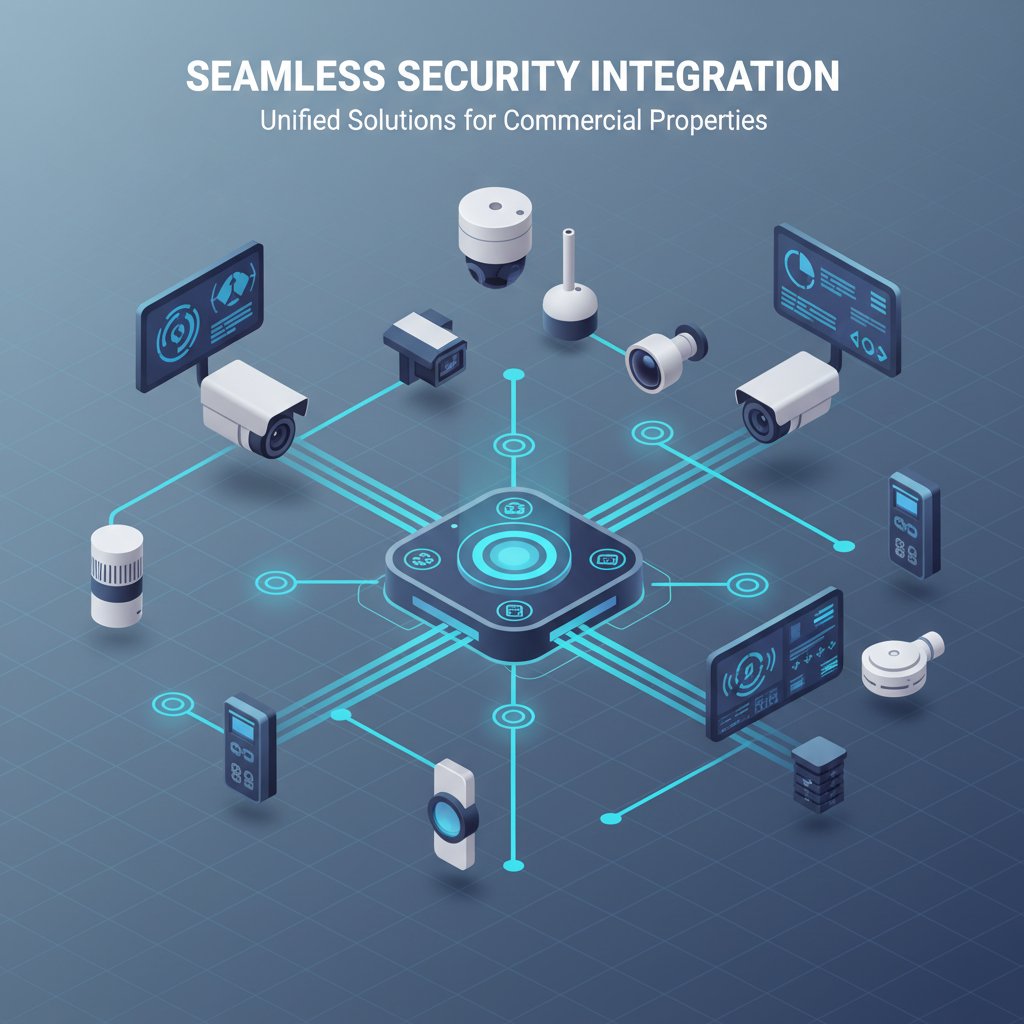
True security system integration extends beyond basic compatibility. When Fortress Global Technology designs comprehensive security ecosystems for large commercial properties, integration means creating intelligent workflows where multiple technologies function as a cohesive unit rather than isolated tools.
Consider a typical scenario at a Class A office building: An employee badges into the parking garage at 2:00 AM—outside normal business hours. An integrated system immediately triggers cameras at that entry point to begin recording, logs the access event with timestamp and user identity, sends notifications to security personnel, and tracks the employee’s path through subsequent access points including elevators and office suite doors.
This synchronized response happens automatically because the access control system, surveillance cameras, elevator controls, and notification platform share data and trigger coordinated actions. No security guard manually switching between screens. No reviewing disconnected camera footage to correlate with access logs. The unified security platform handles everything seamlessly.
The Technologies That Create Complete Protection
Comprehensive security for commercial properties in 2026 typically integrates five core technology layers:
- Access Control Systems: Electronic credentials, card readers, biometric authentication, and mobile access manage who enters which areas and when
- Video Surveillance: IP cameras with AI-powered analytics provide visual verification, forensic evidence, and proactive threat detection
- Intrusion Detection: Sensors monitoring doors, windows, and perimeter zones alert to unauthorized access attempts
- Visitor Management: Digital check-in systems issue temporary credentials and track all non-permanent building occupants
- Intercom and Communication: Two-way audio at entry points, parking structures, and throughout facilities enables verification and emergency response
The transformative capability emerges when these technologies communicate. Access control triggers cameras. Intrusion sensors activate specific camera views. Visitor management systems automatically issue mobile credentials valid only during scheduled appointment windows. Everything connects through a unified security platform that property managers access through a single interface.
Cloud-Based Platforms Transforming Property Security
Cloud infrastructure fundamentally changed how large properties deploy and manage security technology. Unlike legacy systems requiring on-site servers, extensive local storage, and dedicated IT infrastructure, modern platforms like Verkada’s Command system centralize management while distributing intelligence to edge devices.
Verkada cameras include onboard storage capable of retaining weeks of footage locally, while simultaneously making that video accessible from any authorized device through secure cloud access. Access control panels manage door hardware and credentials with cellular backup connectivity, eliminating single points of failure that plague server-dependent systems.
For properties managing multiple locations, cloud platforms provide unprecedented oversight. A hotel management company overseeing twenty properties across different states accesses every camera, access log, and system alert from a unified dashboard. When an incident occurs at any location, evidence gathering requires minutes rather than the hours previously needed to coordinate with on-site teams and retrieve footage from disparate systems.
Brivo’s cloud-based access control platform, pioneering 100% cloud architecture since 1999, exemplifies this approach for commercial access management. Property managers issue mobile credentials to new tenants instantly, revoke access for departing occupants immediately, and grant temporary access to contractors or visitors without physical key management or on-site visits.
When Cloud Architecture Makes Strategic Sense
Cloud platforms deliver maximum value for specific property profiles:
- Multi-location enterprises requiring centralized oversight across geographically distributed facilities
- Properties with limited on-site IT infrastructure or expertise
- Organizations prioritizing rapid deployment and scalability
- Facilities requiring mobile-first access for tech-savvy occupants
- Properties where remote management reduces operational costs
However, certain properties—particularly those with extensive existing infrastructure, strict data sovereignty requirements, or specialized integration needs—may benefit from hybrid architectures combining cloud management with on-premise components.
AI-Powered Intelligence Elevating Security Operations
Artificial intelligence transformed surveillance from passive recording to proactive security intelligence. Modern cameras from manufacturers like Axis Communications and Hanwha Vision embed sophisticated analytics directly into camera hardware, processing video streams locally to detect specific events without constant human monitoring.
These AI capabilities include:
- People Detection and Tracking: Distinguishing humans from animals, vehicles, or environmental motion to reduce false alarms
- License Plate Recognition: Automatically capturing and logging vehicle plates at parking facility entry/exit points
- Perimeter Protection: Creating virtual tripwires or zones that trigger alerts when crossed during specified periods
- Occupancy Analytics: Monitoring space utilization in amenity areas, lobbies, or parking structures
- Unusual Activity Detection: Identifying behaviors like loitering, running, or falls that may indicate security or safety incidents
For a 400-unit luxury residential tower, AI analytics might monitor the parking garage overnight, alerting security only when humans are detected in restricted areas—not every time headlights trigger motion detection. The system learns normal patterns and highlights genuine anomalies requiring attention.
When integrated with access control, these analytics become even more powerful. Cameras can verify that the person using a credential matches authorized user profiles, detect tailgating where multiple people enter using a single credential, or confirm that loading dock doors opened by authorized access actually correspond with scheduled deliveries.
Integration Challenges at Enterprise Scale
While integrated security solutions deliver substantial advantages, implementation complexity increases proportionally with property size and system scope. This reality explains why professional security integrators like Fortress Global Technology exist—and why property managers should view integration expertise as essential rather than optional.
Network Infrastructure Requirements
Modern IP-based security systems demand robust network infrastructure. A property deploying 200 high-definition cameras, 150 access control readers, and dozens of intercom stations generates substantial data traffic requiring proper network architecture, sufficient bandwidth, and quality-of-service configurations ensuring security systems maintain priority during peak usage.
Licensed electrical contractors handle the complete infrastructure—structured cabling throughout facilities, network switch installation and configuration, power-over-Ethernet implementation for devices, and backup power systems ensuring security functionality during outages. These foundational elements determine whether integrated systems perform reliably or suffer chronic connectivity issues.
Cross-Platform Compatibility and Standards
Not all security technologies communicate equally well. While industry standards like ONVIF (Open Network Video Interface Forum) improve compatibility between manufacturers, achieving seamless integration often requires deep technical expertise navigating API connections, webhook configurations, and middleware platforms.
Milestone Systems’ XProtect video management software exemplifies open platform architecture, supporting over 10,000 camera models from virtually any manufacturer. This flexibility allows properties to select best-in-class cameras for specific applications—thermal cameras from Axis for perimeter detection, ultra-wide-angle cameras from Hanwha Vision for parking garages—while managing everything through unified software.
However, leveraging this flexibility requires integration expertise understanding which combinations work optimally and how to configure proper communication between disparate systems.
Property-Specific Integration Applications
Different commercial property types benefit from tailored integration approaches addressing their unique operational requirements and security challenges.
Hotels and Hospitality Properties
Integrated security for hotels extends beyond protecting assets—it enhances guest experience while streamlining operations. Systems integration enables:
- Automatic mobile credential issuance upon reservation, allowing keyless room entry via smartphone
- Parking access control tied to reservation systems, validating guest parking automatically
- Elevator access restrictions limiting guests to floors containing their assigned rooms
- Loading dock scheduling systems providing temporary access for approved vendors during designated delivery windows
- Pool and amenity area monitoring with occupancy tracking for capacity management
When a guest checks out, their credentials automatically expire across all systems—room access, parking privileges, amenity areas—without manual intervention across multiple platforms.
Multi-Family Residential Communities
Residential properties ranging from luxury high-rises to sprawling communities benefit from integration creating convenience for residents while maintaining security:
- Single credentials providing building entry, parking access, amenity spaces, and package rooms
- Visitor management systems allowing residents to issue temporary mobile credentials to guests
- Video intercoms at entry points integrated with resident smartphones for remote visitor verification
- Package delivery monitoring with camera coverage and access logs tracking courier entry to mail rooms
- Community-wide surveillance with license plate recognition monitoring vehicle entry/exit
For property management teams, unified platforms dramatically simplify resident turnover—issuing credentials to new residents, transferring amenity privileges, and ensuring departing residents lose all access simultaneously across every system.
Commercial Office Buildings
Office properties, particularly multi-tenant buildings, require sophisticated access hierarchies and detailed audit trails:
- Tiered access levels restricting tenants to their leased spaces while allowing common area access
- Elevator integration limiting floor access based on credential permissions
- After-hours HVAC and lighting tied to access events, activating building services when authorized users enter
- Visitor management systems notifying tenants of guest arrival and automatically granting lobby-to-suite access
- Emergency lockdown capabilities immediately securing all entry points during critical incidents
Parking Facilities and Structures
Large parking operations benefit substantially from integration combining access control, surveillance, revenue management, and intercom systems:
- License plate recognition systems granting automatic access to monthly parkers while directing transient parkers to payment processes
- Camera coverage at every entry/exit lane, parking level, stairwell, and elevator lobby
- Emergency call stations with video intercoms providing immediate visual communication with security
- Access control integration with building tenants, validating parking privileges match building access
- Analytics tracking space availability and flow patterns optimizing capacity utilization
Implementation Considerations for Large Properties
Property managers evaluating integrated security solutions should consider several strategic factors influencing long-term success.
Scalability and Future Expansion
Large properties evolve—adding buildings, expanding parking, renovating amenity spaces. Integrated security systems must accommodate growth without requiring complete replacement. Cloud platforms like Brivo and Verkada offer inherent scalability, adding locations or devices through subscription models rather than capital infrastructure investments.
Properties should evaluate not just current needs but anticipated expansion over 5-10 year horizons when selecting platforms and partners.
Ongoing Support and Service
Complex integrated systems require ongoing support throughout their operational lifespan. Unlike simple product purchases, enterprise security systems benefit from relationships with integrators providing firmware updates, troubleshooting connectivity issues, adding users, adjusting camera positioning, and optimizing system performance.
Fortress Global Technology’s approach emphasizes long-term partnerships rather than installation-and-departure, with local service teams available throughout Florida and nationwide for enterprise clients. This ongoing accessibility proves invaluable when properties need rapid response to system issues or operational changes requiring configuration adjustments.
Regional Considerations
Geographic factors influence system design and component selection. South Florida properties face unique environmental challenges—hurricane preparedness, corrosion from salt air, extreme heat and humidity affecting equipment longevity. Outdoor cameras and access control hardware require weather-resistant ratings and corrosion-resistant materials. Backup power systems ensure security functionality during weather-related outages.
Similarly, urban properties in markets like Manhattan contend with different challenges—historic building retrofits, union labor coordination, vertical transportation integration in high-rises, and dense network environments with potential interference.
ROI Beyond Security: Operational and Financial Benefits
While security remains the primary driver for integrated systems, comprehensive platforms deliver additional value benefiting property operations and financial performance.
Integrated systems reduce labor costs by automating manual processes—electronic credentials eliminate physical key management, visitor systems reduce front desk workload, and automated reporting provides audit trails without manual log compilation. Properties report operational efficiency gains of 20-30% compared to legacy systems requiring hands-on management.
Insurance carriers increasingly recognize advanced security systems when calculating premiums. Properties demonstrating comprehensive surveillance coverage, access control throughout facilities, and detailed audit capabilities often qualify for reduced rates reflecting lower risk profiles.
For multi-family and commercial properties, advanced security serves as a competitive differentiator attracting quality tenants willing to pay premium rates for enhanced safety and modern amenities like mobile access and video intercoms.
Selecting the Right Integration Partner
Technology selection matters, but integration expertise determines whether sophisticated systems deliver their potential value or become expensive disappointments. Property managers should evaluate potential partners based on:
- Licensing and credentials: Electrical contractor licenses, manufacturer certifications, and insurance coverage appropriate for commercial projects
- Large property experience: Demonstrated expertise with properties matching your scale and complexity
- Integration capabilities: Technical depth across multiple platforms and manufacturers, not single-product focus
- Local service availability: Nearby teams providing ongoing support, not just distant installers
- Infrastructure expertise: Ability to handle complete installations including cabling, network, and power systems
Since 2004, Fortress Global Technology has specialized in designing and implementing integrated security ecosystems for large commercial properties nationwide, with particular expertise in South Florida’s unique requirements and growing presence in New York City markets.
The Path Forward: Integrated Security as Standard Practice
As we progress through 2026, integrated security solutions transition from competitive advantage to baseline expectation for large commercial properties. Tenants, guests, and property stakeholders increasingly expect seamless, intelligent security that operates invisibly while providing comprehensive protection.
Properties continuing to operate disconnected, legacy systems face growing disadvantages—operational inefficiency, increased liability exposure, difficulty attracting quality tenants, and eventual forced migration to modern platforms under less favorable circumstances.
The question facing property decision-makers isn’t whether to integrate security systems, but rather when and with whom. Properties benefit most from proactive planning with experienced integrators who understand both technology capabilities and property-specific operational requirements.
Fortress Global Technology provides comprehensive consultation for commercial properties evaluating integrated security solutions. Our team assesses your current systems, operational requirements, and future plans to design customized security ecosystems leveraging best-in-class platforms from partners including Verkada, Brivo, Axis Communications, Hanwha Vision, and other leading manufacturers. Contact our Boca Raton office to schedule a property security assessment and discover how integrated systems enhance protection, efficiency, and property value.