
Commercial property security has entered a new era. Wireless access control systems are transforming how hotels, office buildings, and multi-family communities in South Florida manage security—eliminating thousands of feet of cabling while delivering enterprise-grade protection. For property managers overseeing sprawling complexes in Palm Beach, Broward, and Miami-Dade counties, this shift represents both an operational advantage and a fundamental rethinking of security infrastructure.
Traditional wired access control systems require extensive conduit runs, wall penetrations, and infrastructure modifications that can take weeks to install and cost tens of thousands in labor alone. Wireless access control systems communicate via encrypted radio frequencies or existing network infrastructure, dramatically reducing installation complexity while maintaining the robust security features that large commercial properties demand.
How Wireless Access Control Systems Actually Work
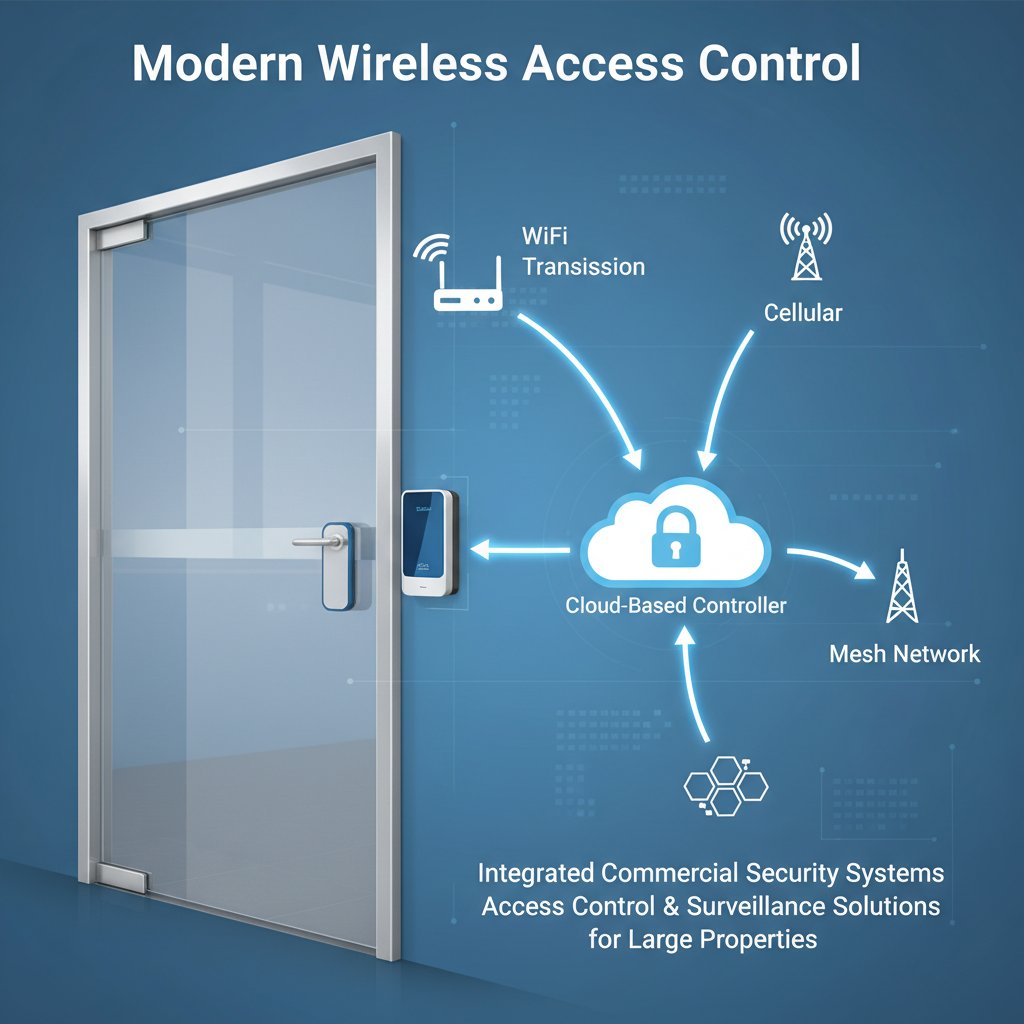
Unlike consumer-grade smart locks, commercial wireless access control maintains the same security standards as wired systems—but delivers credentials and commands differently. These systems typically use one of three communication methods: WiFi-connected controllers that leverage existing network infrastructure, dedicated mesh radio networks that create their own secure communication pathways, or hybrid approaches that combine both technologies for maximum reliability.
Each access point contains a controller with onboard decision-making capability. When an employee presents their credential—whether a card, fob, or smartphone—the local controller verifies authorization and grants or denies access. Critical security decisions happen at the door, not at a central panel potentially located hundreds of feet away. This distributed intelligence approach means a network interruption won’t lock employees out of the building.
The system synchronizes credential databases and logs access events through encrypted wireless communications. Property managers update permissions from centralized software platforms, with changes propagating to all doors within seconds. This architecture supports the same advanced features found in traditional systems: scheduled access, multi-credential authentication for high-security areas, integration with surveillance cameras and intrusion detection, and comprehensive audit trails.
Why Florida Properties Are Adopting Wireless Solutions
South Florida’s unique environmental and architectural characteristics make wireless access control particularly advantageous. Coastal properties face constant exposure to salt air and humidity that corrodes conduit connections and junction boxes over time. Wireless systems minimize exterior cable runs and vulnerable connection points, reducing long-term maintenance requirements.
Historic properties throughout Boca Raton, Coral Gables, and West Palm Beach present restoration challenges where cutting through masonry walls for cable runs can damage architectural integrity or violate preservation requirements. Wireless access control allows these properties to implement modern security without compromising historic fabric.
Florida’s building codes require impact-resistant construction in wind-borne debris regions. Retrofitting wired access control into existing concrete block and reinforced structures involves extensive drilling and conduit installation. Wireless systems mount to existing door hardware with minimal structural modification, streamlining both installation and permitting processes.
Wireless Access Control Benefits for Large Commercial Properties
Faster Deployment Across Distributed Facilities
A 300-room beachfront hotel in Delray Beach implementing wired access control might face a six-week installation timeline as contractors run cables through multiple buildings, coordinate with ongoing operations, and minimize guest disruption. That same property using wireless access control can complete installation in two weeks, with most work happening during standard business hours without disruptive construction activities.
Multi-building office complexes and mixed-use developments benefit even more dramatically. Connecting five buildings across a 10-acre campus with wired infrastructure requires trenching, underground conduit installation, potentially crossing roadways or navigating underground utilities. Wireless systems communicate across buildings using the property’s existing network or dedicated long-range radio, eliminating months of civil work.
Scalability and Future Expansion
Commercial properties evolve constantly. Office buildings reconfigure tenant spaces, apartment communities add amenity areas, hotels renovate wings and add service entrances. Each new door requiring access control in a traditional wired system means pulling new cable from the nearest panel—assuming that panel has available capacity.
Wireless access control systems scale effortlessly. Adding access control to a newly constructed pool pavilion, fitness center, or package room requires mounting the wireless controller and connecting power—a process measured in hours, not days. The controller joins the existing wireless network automatically, appearing in the management software for immediate configuration.
This scalability matters tremendously for properties planning phased security upgrades. A 400-unit luxury high-rise in Aventura might initially secure common areas and parking facilities, then add individual unit access control as residents adopt mobile credentials. Wireless infrastructure supports this graduated approach without requiring fundamental system redesign.
Integration with Cloud-Based Management Platforms
Modern wireless access control systems pair naturally with cloud-based security platforms from manufacturers like Verkada and Brivo. Property managers access the entire security ecosystem—surveillance cameras, access control, visitor management, and intrusion detection—through unified interfaces accessible from any device with internet connectivity.
This cloud integration enables sophisticated automation scenarios. When someone uses their credential to access a parking garage elevator at 2:00 AM, the system can automatically trigger nearby cameras to record, send alerts to security personnel, and log the event for audit purposes. These integrations happen in software without requiring physical wiring between systems.
For property management companies overseeing multiple locations throughout South Florida, cloud-based wireless access control provides centralized visibility across entire portfolios. Security directors monitor access events at properties from West Palm Beach to Miami from single dashboards, identifying patterns and responding to incidents regardless of physical location.
Mobile Credentials and Touchless Access
Wireless access control systems support mobile credentials that transform smartphones into access devices. Employees, residents, and authorized visitors receive digital credentials through apps like Brivo Mobile Pass, eliminating physical card distribution and the security vulnerabilities of lost or copied credentials.
Mobile credentials offer operational advantages beyond convenience. Property managers instantly grant temporary access to contractors, delivery personnel, or short-term residents without producing physical cards. When someone’s employment ends or a lease expires, managers revoke credentials remotely with immediate effect—no wondering whether terminated employees returned their access cards.
The touchless access capability gained prominence during recent health concerns but delivers lasting value. Employees and residents unlock doors by approaching with smartphones in pockets or bags, maintaining hands-free operation while carrying packages, luggage, or equipment. This convenience factor significantly improves daily user experience across hotels, office buildings, and residential communities.
Smart Access Control Systems: Advanced Features for Enterprise Properties
Today’s wireless access control platforms incorporate artificial intelligence and advanced analytics that transform security from reactive monitoring to proactive risk management. These smart access control systems learn normal usage patterns and flag anomalies requiring attention.
A commercial office building in Boca Raton using Verkada’s access control platform might receive alerts when someone’s credential is used at unusual times, when multiple people tailgate through a single door opening, or when high-security areas experience access attempts from unauthorized credentials. The system correlates access events with surveillance camera footage automatically, providing security teams with immediate visual context for every door opening.
Occupancy management features help properties optimize space utilization and enforce capacity limits. Hotels track conference room usage, apartment communities monitor amenity areas, and office buildings analyze which floors and departments actually utilize space—data that informs lease negotiations, renovation decisions, and operational planning.
Integration with other building systems creates comprehensive automation. Access control systems communicate with HVAC platforms to adjust climate control when employees access floors after hours, trigger lighting systems to illuminate pathways as people move through facilities, and coordinate with elevator controls to grant floor access based on credential authorization levels.
Wireless Versus Wired: When Each Approach Makes Sense
Wireless access control isn’t universally optimal for every scenario. Understanding when wireless solutions excel and when traditional wired infrastructure remains preferable helps properties make informed decisions.
Wireless access control particularly suits retrofit applications where existing buildings need security upgrades without major construction, distributed facilities where connecting multiple buildings presents challenges, properties requiring rapid deployment timelines, and environments where future expansion seems likely. Hotels, multi-family residential communities, office buildings with frequent tenant improvements, and mixed-use developments typically benefit most from wireless approaches.
Wired access control might remain preferable for new construction where infrastructure installation happens during initial building phases, extremely high-security applications where eliminating any wireless communication reduces attack surfaces, facilities with severe wireless interference from industrial equipment, or properties with existing conduit infrastructure already supporting other low-voltage systems.
Many enterprise properties implement hybrid approaches—wireless access control for most doors with hardwired connections for critical high-security entrances, server rooms, or cash-handling areas. This strategy balances installation efficiency with maximum security where it matters most.
Professional Installation: Why Expertise Matters for Commercial Deployments
Commercial wireless access control systems require professional design and installation despite their simpler physical infrastructure. Licensed integrators like Fortress Global Technology assess wireless signal coverage throughout facilities, identify potential interference sources, design network infrastructure supporting hundreds of access points, and ensure proper system configuration.
South Florida security installation presents unique challenges requiring local expertise. Properties must account for concrete block construction that impedes wireless signals, metal hurricane shutters that create radio frequency barriers, and coastal environments that demand specific equipment ratings. Professional integrators specify appropriate hardware, plan wireless coverage accounting for building materials, and design systems meeting Florida building codes.
Proper installation also addresses network security. Wireless access control systems transmit credential data and access decisions across radio frequencies or network connections that require encryption, authentication, and monitoring. Professional integrators implement network segmentation isolating access control traffic from guest WiFi or other systems, configure firewalls protecting management interfaces, and establish secure remote access for ongoing administration.
Wireless Access Control Across Different Property Types
Hotels and Hospitality Properties
Hotels throughout Fort Lauderdale, Miami Beach, and Palm Beach benefit tremendously from wireless access control’s flexibility. Guest room locks communicate wirelessly with property management systems, automatically synchronizing access permissions with reservation schedules. Guests receive mobile keys through hotel apps, enabling smartphone-based room entry from check-in through checkout.
Back-of-house areas including loading docks, storage rooms, employee entrances, and restricted service corridors gain centralized access management without extensive cabling through guest areas. Wireless controllers mount to existing doors with minimal disruption to operations—critical for properties maintaining continuous guest service during security upgrades.
Multi-Family Residential Communities
Luxury apartment buildings and condominium towers in Brickell, Coral Gables, and downtown West Palm Beach deploy wireless access control across amenity areas, parking facilities, package rooms, and residential units. Residents use mobile credentials or key cards to access community spaces, with permissions automatically adjusting based on lease status, HOA membership, or reservation systems.
Visitor management integrates seamlessly with wireless access control. Residents grant temporary access to guests, dog walkers, or cleaning services through mobile apps, with the system automatically logging entry times and revoking credentials after specified periods. This capability eliminates the security vulnerabilities and operational hassles of physical guest passes.
Commercial Office Buildings
Office properties implement wireless access control for tenant space management, common area security, and after-hours access control. Multi-tenant buildings grant each company independent administration of their leased spaces while maintaining building-wide security standards.
Elevator integration controls floor access based on credential authorization—preventing visitors from accessing floors beyond their intended destination. Wireless access control simplifies this integration compared to hardwired systems requiring cable runs through elevator shafts and machine rooms.
Frequently Asked Questions About Wireless Access Control
How reliable are wireless access control systems compared to wired systems?
Commercial wireless access control systems achieve the same reliability standards as traditional wired infrastructure. Controllers include onboard decision-making capability and backup power, so access control continues functioning during network interruptions. Encrypted communications, redundant pathways, and continuous system monitoring ensure consistent performance. Properties throughout South Florida operate wireless access control systems managing thousands of daily transactions with reliability exceeding 99.9%.
Can wireless access control be hacked more easily than wired systems?
Modern wireless access control uses bank-level encryption protecting all communications between credentials, controllers, and management systems. Professional installations implement network security best practices including traffic segmentation, intrusion detection, and regular security updates. Wireless systems often prove more secure than older wired systems lacking contemporary encryption and authentication standards. The key factor isn’t wireless versus wired—it’s whether the system receives professional installation and ongoing security management.
What happens if WiFi goes down in a wireless access control system?
Access control continues operating normally during network outages. Controllers store credential databases locally and make access decisions independently without requiring constant network connectivity. The network facilitates management updates and event logging, but doesn’t control moment-to-moment door operations. When connectivity restores, controllers synchronize any credential changes and upload logged events. This architecture prevents network issues from creating security vulnerabilities or locking people out of facilities.
How much does wireless access control cost compared to traditional systems?
Wireless access control typically reduces total installation costs by 30-50% compared to wired systems when accounting for labor, materials, and project timelines. Hardware costs remain similar, but dramatically reduced cabling and conduit requirements lower installation expenses substantially. Properties requiring rapid deployment see additional savings from compressed timelines minimizing contractor mobilization and project management overhead. Long-term costs often favor wireless systems due to easier expansion and reduced maintenance of physical cabling infrastructure.
Implementing Wireless Access Control: What Properties Should Expect
Professional wireless access control deployment begins with comprehensive site assessment. Integrators evaluate facility layouts, identify doors requiring security, assess wireless coverage and network infrastructure, and develop customized system designs addressing specific operational requirements and security concerns.
Implementation timelines vary based on property size and complexity but generally proceed much faster than wired installations. A typical 200-unit apartment community might complete wireless access control implementation across common areas and amenities within two weeks. A 150-room hotel adding wireless locks to guest rooms and access control to service areas might require three to four weeks accounting for lock replacement and system integration with property management platforms.
Ongoing support remains critical for commercial access control systems. Professional integrators provide system monitoring, credential management assistance, regular security updates, and rapid response when issues arise. South Florida properties benefit from working with local integration firms maintaining service teams throughout Palm Beach, Broward, and Miami-Dade counties for prompt on-site support when needed.
Secure Your Property with Professional Wireless Access Control
Wireless access control systems represent the current standard for commercial property security—combining enterprise-grade protection with installation efficiency, operational flexibility, and advanced features impossible with traditional approaches. For South Florida properties ranging from beachfront hotels to urban office towers, wireless solutions address both universal security requirements and region-specific challenges including hurricane-resistant construction, coastal environments, and rapidly evolving operational needs.
Fortress Global Technology specializes in designing and implementing comprehensive wireless access control solutions for large commercial properties throughout Florida and nationwide. As authorized integrators for Verkada, Brivo, and other leading access control platforms, we provide complete security ecosystems tailored to your property’s specific requirements—from initial assessment and system design through professional installation and ongoing support.
Contact Fortress Global Technology today to schedule a consultation and discover how wireless access control can transform security operations at your commercial property while reducing installation complexity and positioning your facility for future growth.