Active construction site at night
  1. Home
  2. Industries
  3. Construction Sites

Construction Site Security Systems

Active construction sites lose billions of dollars annually to theft, vandalism, and unauthorized entry. Fortress Global Technology deploys mobile surveillance trailers, temporary access control, and remote monitoring solutions purpose-built for construction sites with no permanent electrical, no finished structure, and no time to waste.

Security solutions built for construction sites

Construction sites present security challenges that standard commercial surveillance systems are not designed to handle. There is no permanent building to mount cameras on. There is often no reliable electrical supply. The site perimeter changes as the project progresses, and dozens of subcontractors with different schedules need controlled access at all hours. The build lasts months or years, and then the security infrastructure needs to be removed without a trace.

Fortress Global Technology has deployed security systems for active construction sites, ground-up commercial developments, large residential projects, and major renovation sites nationwide. Our flagship solution for construction sites is the mobile surveillance trailer: a self-contained, solar-powered, 4G/5G and Starlink-connected unit with AI-detection cameras and remote monitoring capability that can be on site and operational within 24 to 48 hours of order. We also deploy temporary perimeter cameras along fence lines, LPR cameras at site entrances for vehicle and contractor logging, and temporary gate access control for tracking who enters and exits the site at any point during the build.

Security challenges in construction

Equipment and materials theft

The construction industry loses billions of dollars annually to theft of tools, copper wire, heavy equipment, lumber, and building materials. Sites are often unoccupied overnight and on weekends, with no permanent security infrastructure in place and no easy way to detect intrusions until the crew arrives the next morning and discovers equipment missing. A single theft event can delay a project by days and cost tens of thousands of dollars in replacement materials and equipment rental.
Vandalism and unauthorized entry

Open construction sites attract trespassers, which creates both property damage and serious liability exposure. If an unauthorized person is injured on the site, the general contractor and property owner face significant legal and insurance consequences regardless of posted warning signs. Visible surveillance with documented deterrence reduces unauthorized entry and creates an evidence record in the event of an incident.

No permanent infrastructure

Most security systems assume a finished building with permanent electrical supply, conduit pathways, and stable mounting surfaces. A construction site has none of that, particularly in the early phases of a ground-up build. Security equipment must be self-contained and deployable without relying on infrastructure that does not yet exist. Mobile surveillance trailers address this directly by operating entirely on solar power and cellular connectivity with no site hookup required.

Subcontractor access control and safety compliance

On a busy commercial build, dozens of different subcontractors with different schedules, different clearances, and different access needs arrive and depart throughout the day. Knowing exactly who is on site at any given time is not just an operational concern; it is a safety compliance requirement. OSHA and insurance carriers may require documented site monitoring and access records, and tracking subcontractor presence manually through a paper sign-in sheet is unreliable and creates record-keeping gaps.

Our construction site security solutions

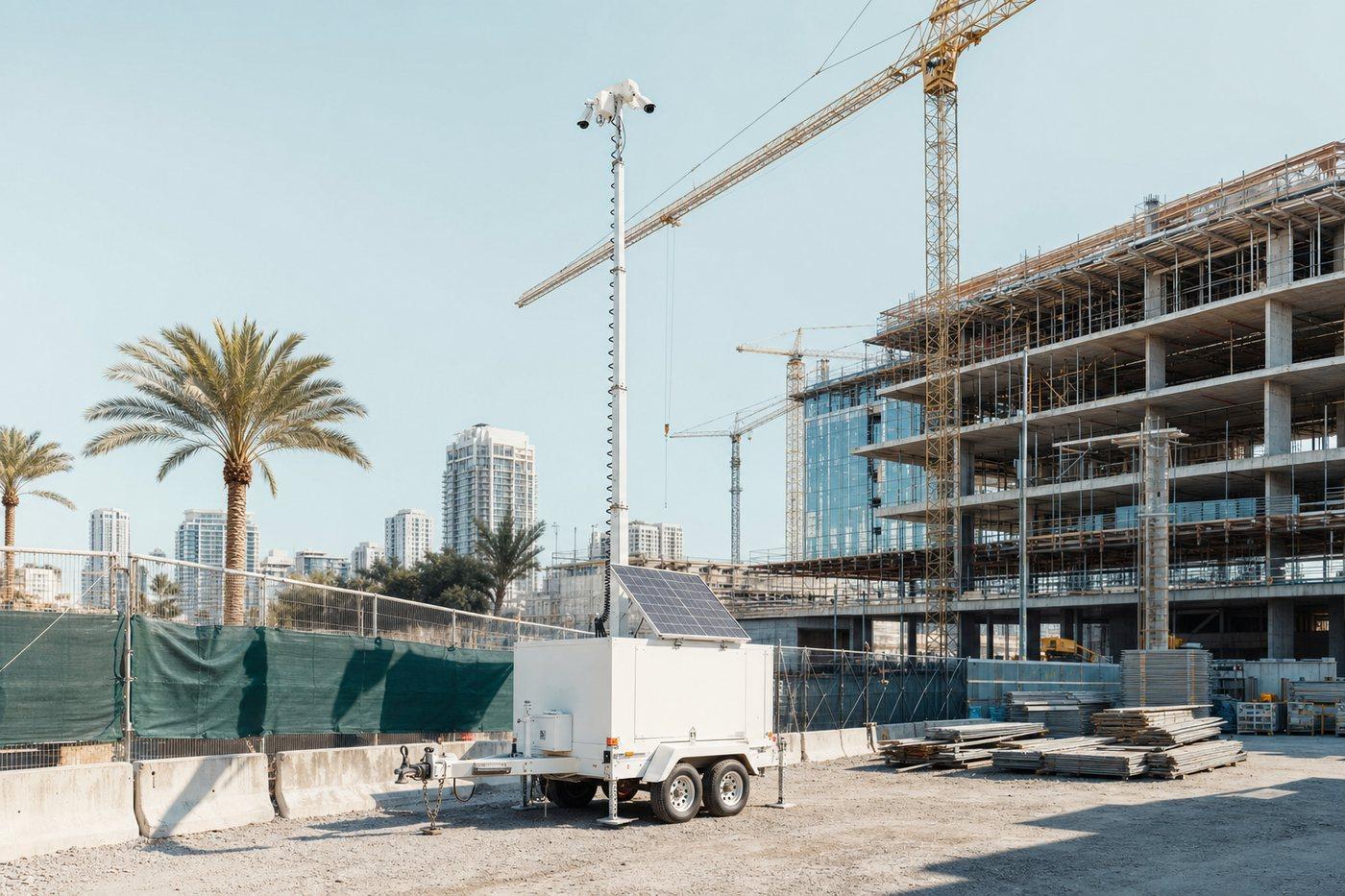
A mobile surveillance trailer with its mast extended on an active construction site

Mobile surveillance trailers

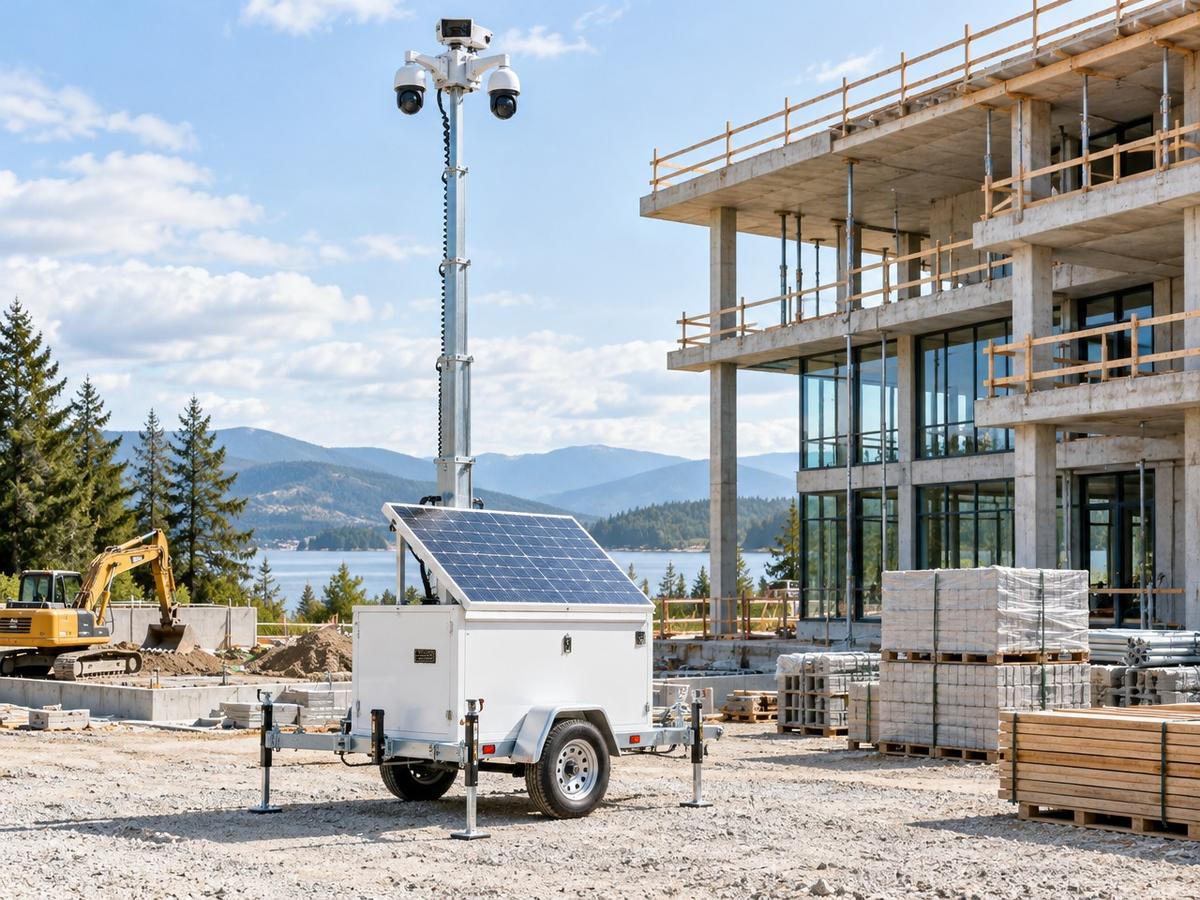
Our mobile surveillance trailers are the flagship solution for active construction sites. Each unit is solar-powered with battery backup, eliminating any dependence on site electrical. Connectivity runs on 4G/5G cellular with Starlink satellite backup, maintaining reliable uptime even in remote locations. AI-detection cameras with pan-tilt capability provide wide-area coverage of the site perimeter and critical zones. Remote monitoring allows live operators to watch the site overnight and trigger audio deterrents or dispatch response when activity is detected. Units deploy within 24 to 48 hours of order and are removed without permanent installation when the project is complete. Rental terms are available on daily, weekly, and monthly bases to match the project timeline.

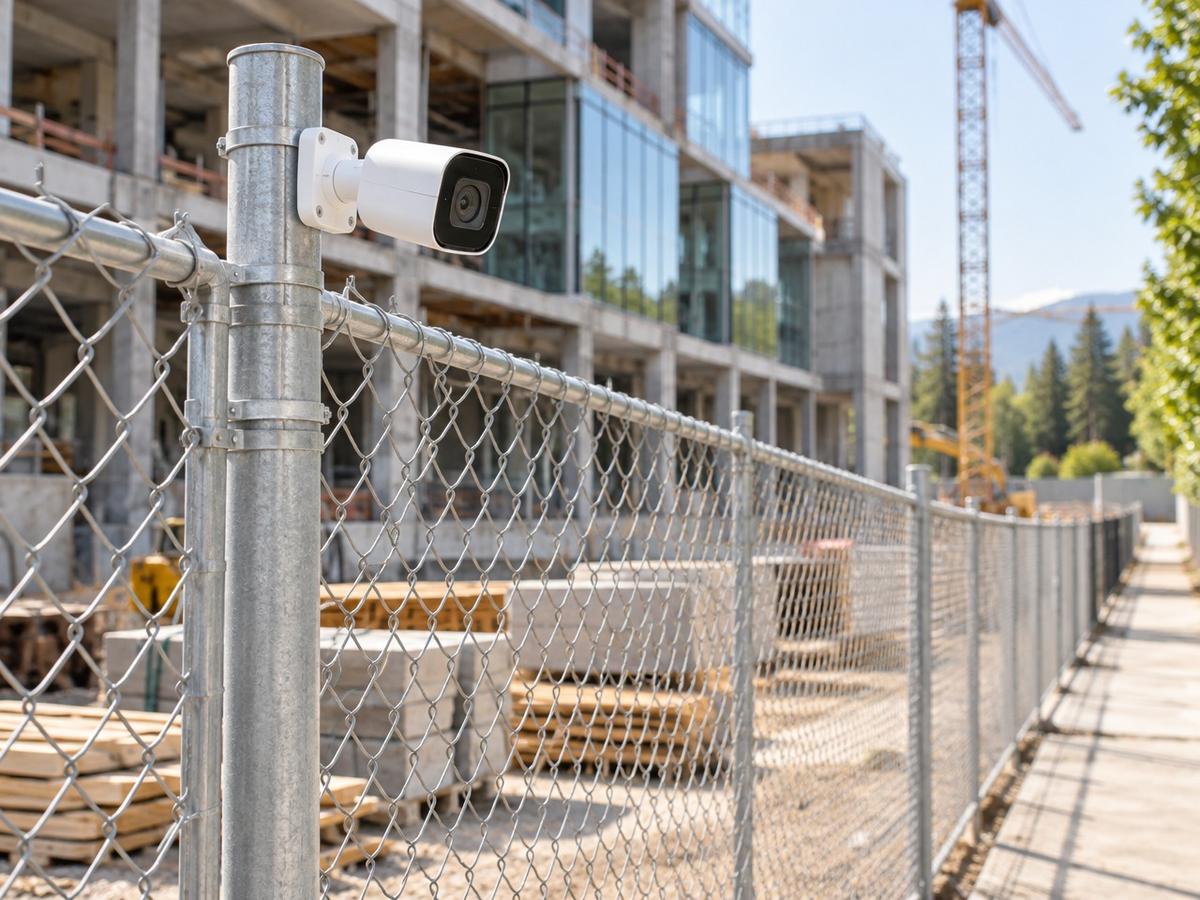
A security camera mounted on a temporary construction fence post along a site perimeter

Temporary perimeter camera mounting

For sites with temporary fencing already in place, we mount surveillance cameras directly on fence lines and temporary support structures to provide continuous perimeter coverage without requiring a building or permanent mount point. Camera positions are selected to cover entry points, material staging areas, equipment storage zones, and any high-value areas identified during the site security assessment.

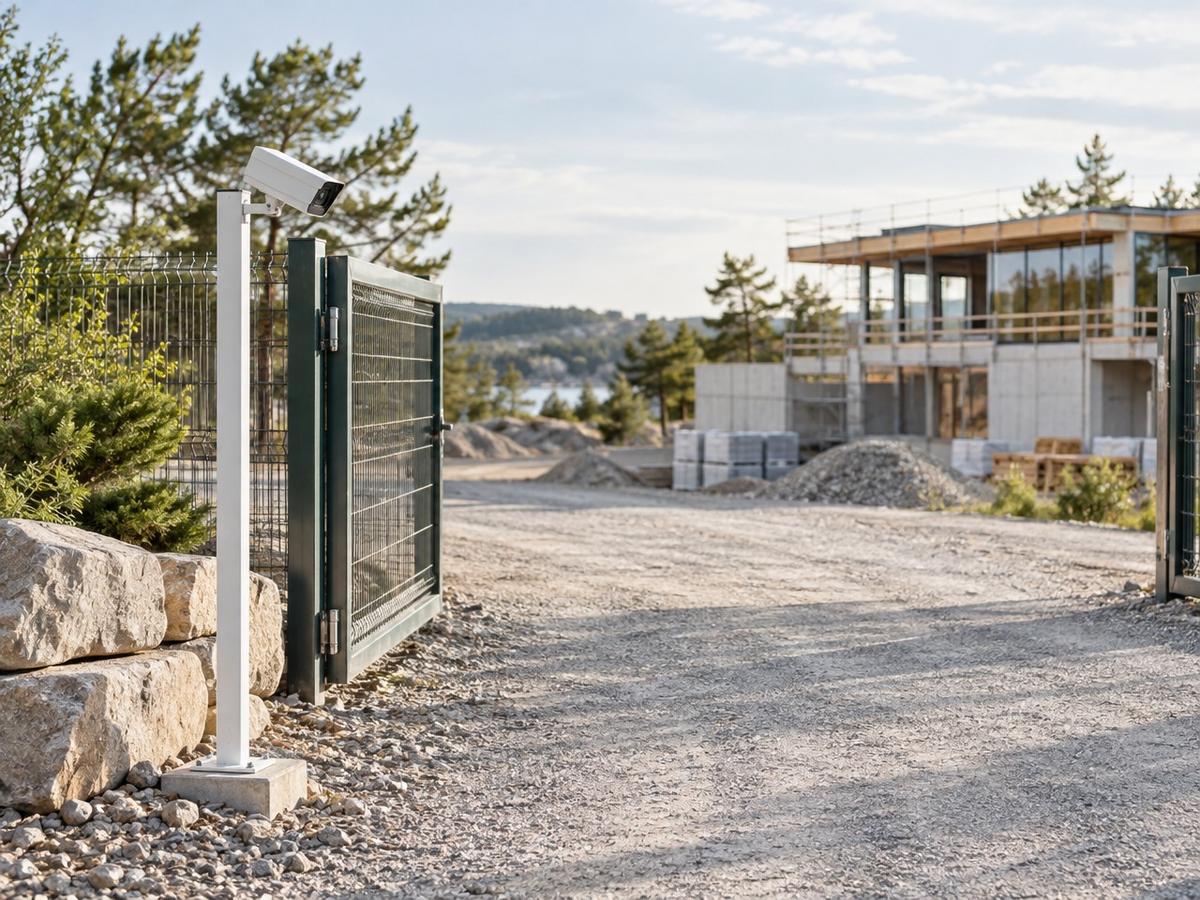
A camera on a short pole watching the vehicle entrance of a construction site

LPR cameras at site entrances

License plate recognition cameras at the primary site entrance automatically log every vehicle entering and exiting. The system creates a timestamped vehicle access record that can be cross-referenced with subcontractor schedules and delivery manifests. For projects where knowing which vehicles were on site at a specific time is operationally or legally important, LPR at the gate is a low-overhead way to build that record automatically.

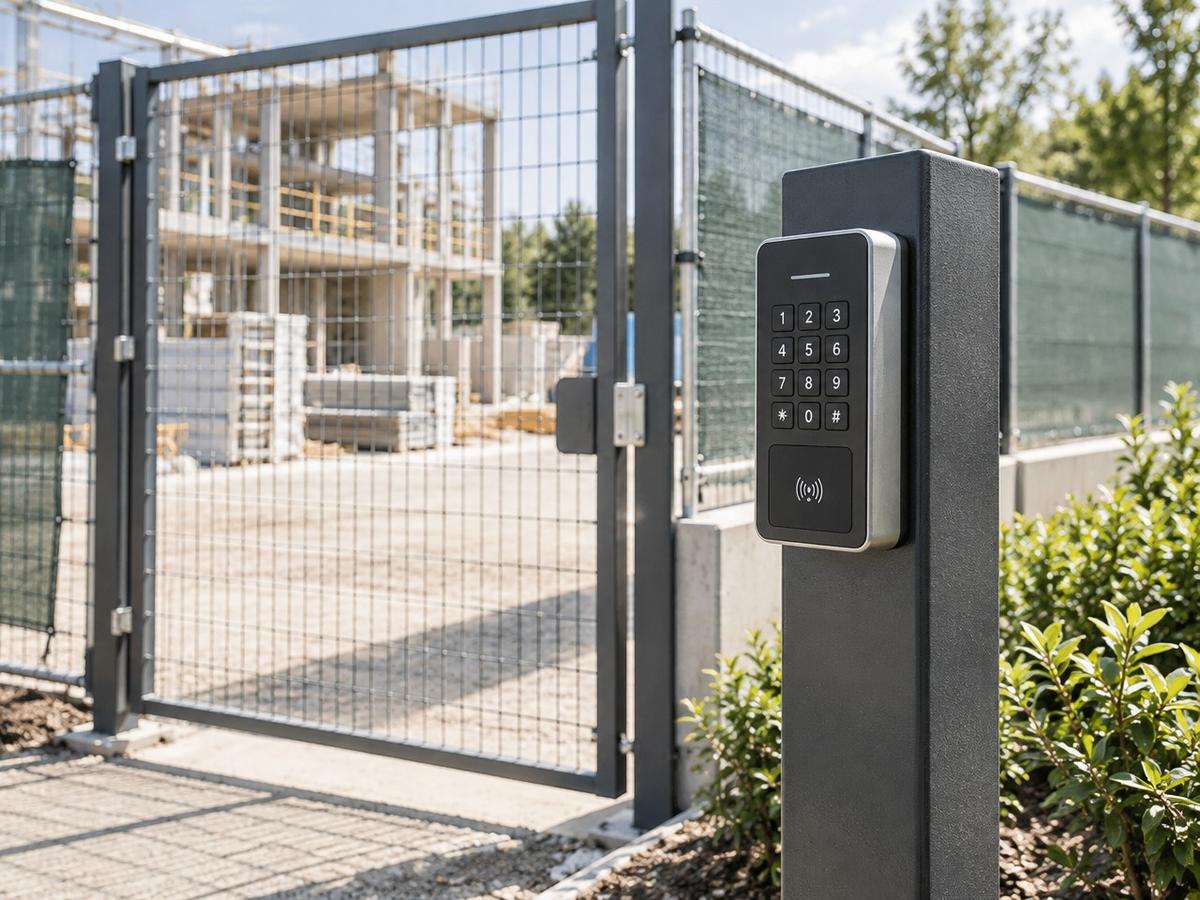
A keypad and card reader on a post beside a temporary construction site gate

Temporary gate access control

Temporary gate access control systems track who enters and exits the construction site on foot or by vehicle. Contractors and subcontractors are issued credentials, and the system logs every entry with a timestamp. Unauthorized personnel without valid credentials are flagged and denied entry. For projects with multiple subcontractors operating across different shifts, access control provides a real-time roster of who is currently on site, which is valuable for both safety headcounts and compliance documentation.

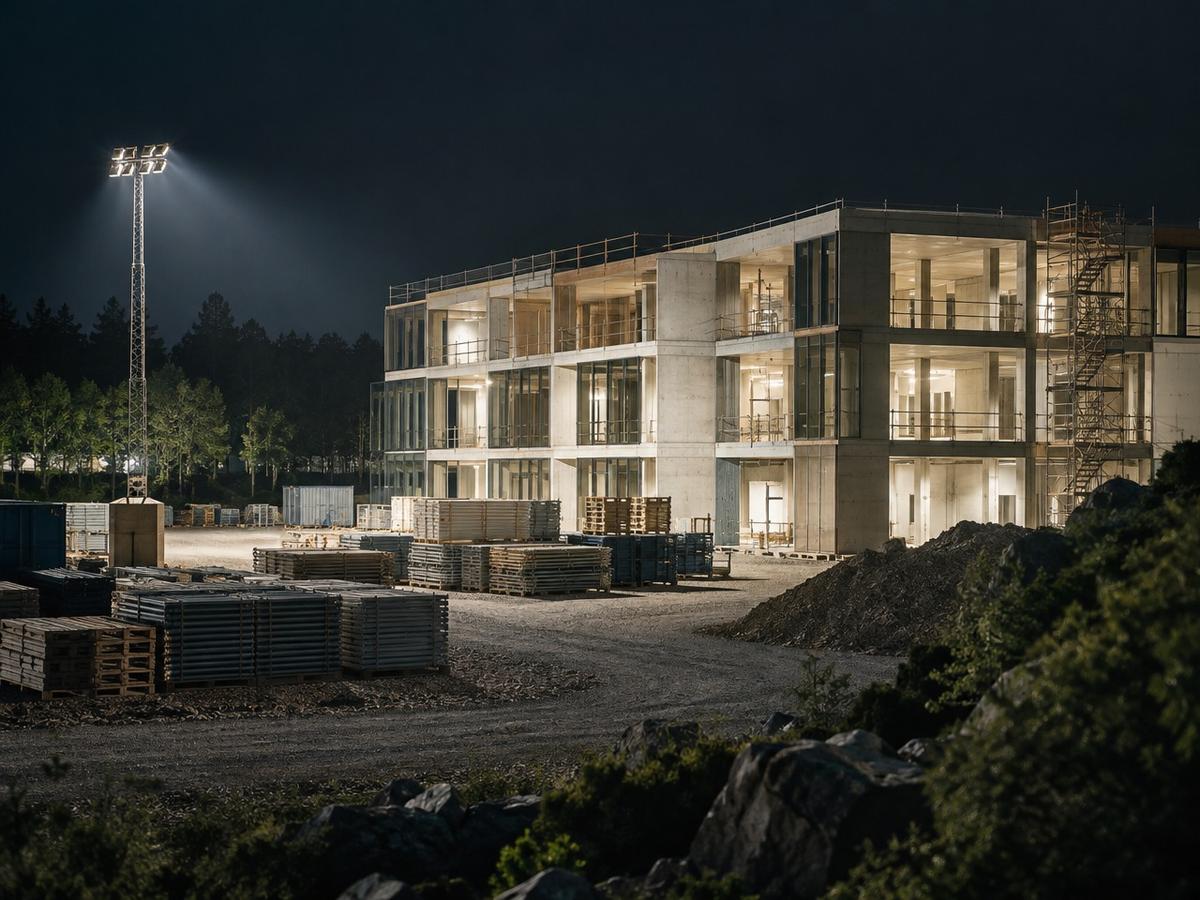
A construction site at night, floodlit from a camera mast and empty of people

Remote video monitoring

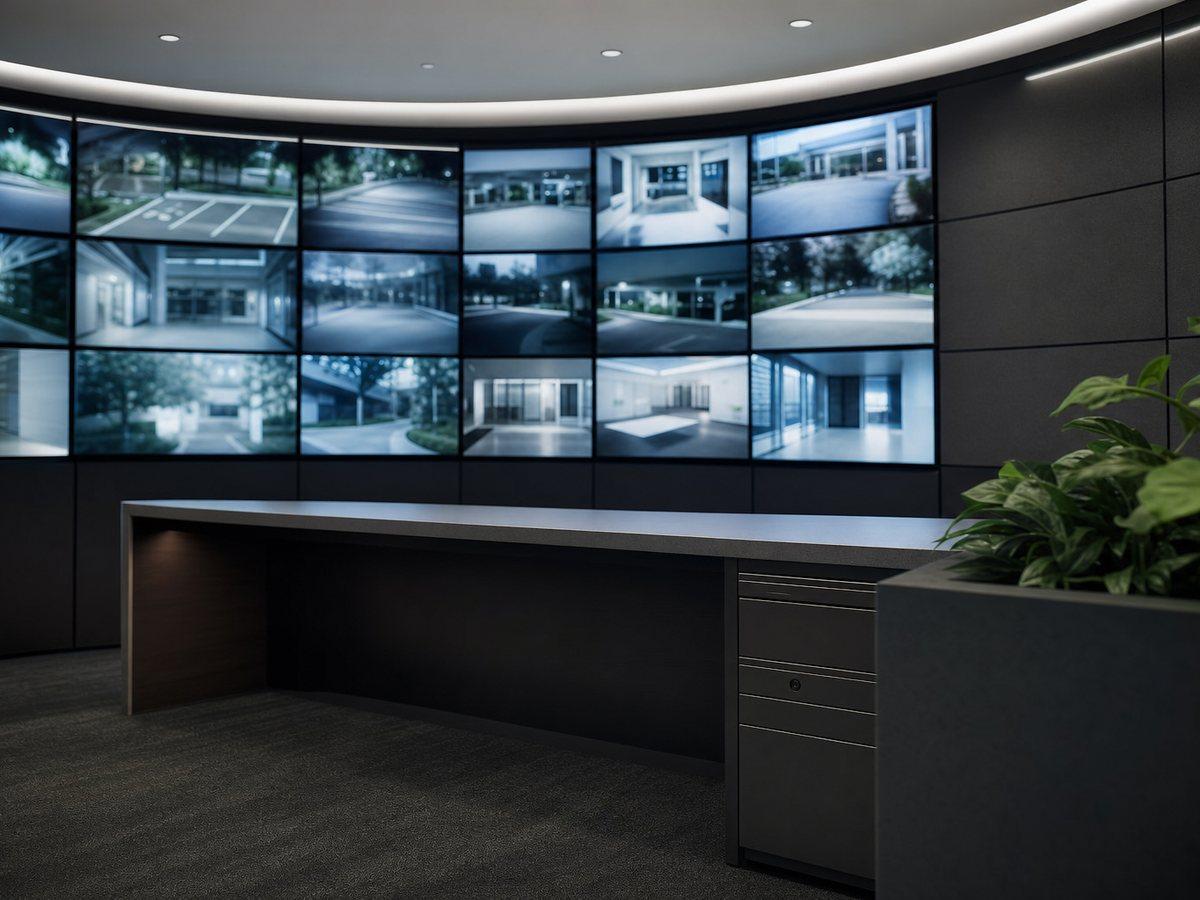
Remote monitoring with live operators provides overnight and weekend coverage when the site is unstaffed. Operators monitor camera feeds in real time and can respond to detected activity with audio announcements, notify local law enforcement, or escalate to the project's designated contact. Remote monitoring is significantly more cost-effective than posting an on-site security guard during off-hours while providing faster detection and response capability than recorded-only surveillance.

Why choose Fortress Global for construction site security

  • Licensed electrical contractor, fully insured
  • Mobile surveillance trailers deploy in 24 to 48 hours
  • Solar-powered units require no site electrical hookup
  • 4G/5G and Starlink connectivity for reliable uptime
  • Flexible daily, weekly, and monthly rental terms
  • LPR cameras for vehicle logging at site entrances
  • Remote monitoring with live operators available overnight
  • Full removal with no permanent installation when project ends
20+

Years in the industry

500+

Completed installations across the U.S.

Construction site security FAQs

For most active construction sites, a mobile surveillance trailer is the most effective and practical security solution available. A mobile trailer is self-contained, requiring no permanent electrical supply, no finished building to mount cameras on, and no infrastructure commitment that has to be undone when the project ends. It deploys within 24 to 48 hours of order, provides wide-area AI-detection camera coverage of the site, and can be monitored remotely by live operators overnight.

The self-contained nature of a mobile trailer directly addresses the core challenge of construction site security: standard camera systems assume a finished facility with stable infrastructure, and a construction site has neither. For sites with specific entry point control needs, a mobile trailer at the primary gate combined with LPR cameras for vehicle logging and temporary perimeter cameras along fence lines provides layered coverage across the entire site. Fortress Global Technology recommends a site security assessment before deployment to identify the highest-risk zones, camera placement priorities, and the appropriate monitoring level for the project's duration and value.

Fortress Global Technology can typically deploy a mobile surveillance trailer to a construction site within 24 to 48 hours of confirmed order. The trailer arrives on a tow vehicle, is positioned at the designated location on the site, and is operational within a few hours of arrival. There is no trench work, no conduit to pull, and no electrical connection to make. The unit runs on its own solar array with battery backup and connects to the monitoring network over 4G/5G cellular with Starlink satellite as a backup link.

For projects where rapid deployment is critical, such as a site that has already experienced a theft event or is beginning during a high-risk period, the 24 to 48 hour window is a firm operational target. We recommend contacting Fortress GT as early as possible in the project timeline so the trailer can be staged and ready at the groundbreaking date rather than deployed reactively after an incident. Proactive deployment from the start of a project is almost always more cost-effective than emergency deployment after a theft or vandalism event.

Yes. This is one of the defining advantages of a mobile surveillance trailer for construction site deployment. Each trailer is equipped with a solar panel array and a battery storage system that provides continuous power to the cameras, the cellular and Starlink communications equipment, and the onboard computing systems without any connection to site electrical. The solar and battery system is sized to maintain operation through overcast periods and nights without interruption. For extended overcast weather or sites in locations with lower solar availability, supplemental generator capacity can be added.

The elimination of site electrical dependency matters on construction sites because permanent electrical service is rarely available in the early phases of a ground-up build, and tapping into temporary construction power requires coordination with the electrical contractor and creates a dependency that can be disrupted by site activity. A self-contained solar-powered trailer sidesteps all of that and is operational from the first day it arrives on site, regardless of where the project is in its construction sequence.

Managing access for multiple subcontractors requires a structured credentialing system rather than a paper sign-in sheet or an open gate. Fortress Global Technology deploys temporary gate access control systems that issue credentials to authorized subcontractors and log every entry and exit with a timestamp. Credentials can be time-limited to match each subcontractor's scheduled work window, preventing a framing crew's credentials from functioning during the period when only electrical work is scheduled. For vehicle access, LPR cameras at the gate entrance automatically log every vehicle, providing a second-layer record that complements the foot traffic access log.

The general contractor or site superintendent can review a real-time roster of who is currently on site at any time through the access control dashboard, which also serves as the documentation base for safety compliance reporting. When a subcontractor's work is complete, their credentials are deactivated from the dashboard without any physical collection required. Fortress Global Technology configures access rules to match the project's scheduling and phasing, and the system can be reconfigured as subcontractors cycle on and off the project throughout the build.

No. Fortress Global Technology offers mobile surveillance trailer deployments on flexible daily, weekly, and monthly rental terms specifically because construction projects have defined timelines that do not align with multi-year security contracts. You pay for the coverage you need for the duration of the project, and when the build is complete and the site is occupied, the trailer is removed. There are no decommissioning costs or residual equipment obligations.

For projects with phased construction where security needs change over time, such as a development where the first buildings are complete and occupied while additional phases are still under construction, we can adjust the coverage configuration or redeploy equipment as the project evolves. The flexibility of rental-based deployment also means that if a project timeline extends, adding coverage for additional months is straightforward, and if a project completes ahead of schedule, you are not locked into paying for equipment that is no longer needed. Contact Fortress Global Technology to discuss the deployment terms that align with your specific project timeline and budget.

Remote monitoring with live operators can replace an on-site security guard for most construction site overnight coverage scenarios, and it typically provides faster detection and response capability at a lower cost per hour of coverage. An on-site guard covers whatever area they are physically standing in at any given moment. A remote monitoring operator watching multiple camera feeds covering the entire site perimeter simultaneously detects intrusion anywhere on the site the moment it occurs, rather than during the next patrol pass.

When the monitoring operator detects activity, they can immediately issue an audio announcement over the trailer's speaker system, contact law enforcement, and notify the designated project contact, all within seconds of detection. For high-value sites or projects that have already experienced theft or vandalism, the combination of visible mobile trailer deterrence and active remote monitoring is the most cost-effective overnight security configuration available. Fortress Global Technology can discuss monitoring service levels, response protocols, and escalation procedures during the project security assessment to confirm that the remote monitoring configuration matches the site's specific risk profile.

The highest-priority areas for camera coverage on a construction site are the primary access points, material staging areas, and equipment storage zones. The primary gate or entrance is the single most important coverage point because it captures every person and vehicle entering or leaving the site and creates the baseline documentation record for access control and LPR logging. Material staging areas where lumber, copper wire, conduit, and other high-value or easily transportable materials are stored overnight are the second priority, as these are the most common targets for theft.

Equipment storage zones where heavy equipment, generators, compressors, and portable tools are parked overnight should also have direct camera coverage rather than relying solely on perimeter coverage to detect intrusions near high-value equipment. For ground-up commercial builds where the structure is taking shape, coverage of the building perimeter and interior access points such as temporary door openings and stairwells becomes important as the project progresses and more materials are installed within the structure. Fortress Global Technology conducts a site security assessment to map coverage priorities against the current phase of construction, the highest-value materials and equipment on site, and the site's specific vulnerability profile before finalizing camera placement.

Secure your construction site before the first tool goes missing

Construction site theft and vandalism typically happen in the first unprotected overnight window. Contact Fortress Global Technology to assess your site and get a mobile surveillance trailer deployed before the project is exposed.

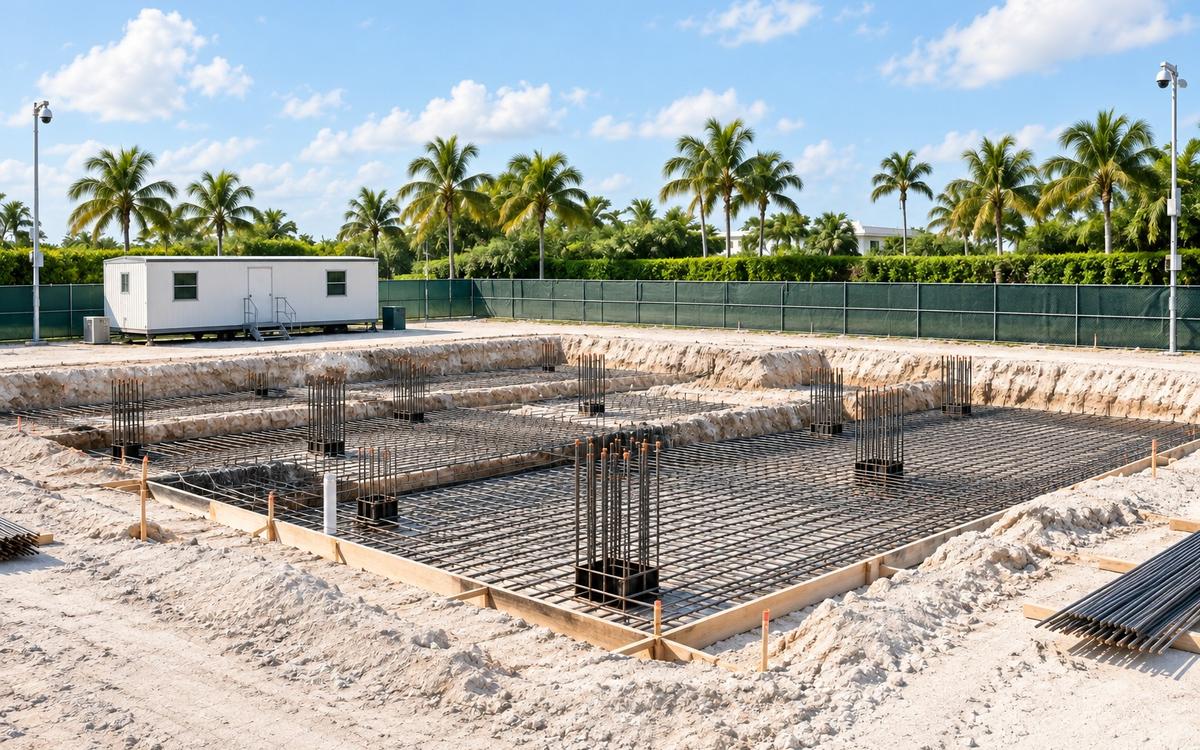
Construction site with rebar foundations, a site office trailer, perimeter fencing and camera poles